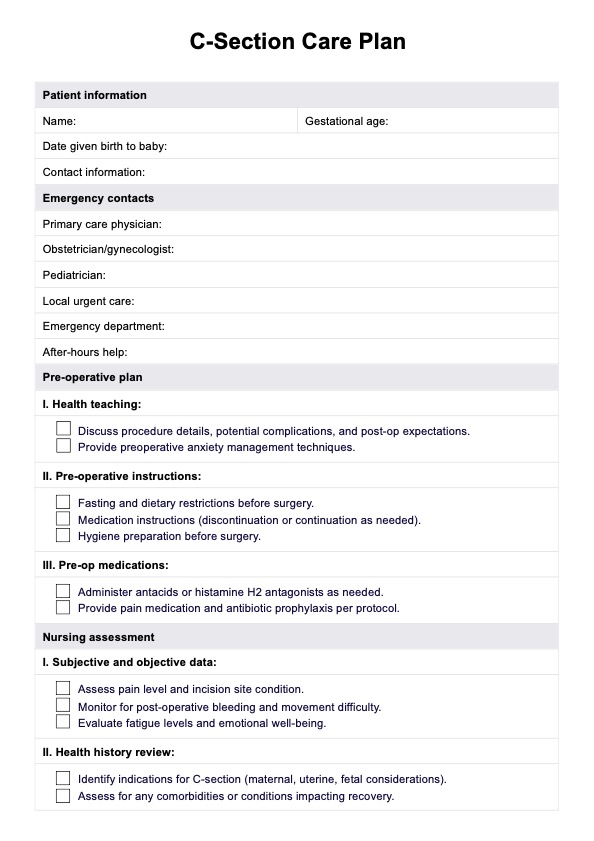
Components of a C-Section Care Plan
A C-Section Care Plan is designed to ensure the safe recovery of patients who have undergone a cesarean birth. It addresses preoperative and postoperative care, focusing on surgical incisions, pain management, infection prevention, and long-term health considerations. Proper assessment, timely interventions, and discharge planning help prevent complications such as deep vein thrombosis, urinary tract infection, and increased pain.
Preoperative plan
Before a C-section, the health care team prepares the patient by reviewing medical history, including any problem pregnancies or conditions like placenta previa. The procedure requires either regional anesthesia (such as a spinal or epidural block) or general anesthesia in emergency cases. A urinary catheter monitors urine output and prevents bladder injury during surgery. Bloodwork is done to determine if a blood transfusion may be necessary.
Postoperative plan
Post-surgery, monitoring focuses on the surgical incision site, pain management, and overall recovery. Nurses assess for complications such as surgical site infection, urinary tract infection, and deep vein thrombosis. The abdomen and uterus are evaluated for proper healing, and pain medications are administered as needed. Patients are encouraged to ambulate early to prevent complications.
Nursing diagnoses and priorities
The primary nursing diagnosis in a C-Section Care Plan includes acute pain, risk of infection, and impaired mobility due to the surgical incision. Pain management is a priority, using both pharmacological and non-pharmacological interventions. The patient is also monitored for increased pain, excessive bleeding, and difficulty healing. Nursing priorities also include emotional support and education on long-term health considerations following a cesarean delivery.
Nursing interventions
Nurses implement strategies to reduce complications and promote healing. They assess the uterine incision, educate on proper surgical incision care, and encourage ambulation. Close monitoring of vital signs helps detect early signs of infection or blood loss, and pain medications are adjusted based on patient needs. Nurses also instruct patients on when to seek medical attention for complications.
Discharge instructions
Before discharge, the patient receives detailed guidance on caring for the surgical incision site, managing pain medications, and monitoring for complications. Instructions include recognizing signs of infection, preventing urinary tract infection, and promoting proper healing. Patients are also educated on potential risks for future pregnancies and the importance of follow-up visits to ensure a full recovery.