





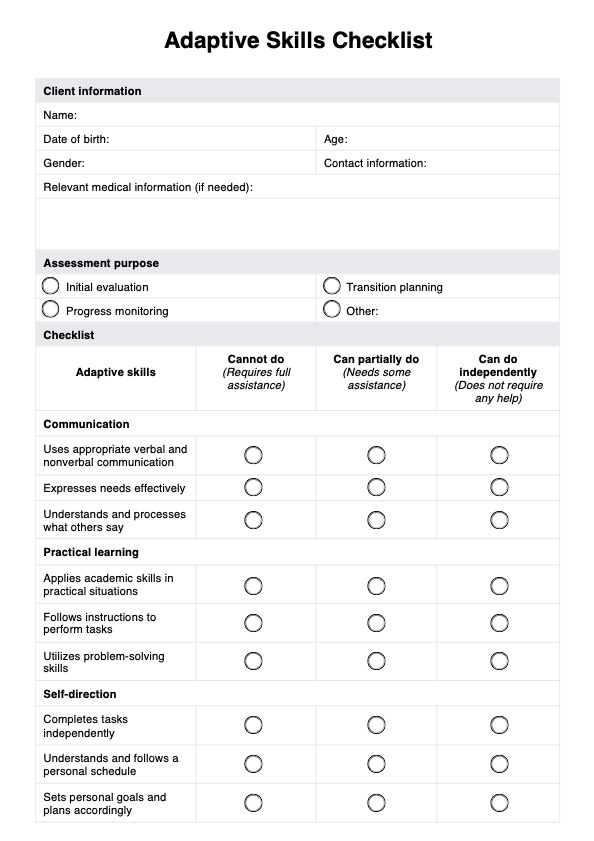




Introduction to adaptive skills
Adaptive skills, also known as adaptive behaviors, are essential for daily living. They are the practical, everyday skills one needs to function and meet the demands of one's environment, including the skills necessary for social interaction and self-care.
Evaluating and supporting the development of adaptive behavior skills is a significant part of providing care, especially for people with an intellectual disability, developmental delays, sensory impairment, or those recovering from illness or injury. Additionally, adaptive skills assessment can help us determine areas of need, guide interventions, and monitor progress. Furthermore, fostering these skills contributes to a person's overall quality of life, enhancing their independence and ability to participate fully in their community.
Adaptive skills are the foundation for managing daily life and interacting effectively with the world around them. They are important in determining how an individual functions in various life stages and settings, specifically for facilitating independence, promoting social integration, enhancing the quality of life, ensuring safety, and supporting educational and employment opportunities.
Some examples of adaptive skills include self-care, communication skills, social skills, motor skills, home living skills, community use, self-direction, functional academics, leisure and work, and health and safety.









