



What is the Male Role Norms Inventory (MRNI)?
Male role norms are societal expectations and beliefs about how men should think, behave, and present themselves in various aspects of life. These norms often emphasize traits such as emotional stoicism, physical toughness, independence, dominance, and traditional views on sexuality. While these gender roles are deeply ingrained in many cultures, they can create pressure on men to conform to rigid standards, which may impact their mental health, relationships, and overall well-being.
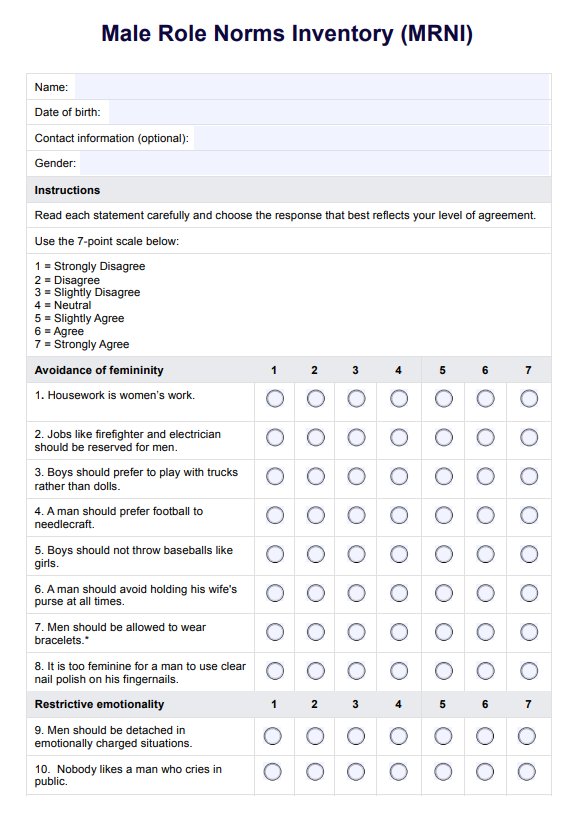
The Male Role Norms Inventory (MRNI) is a 58-item self-report measure assessing beliefs about traditional male gender norms across seven subscales (Levant et al., 1992):
- Avoidance of femininity: Measures rejection of traits seen as feminine, like emotional expressiveness and passivity.
- Restrictive emotionality: Assesses suppression of emotions, particularly vulnerability and sadness.
- Aggression: Evaluates beliefs in aggression, dominance, and competitiveness as key masculine traits.
- Achievement/Status: Reflects pressure on men to achieve success, financial stability, and recognition.
- Self-reliance: Measures belief in independence and avoiding help-seeking behavior.
- Homophobia: Assesses negative attitudes toward homosexuality linked to traditional masculinity.
- Attitudes toward sex: Reflects views on male dominance in sexuality and promiscuity.
The MRNI helps identify how adherence to traditional masculinity may influence mental health, relationships, and social behavior. High scores on certain subscales can be linked to issues like emotional repression, aggression, and social isolation. It is used in clinical, educational, and research settings to explore and address the impact of rigid gender norms.