
The Male Role Norms Inventory (MRNI) is a psychometric tool designed to assess adherence to masculine norms, including traits such as physical toughness, self-reliance, and the avoidance of behaviors seen as feminine. It evaluates masculine ideologies across various domains, including emotional expression, health behaviors, and societal expectations related to mechanical skills and leadership roles. The MRNI is widely utilized in research on men's health and mental health, helping to highlight the influence of gender role strain. By measuring general and specific masculinity factors, the inventory sheds light on how traditional norms contribute to health risk behaviors and the challenges men face in aligning with societal expectations, offering valuable insights into the relationship between masculine norms and gender role conflict.
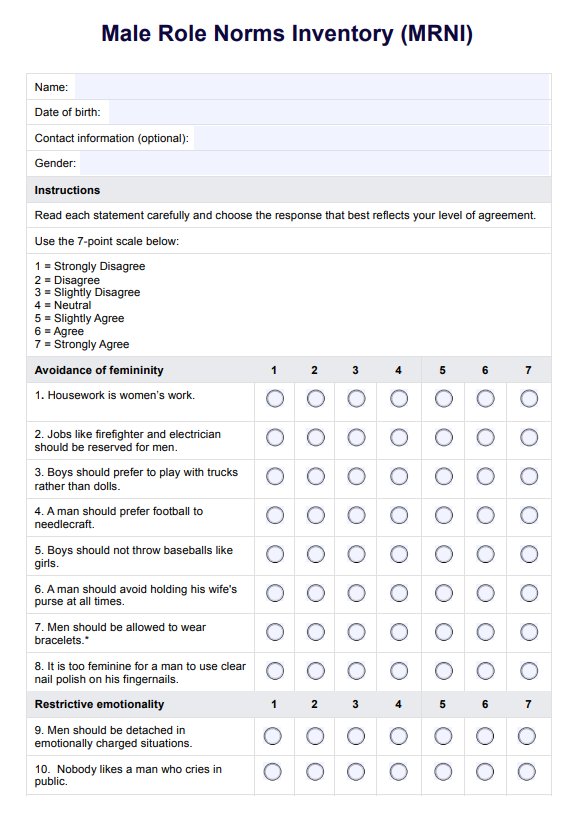



MRNI
Explore the Male Role Norms Inventory (MRNI), a tool for assessing masculinity ideologies, health behaviors, and gender role attitudes in research.

MRNI Template
Commonly asked questions
Male society norms refer to the societal expectations and behaviors that define what it means to be a man in a given culture. These norms are often tied to traditional masculinity ideology, which emphasizes traits such as emotional stoicism, dominance, self-reliance, aggression, and avoidance of femininity. Such norms can lead to gender role conflict, as men may feel pressure to conform to these ideals, even if they are not aligned with their true identities or well-being.
Masculine norms are specific beliefs and expectations about how men should behave, often rooted in traditional gender roles. These norms typically promote traits such as strength, independence, and control while discouraging vulnerability, emotional expressiveness, and help-seeking behavior. Adherence to these norms can encourage risk-taking, as men may feel pressure to prove their masculinity through dangerous or high-stakes actions. The belief in these norms can also lead to gender role conflict, where men experience stress or discomfort when they are unable to meet these societal expectations, potentially impacting their mental health and well-being.

EHR and practice management software
Get started for free
*No credit card required
Free
$0/usd
Unlimited clients
Telehealth
1GB of storage
Client portal text
Automated billing and online payments