Lead poisoning treatments
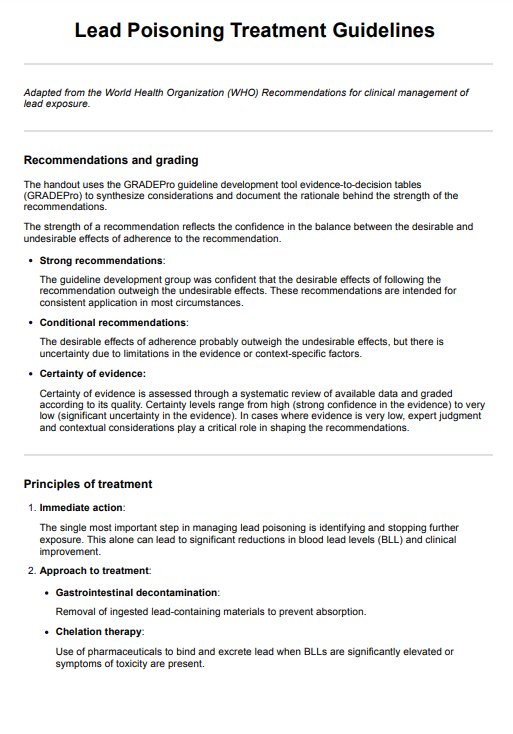
The treatment of lead poisoning aims to reduce blood lead levels (BLLs) and mitigate its toxic effects. Management varies depending on the severity of lead exposure, age, and individual health status. Below are the key treatments, including those highlighted in the guidelines.
Immediate exposure removal
The first and most critical step in managing lead poisoning is identifying and stopping further lead exposure. This alone can significantly reduce BLLs over time and improve clinical outcomes. Strategies include:
- Removing lead-based paint, contaminated soil, or lead pipes.
- Ensuring safe drinking water.
- Discontinuing lead-containing products (e.g., traditional medicines or cosmetics).
This foundational step is universally recommended across treatment guidelines.
Gastrointestinal decontamination
Gastrointestinal decontamination prevents the absorption of ingested lead materials, particularly in cases of acute exposure. Treatments include:
- Esophagogastroduodenoscopy (EGD) or surgery: Recommended for removing solid lead objects (e.g., bullets, fishing weights) from the stomach, which dissolve in stomach acid, increasing toxicity risks.
- Whole bowel irrigation (WBI): Used for lead-containing objects or dispersed materials (e.g., paint chips, ceramic glaze) in the intestines. It is effective for clearing the GI tract, mainly when other methods are unavailable.
These interventions are crucial for mitigating acute toxicity but depend on the material type and location.
Chelation therapy
Chelation therapy involves pharmaceuticals that bind lead, facilitating its excretion. It is indicated for individuals with significantly elevated BLLs or symptoms of toxicity. Common agents include:
- Succimer (DMSA): An oral chelator for children with BLLs ≥45 µg/dL. It is often the first-line treatment due to its safety profile.
- Calcium disodium EDTA (CaNa2-EDTA): Administered intravenously, used in severe cases or when oral chelation is ineffective.
- Dimercaprol (BAL): Combined with CaNa2-EDTA for life-threatening lead encephalopathy.
Chelation therapy reduces the body’s lead burden but requires careful monitoring for potential side effects like renal dysfunction.
Surgical removal
Surgical intervention is warranted in cases where lead-containing objects, such as those lodged in the appendix, are causing appendicitis or increasing blood lead concentrations. For asymptomatic individuals, periodic monitoring may suffice, but surgery is recommended if toxicity signs develop.
Nutritional interventions
Enhancing nutritional status can help reduce lead absorption and toxicity, particularly in children. Adequate intake of:
- Calcium: Competes with lead for absorption in bones.
- Iron: Reduces lead absorption in the gastrointestinal tract.
- Vitamin C: Enhances lead excretion.
Nutritional interventions are adjunctive and beneficial in populations at high risk of malnutrition.