



What is a Chain Analysis Worksheet?
Chain analysis, also known as functional analysis, is a technique utilized in both cognitive behavioral therapy (CBT) and dialectical behavior therapy (DBT). However, the structure and content of a functional analysis template differ between these therapies due to their distinct purposes, goals, and session dynamics.
In DBT sessions, the chain analysis worksheet guides patients beyond mere recognition and redirection of thoughts. It includes additional questions and instructions to explore factors influencing problematic behaviors. Patients are encouraged to accept their thoughts, feelings, and actions and to strategize changes for moving forward, aligning closely with the core principles of DBT.
With regards to a chain analysis worksheet for DBT sessions, practitioners utilize this worksheet to guide their patients to go beyond thought recognition and redirection. Some additional questions and instructions aid the patient in exploring the factors that cause or affect their problematic behavior. In addition, some instructions help them accept their thoughts, feelings, and actions as well as how or what to change moving forward. All of these are very much aligned with the purpose of DBT.
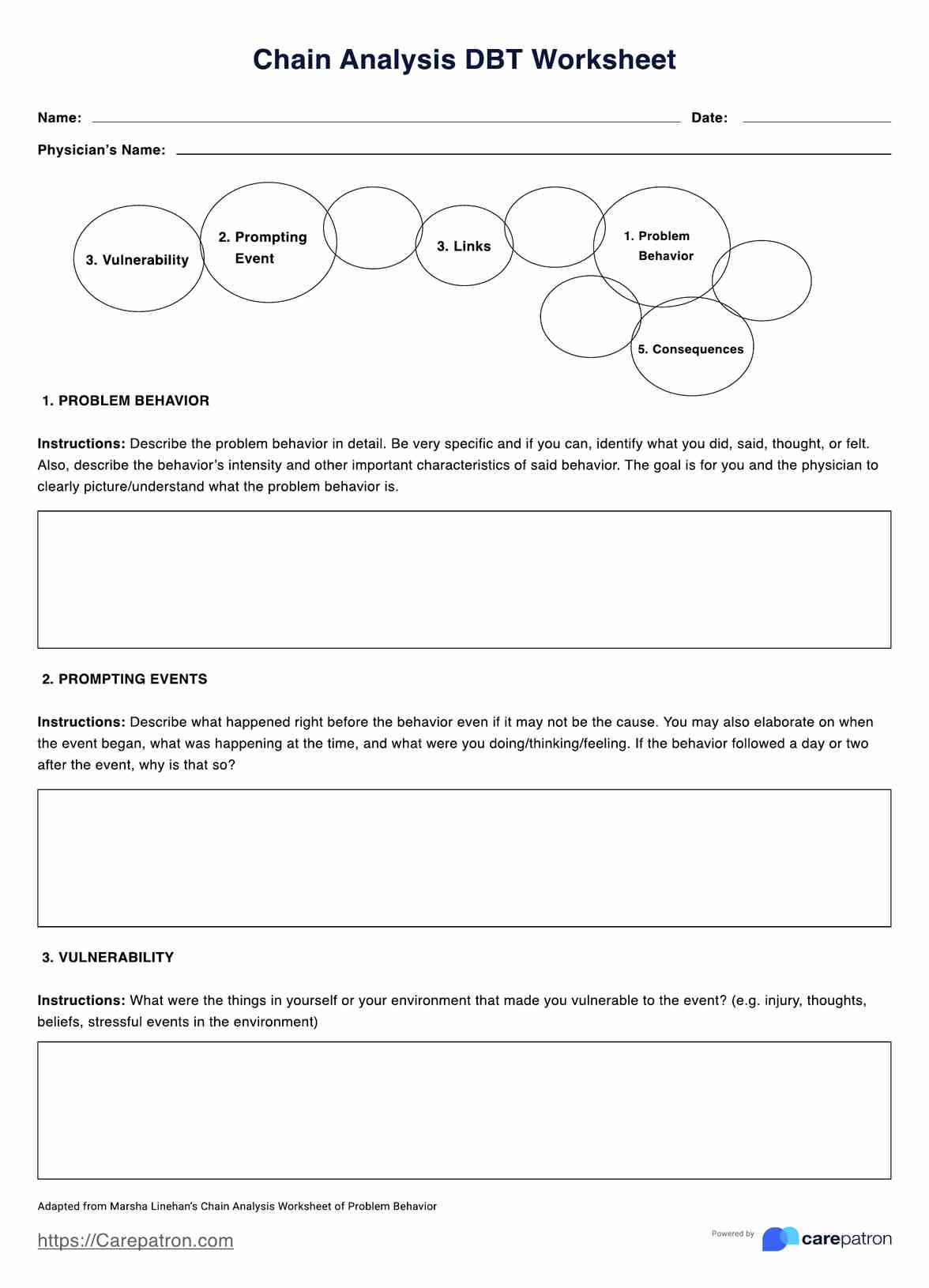
Our Behavior Chain Analysis Worksheet DBT template, particularly, comes with the following sections and components. Based on a target behavior, you will then need to assess a behavior chain that consists of the following:
- Problem behavior
- Prompting events
- Vulnerability
- Links
- Consequences
- Coping/skillful behaviors
- Prevention
- Solving
- Sharing
Aside from questions that will prompt answers, there is ample space to write responses based on the instructions provided for each section.
At the end of the session or when they give you a filled-out worksheet, you may utilize their answers during your discussion or use this document as a reference in the future for a diagnosis, treatment plan, or the like.
What is DBT?
DBT, otherwise known as dialectical behavioral therapy, is a talk therapy based on cognitive behavioral therapy (CBT). Although it's easy to sometimes confuse the two, it is important to remember that DBT works on opposing ideas that help individuals accept the reality of their lives.
Using DBT, clients can learn to change their behaviors healthily and regulate their emotions to manage mental health conditions effectively. It is commonly used for the treatment of disorders such as anxiety, depression, borderline personality disorder, post-traumatic stress disorder, substance use disorders, and suicidal behavior.
DBT can result in less depressive symptoms, negative self-talk, less drug and alcohol misuse, and can elevate positive changes and commitment and improve overall emotional well-being. One of the best aspects of DBT is that the intervention is effective in both group and individual settings, making it a useful therapy alternative.
Printable Chain Analysis DBT Worksheet
Download this Behavioral Chain Analysis DBT Worksheet and guide your clients through their therapy treatment.