



What is the Warwick–Edinburgh Mental Well-being Scale (WEMWBS)?
The Warwick–Edinburgh Mental Well-being Scale (WEMWBS) is a psychometrically robust tool designed to measure mental well-being by assessing positive thoughts and feelings. Developed to promote mental health research and practice, WEMWBS evaluates aspects of mental well-being.
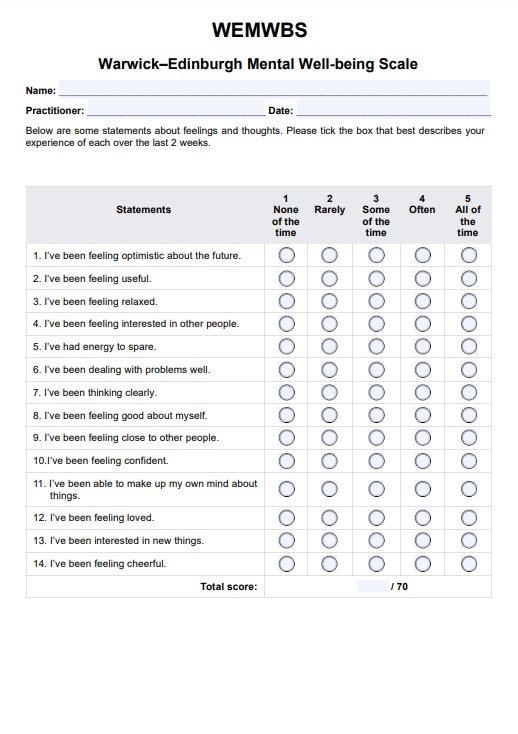
This 14-item scale asks individuals to rate their experiences over the past two weeks using positively worded items relating to optimism, confidence, and social connections. Responses are scored on a 5-point Likert scale, with a total score ranging from 14 to 70. Higher scores indicate greater levels of mental well-being. WEMWBS has been validated through confirmatory factor analysis and psychometric assessment with an existing scale and tested across student and population samples. This ensures its relevance for monitoring mental well-being in different contexts (Stewart-Brown & Janmohamed, 2008).
The scale is widely used in public mental well-being initiatives, clinical sciences, and health promotion programs. Its ability to monitor mental well-being at a population level has made it a valuable tool in community health, public mental health research, and life satisfaction studies. Unlike other scales measuring mental health, WEMWBS focuses exclusively on positive mental health, making it instrumental in strengthening mental health promotion efforts.
Healthcare practitioners can use WEMWBS to evaluate the effectiveness of interventions, track mental health outcomes, and tailor support strategies for individuals or groups. Its reliability, sensitivity to change, and compatibility with existing scales such as the General Health Questionnaire make it ideal for use in clinical and research settings. WEMWBS provides meaningful insights to help practitioners improve patients' mental well-being.