
To treat rejection-sensitive dysphoria (RSD), therapy like cognitive behavioral therapy (CBT) or dialectical behavior therapy (DBT) helps improve emotional regulation, medication addresses underlying ADHD or RSD symptoms, and coping strategies such as self-compassion and stress management build resilience.
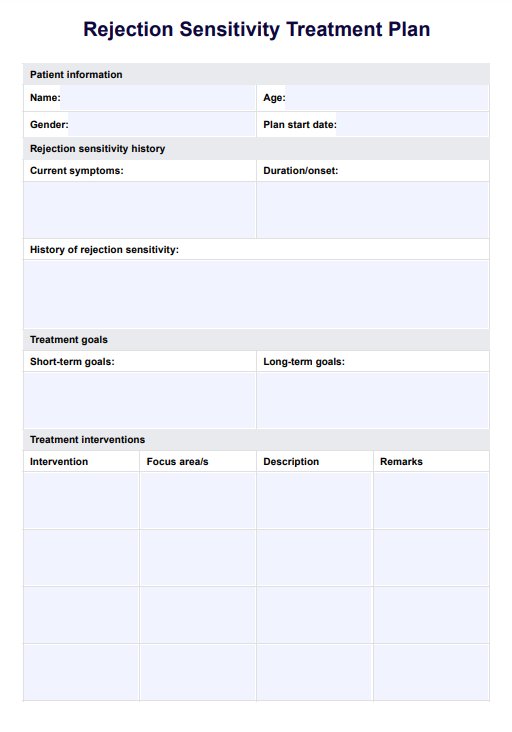



Rejection Sensitivity Treatment Plan
Access a structured Rejection Sensitivity Treatment Plan to help clients manage triggers, build coping skills, & strengthen emotional resilience.

Use Template
Rejection Sensitivity Treatment Plan Template
Commonly asked questions
Triggers include intense emotions or feelings of perceived or actual rejection, criticism, negative feedback, or social interactions that lead to overwhelming emotional reactions and evoke feelings of inadequacy or low self-esteem.
No, rejection-sensitive dysphoria (RSD) is not just trauma. While past trauma can contribute, RSD often stems from neurobiological factors, such as its links to attention deficit hyperactivity disorder (ADHD), emotional dysregulation, and heightened sensitivity.
EHR and practice management software
Get started for free
*No credit card required
Free
$0/usd
Unlimited clients
Telehealth
1GB of storage
Client portal text
Automated billing and online payments