


What is the General Behavior Inventory (GBI)?
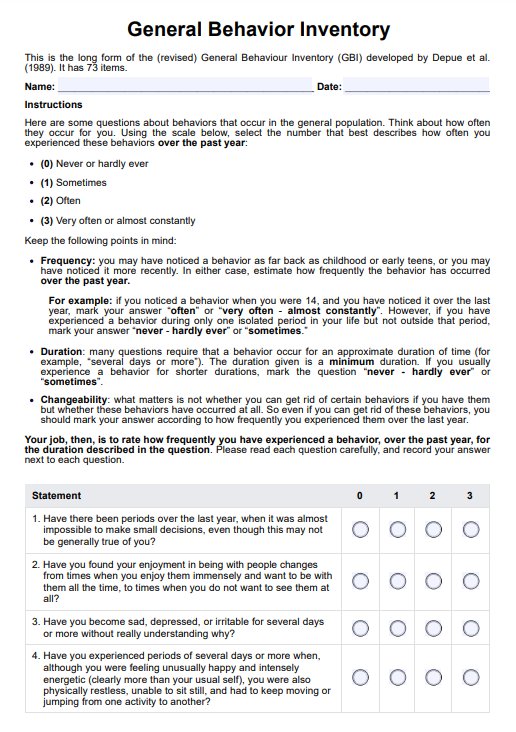
The General Behavior Inventory (GBI) is a psychological assessment tool designed to detect the presence and severity of manic, hypomanic, and depressive symptoms. Comprised of 73 questions, the GBI is a self-report measure typically used to evaluate the severity of bipolar spectrum disorders and map fluctuations in symptoms over time.
Bipolar affective conditions (also known as bipolar depression or bipolar disorder) typically present as extreme mood swings or shifts in a person's energy, affect, and behavior. These depressive, manic or mixed episodes are often cyclical and can cause major impairment in the lives of those affected. Timely detection and accurate evaluations are critical for reducing the distress associated with bipolar spectrum disorder.
The GBI aids in detecting chronic affective disorders by identifying behavior resembling manic and depressive tendencies (i.e. symptoms outside the normal range). It can also be used to track whether a patient who has received a bipolar diagnosis is responding to treatment or worsening over time.
The GBI is also sensitive to manic and depressive tendencies in child and adolescent populations, meaning it also has utility in abnormal child psychology. GBI results can aid in the diagnosis of adolescent mood disorders such as pediatric bipolar disorder. This is especially useful for screening adolescents with a genetic predisposition towards mood disorders, facilitating early detection of symptoms and timely intervention.