How To Use This CBT worksheet For Anxiety
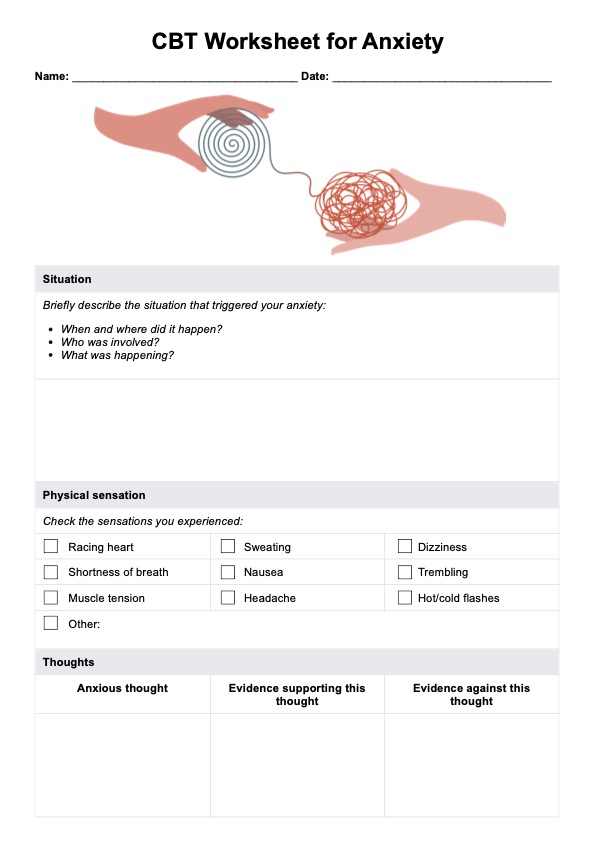
Step 1: Identify the triggering situation that causes anxiety.
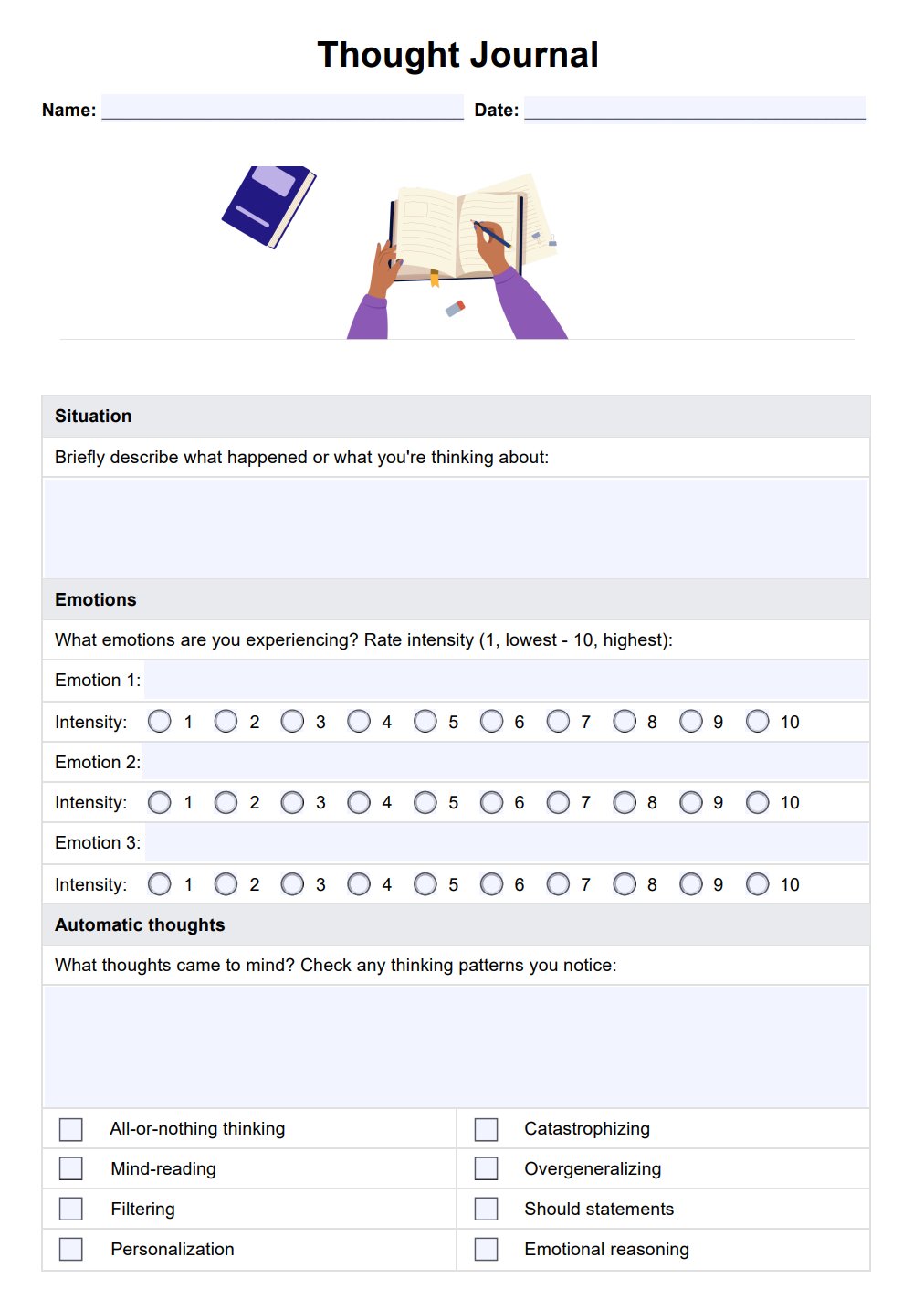
The first step in using this worksheet is identifying the situation or event that causes your anxiety. It could be a specific social event, an upcoming test, or even a general fear that you have on a regular basis. Make a short description of the situation.
Step 2: Rate your anxiety level on a scale of 1-10.
Next, rate your level of anxiety on a scale of 1 to 10, with 1 being the lowest and 10 being the highest. As you work through the worksheet, this will help you understand the intensity of your anxiety and track your progress.
Step 3: Identify negative thoughts that contribute to your anxiety.
Think about the negative thoughts that arise when you encounter the triggering situation. These thoughts frequently contribute to your anxious feelings. Write them down as precisely as possible.
Step 4: Write down the emotions you feel in response to your thoughts.
Identify the emotions you experience in response to your negative thoughts. You might feel scared, nervous, or overwhelmed, for example. Make a detailed record of your emotions.
Step 5: List the specific behaviors you exhibit in response to your anxious thoughts and emotions.
Identify the specific behaviors that occur in response to your anxious thoughts and emotions. This could include completely avoiding the situation, engaging in compulsive behaviors, or experiencing physical symptoms like sweating or shaking. Make a detailed note of these behaviors.
Step 6: Challenge negative beliefs.
Now, challenge your negative beliefs by thinking of more realistic alternatives. These thoughts should call into question any negative beliefs you have about yourself or the situation. Make a detailed list of them.
Step 7: List the emotions you would like to experience in response to the situation.
Identify the emotions you want to feel in response to the situation. These may include feelings of calm, confidence, or relaxation. Make a detailed list of them.
Step 8: Identify healthy and constructive behaviors to exhibit in response to your alternative thoughts and emotions.
Make a list of the healthy and constructive behaviors you want to exhibit in response to your opposing thoughts and emotions. These actions should assist you in dealing with the situation in a healthy and constructive manner. Make a detailed note of these behaviors.
Step 9: Develop a plan of action to manage your anxiety and achieve your goals.
Finally, create a strategy for dealing with your anxiety in this situation. Make a list of the specific steps you'll take to deal with your anxiety and achieve your goals. This plan should include the alternative thoughts, emotions, and behaviors that you identified in the worksheet. Maintain your plan and refer to it as needed.






.png)