



What is pyromania?
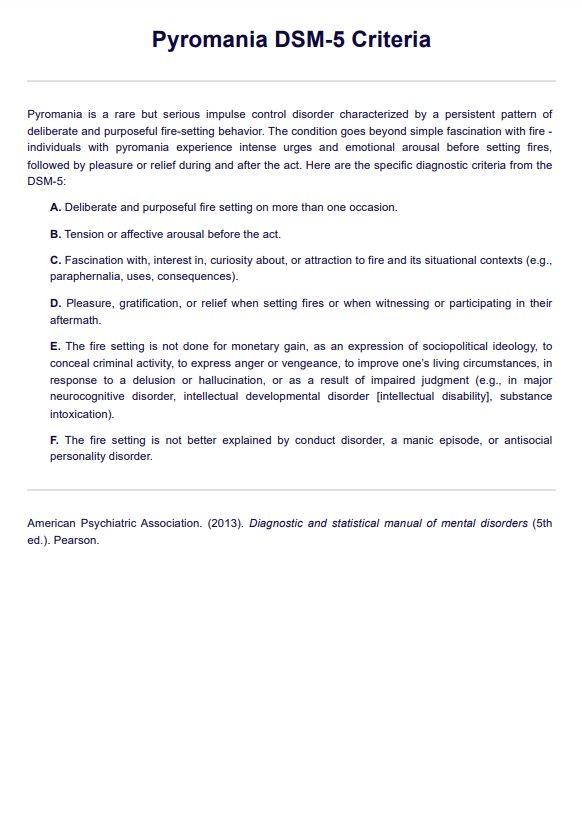
Pyromania is a rare but serious mental health condition classified as an impulse control disorder in the Diagnostic and Statistical Manual of Mental Disorders, Fifth Edition (DSM-5). It is characterized by a recurrent and irresistible urge to set fires deliberately and purposefully.
People with pyromania experience a build-up of tension or emotional arousal before setting a fire, followed by a sense of relief, pleasure, or gratification during and after the act. This fascination extends beyond the fire setting itself, often including interest in fire-related paraphernalia, the use of fire, and its consequences. For diagnosis, it is essential that the fire-setting behavior occurs repeatedly and is not better explained by other conditions, such as conduct disorder, antisocial personality disorder, or impaired judgment due to substance use or neurocognitive disorders.
Importantly, pyromania is distinct from other fire-setting behaviors. Many individuals set fires for practical, criminal, or expressive reasons, such as vandalism, covering up a crime, or expressing anger. In contrast, pyromania is a pathological condition in which the act of setting fires serves no practical purpose but satisfies an internal psychological urge.
The disorder is closely linked to impaired impulse control, which makes it challenging for affected individuals to resist the compulsion to set fires despite being aware of the potential harm. Diagnosing pyromania requires a comprehensive psychiatric assessment to rule out other mental disorders and motivations.
Though rare, pyromania can have devastating consequences for individuals, their communities, and the environment, making early identification and treatment critical. Effective management may include behavioral therapy and address any co-occurring mental health conditions.