



What is kleptomania?
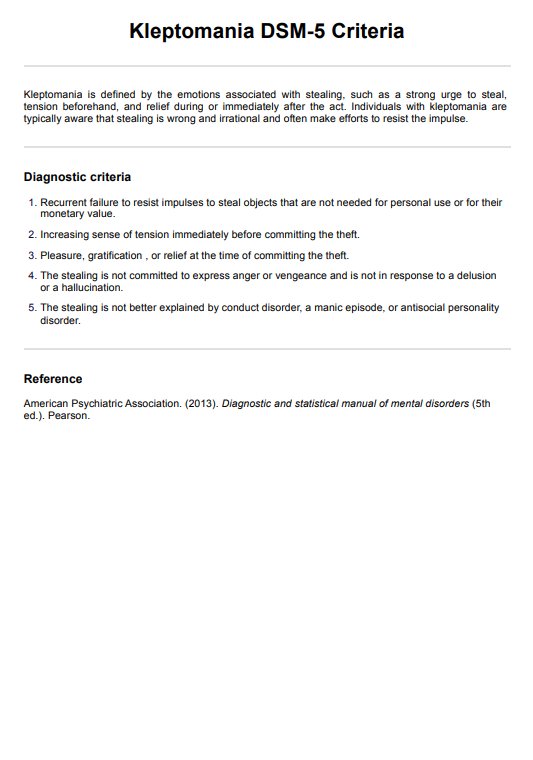
Kleptomania involves the recurrent, uncontrollable urge to steal items, even when they are not needed for personal use or have no significant monetary value. Unlike ordinary theft, kleptomania is driven by a psychological compulsion rather than personal gain, with individuals experiencing a sense of tension immediately before committing the theft and pleasure or relief at the time of stealing. This behavior significantly disrupts daily life and causes distress or impairment in social, occupational, or other important areas of functioning.
The 2013 Diagnostic and Statistical Manual of Mental Disorders, Fifth Edition (DSM-5) classifies kleptomania under Disruptive, Impulse-Control, and Conduct Disorders, specifically as an impulse-control disorder. Individuals with kleptomania typically have comorbid psychiatric conditions, such as anxiety disorders, mood disorders, and major depressive disorder, which can complicate diagnosis and treatment. It is crucial to distinguish kleptomania from conduct disorders or antisocial personality disorder, as kleptomania is not motivated by antisocial tendencies, anger, or a desire for revenge.
While kleptomania is an impulse control disorder, it shares traits with addictive disorders (substance use, gambling) and obsessive-compulsive disorder. Due to the high likelihood of psychiatric comorbidities, healthcare providers must evaluate the broader clinical picture, particularly when addressing repeated difficulties in resisting impulses.