
Gambling disorder is when gambling behavior causes significant distress or problems in daily life. It's diagnosed when an individual meets four or more of the DSM-5 diagnostic criteria, like needing more money to gamble or risking relationships, and not better explained by a manic episode.
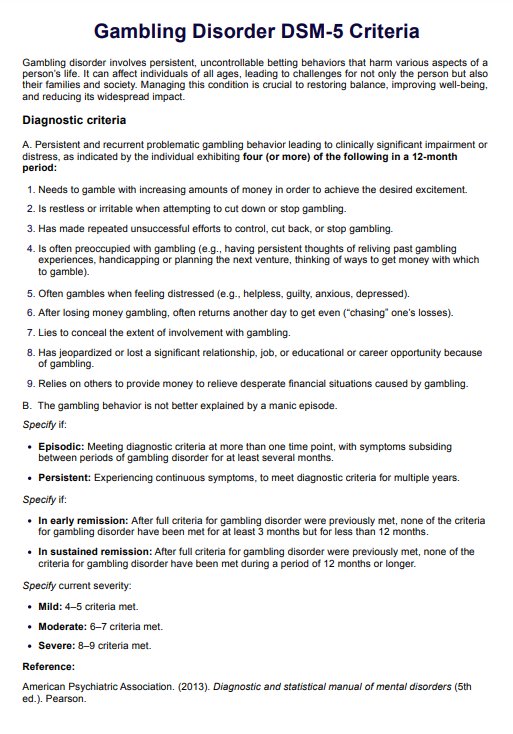



Gambling Disorder DSM-5 Criteria
Use this Gambling Disorder DSM-5 Criteria reference handout to incorporate into your clinical practice. Get this PDF for free!

Use Template
Gambling Disorder DSM-5 Criteria Template
Commonly asked questions
Treatment and management include cognitive behavioral therapy (CBT), family therapy, and being part of support groups.
Gambling behavior can often be managed with the right strategies and support, but success may vary depending on the individual. While some people regain control through therapy or self-help methods, others may find it more challenging and require ongoing assistance.
EHR and practice management software
Get started for free
*No credit card required
Free
$0/usd
Unlimited clients
Telehealth
1GB of storage
Client portal text
Automated billing and online payments