
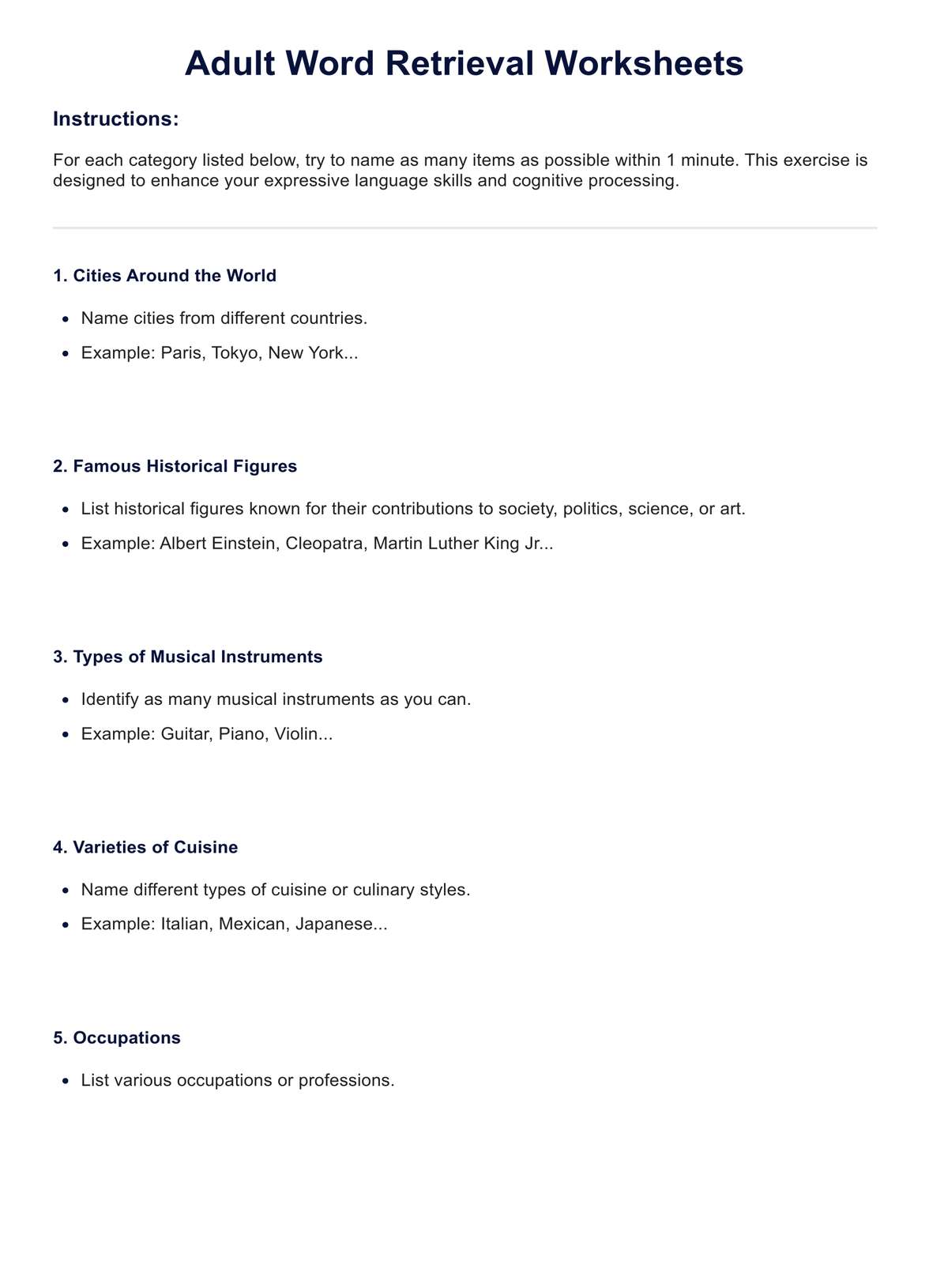




What is word retrieval?
Word retrieval, a critical aspect of language and speech, refers to the ability to recall and produce the right word at the right time. It's a complex cognitive function involving multiple brain processes and is crucial for effective communication. Speech-language pathologists often work with individuals who have word retrieval difficulties, a common issue in various speech and language disorders.
Key components of word retrieval:
- Speech and language processing: Word retrieval is an integral part of speech and language processing, allowing a person to access their vocabulary and articulate thoughts.
- Cognitive skills: It involves cognitive skills like memory, attention, and executive functioning.
- Semantic features: Retrieving a word requires understanding its semantic features - meaning, associations, and attributes.
- Word-finding skills: This is the ability to recall words promptly and accurately, essential for fluent speech and writing.
- Word-finding strategies: Techniques used to overcome word-finding difficulties, such as pausing to think, describing the word, or using a synonym.
- Target word: The specific word an individual is trying to recall.
- Word finding difficulties: Challenges in retrieving words, common in conditions like aphasia, dyslexia, or after a stroke. It can manifest as pauses in speech, use of fillers, or circumlocution.
- Special education: In special education contexts, strategies for improving word retrieval are often incorporated to assist children with language delays or disorders.
- Semantic feature analysis: A therapy technique where an individual describes the features of a word (like its category, function, or attributes) to aid in retrieval.
- First sound/first letter cue: A strategy where the initial sound or letter of a word is provided as a cue to aid in its recall.
- Speech therapy activities: Engaging exercises designed to improve word retrieval, such as naming objects, categorization games, or storytelling.
- Younger Children and Adults: Both younger children and adults can experience word retrieval issues, and the strategies used can be tailored to age and developmental level.
Importance in communication:
- Conversational fluency: Efficient word retrieval is vital for fluent and coherent conversation.
- Academic and professional success: It's crucial in academic settings and professional environments, where precise and timely word use is often necessary.
- Social interactions: Effective word retrieval supports social interactions, helping individuals express themselves clearly and understand others.
In summary, word retrieval is a fundamental component of language function, encompassing the recall and production of words. It's a skill that can be affected by various language disorders, and speech-language pathologists often employ targeted strategies to help individuals improve their word retrieval abilities, thereby enhancing their overall communication skills.









