




What is a Strabismus Test?
Strabismus, also known as squint or crossed eyes, is a condition in which the eyes are misaligned and do not look in the same direction at the same time. It typically affects both children and adults, though it most commonly develops in infancy or early childhood.
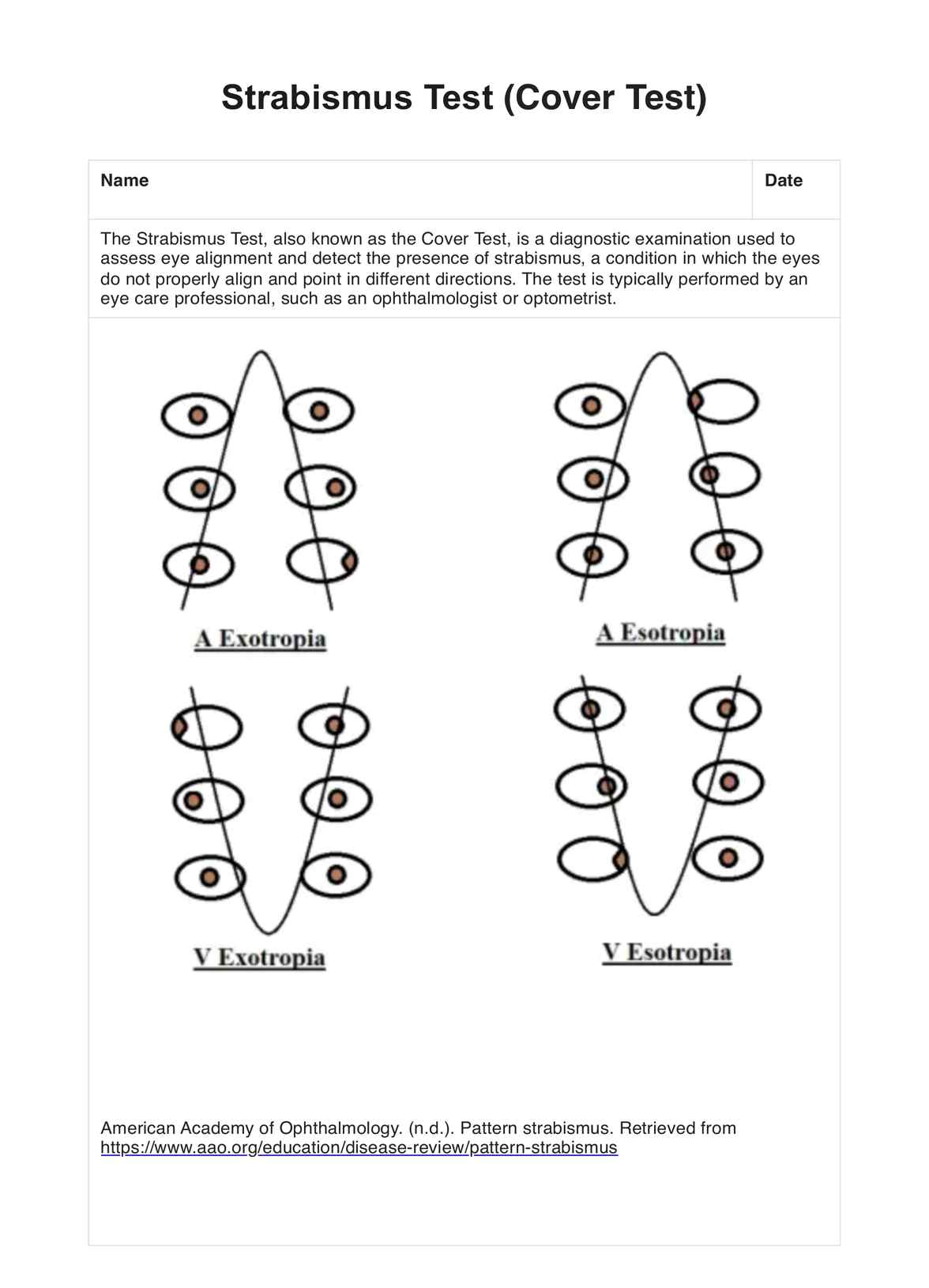
In strabismus, one eye may turn outward (exotropia), inward (esotropia), upward (hypertropia), or downward (hypotropia). It can be constant or intermittent, and one eye may turn in a different direction than the other.
Strabismus is usually treated with corrective lenses, patching, vision therapy, botulinum toxin injections (Botox), or, in some cases, surgery. Depending on the type and severity of strabismus, treatment may improve the alignment of the eyes or develop better eye coordination between them.
A, or Cover Test, is the most commonly used assessment to help diagnose strabismus. It involves covering each eye in turn and observing eye movement, indicating strabismus.
Note that this test only identifies the presence of strabismus and does not provide any information about its severity or type. Further evaluation is required to determine the type and degree of strabismus present.









