How to use the Panic Disorder Severity Scale
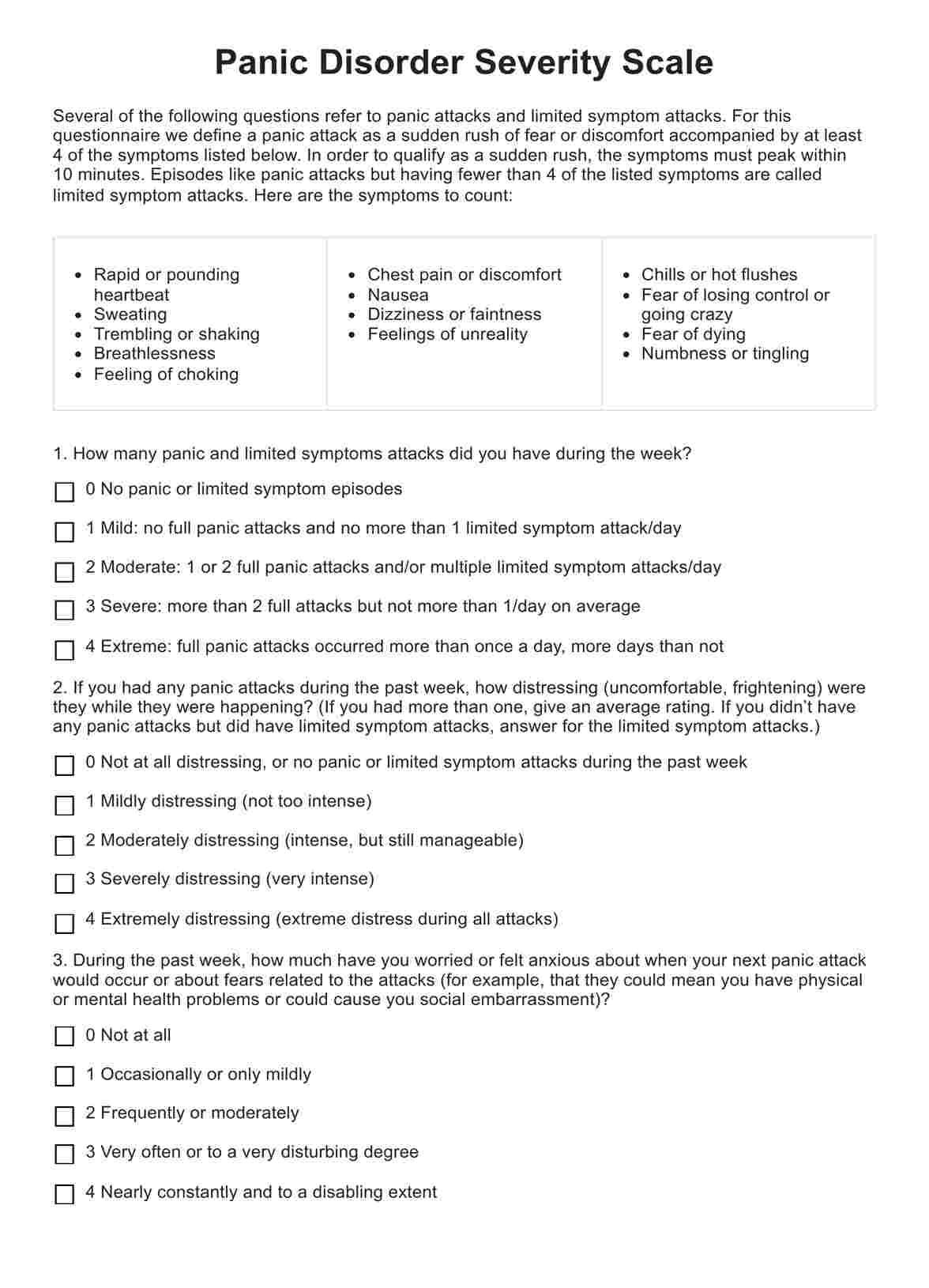
The Panic Disorder Severity Scale is a clinical tool used to gauge the severity of a patient's panic attacks, specifically those they've experienced recently. The scale begins with a definition of a panic attack and then mentions that at least four symptoms normally accompany a panic attack. The symptoms are listed below the instructions.
The scale also mentions that for an attack to be considered a panic attack, its accompanying symptoms must peak within ten minutes. If the attack is accompanied by less than four of the symptoms listed in the instructions, it is considered a limited-symptom attack.
After reading the instructions, patients or those engaging with the scale will answer seven questions:
- How many panic and limited-symptom attacks did you have during the week?
- If you had any panic attacks during the past week, how distressing (uncomfortable, frightening) were they while they were happening? (If you had more than one, give an average rating. If you didn't have any panic attacks but did have limited symptom attacks, the answer for the limited symptom attacks.)
- During the past week, how much have you worried or felt anxious about when your next panic attack would occur or about fears related to the attacks (for example, that they could mean you have physical or mental health problems or could cause you social embarrassment)?
- During the past week, were there any places or situations (e.g., public transportation, movie theaters, crowds, bridges, tunnels, shopping malls, being alone) you avoided or felt afraid of (uncomfortable in, wanted to avoid, or left), because of fear of having a panic attack? Are there any other situations that you would have avoided or been afraid of if they had come up during the week, for the same reason? If yes to either question, please rate your level of fear and avoidance this past week.
- During the past week, were there any activities (e.g., physical exertion, sexual relations, taking a hot shower or bath, drinking coffee, watching an exciting or scary movie) that you avoided, or felt afraid of (uncomfortable doing, wanted to avoid or stop), because they caused physical sensations like those you feel during panic attacks or that you were afraid might trigger a panic attack? Are there any other activities that you would have avoided or been afraid of if they had come up during the week for that reason? If yes to either question, please rate your level of fear and avoidance of those activities this past week.
- During the past week, how much did the above symptoms altogether (panic and limited symptom attacks, worry about attacks, and fear of situations and activities because of attacks) interfere with your ability to work or carry out your responsibilities at home? (If your work or home responsibilities were less than usual this past week, answer how you think you would have done if the responsibilities had been usual.)
- During the past week, how much did panic and limited symptom attacks, worry about attacks and fear of situations and activities because of attacks interfere with your social life? (If you didn't have many opportunities to socialize this past week, answer how you think you would have done if you did have opportunities.)
Each item has five answer options, each with corresponding points. The person engaging with the scale simply has to pick the answer that best represents their recent bouts with panic attacks. The maximum score a person can get is 28.
The score serves as an initial indication of whether an individual might be dealing with a panic disorder. This panic disorder assessment provides a snapshot of the person's experiences and symptoms, shedding light on their frequency, intensity, and impact on daily life.
A higher score typically suggests that the respondent frequently experiences severe symptoms associated with panic disorder, such as sudden, intense fear, palpitations, sweating, trembling, or feelings of impending doom. This could indicate a likelihood of panic disorder, but it's crucial to remember that this test is not definitive. If a person's overall panic disorder severity gets a score of 9 or higher, it's best to have them undergo a formal diagnostic assessment.
On the other hand, a lower score indicates fewer or less severe symptoms. While this might suggest that the individual is less likely to have a panic disorder, it does not eliminate the possibility. Other factors, such as the individual's overall mental health, personal circumstances, and physical health, can influence these symptoms.