









What is Dialectical Behavior Therapy?
is a comprehensive and evidence-based therapeutic approach initially developed by Dr. Marsha M. Linehan to treat individuals with complex emotional regulation difficulties, particularly those diagnosed with borderline personality disorder. Over time, DBT has evolved into a versatile framework applicable to various mental health challenges, including improving interpersonal relationships and enhancing assertiveness skills.
DBT emphasizes a balance between acceptance and change, employing various techniques to foster mindfulness, emotion regulation, distress tolerance, and interpersonal effectiveness. In improving the ability to say "no," DBT offers invaluable insights and tools to significantly benefit healthcare practitioners and their clients.
One of the core elements of DBT is Interpersonal Effectiveness, which addresses the challenges individuals face in communicating their needs and setting boundaries within relationships. Many individuals, whether due to fear of rejection, a desire to please others, or a history of unhealthy dynamics, struggle to say "no" assertively and respectfully.
DBT equips clients with the skills to navigate such situations effectively. Through mindfulness techniques, clients become more attuned to their emotions and triggers. This awareness enables them to identify patterns of behavior that inhibit them from saying "no" when needed. They learn to recognize the feelings underlying their hesitance and apply distress tolerance skills to manage any discomfort.
DBT provides structured methods for improving interpersonal communication. Clients learn to create "I" statements that express their feelings, needs, and boundaries without blaming or criticizing others. By practicing assertiveness through role-playing and real-life scenarios, clients gradually gain confidence in saying "no" while preserving their relationships.
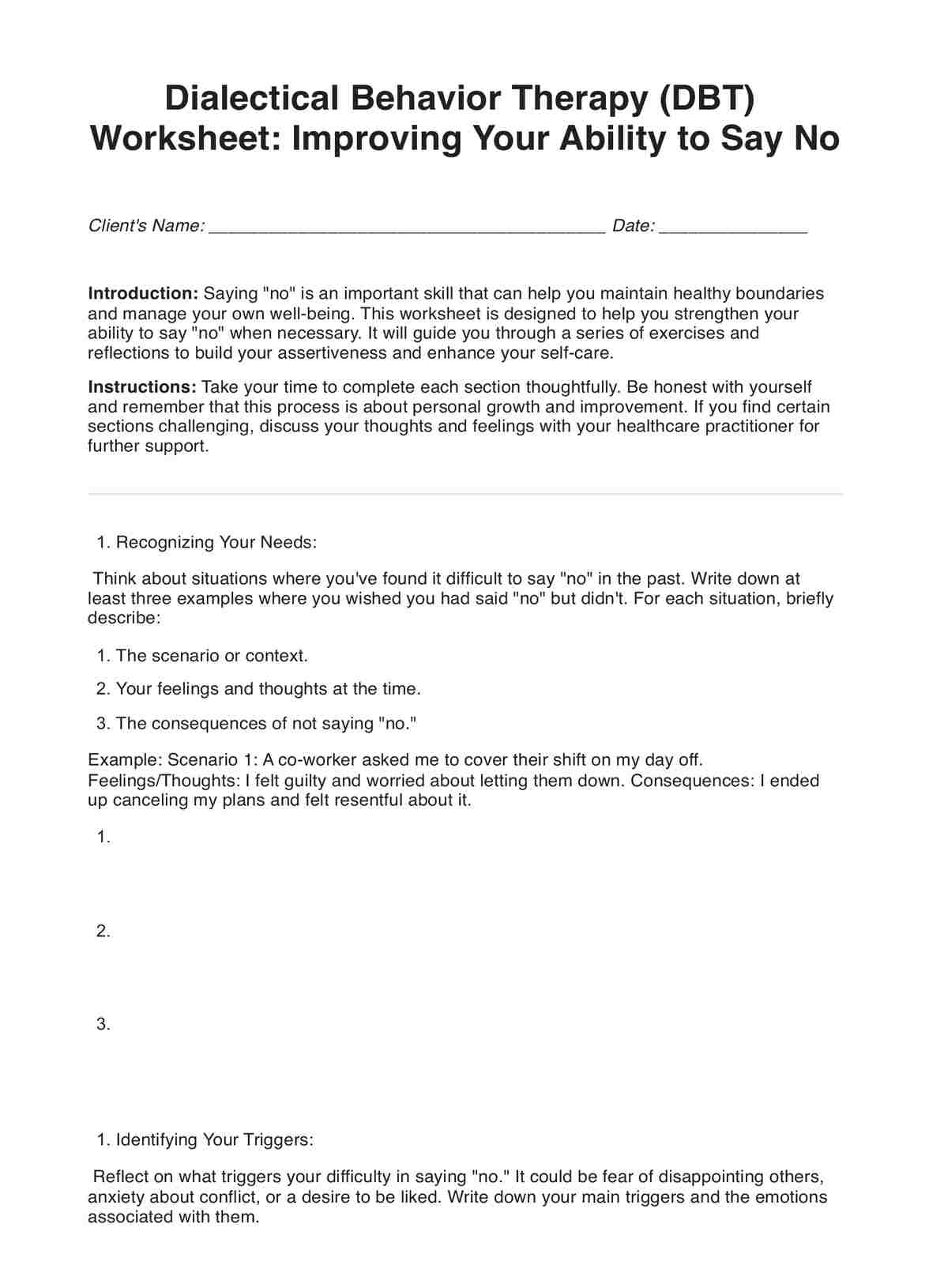
The Improving Your Ability to Say No DBT Worksheet offers a structured approach to strengthening assertiveness skills. It guides clients through recognizing triggers, aligning actions with personal values, rehearsing empowered responses, and seeking support when needed. Combining mindfulness, emotion regulation, and interpersonal effectiveness techniques, DBT allows individuals to authentically say " no, " fostering healthier relationships built on clear communication and mutual respect.
As healthcare practitioners, integrating DBT techniques into therapy sessions can significantly contribute to clients' well-being and developing their interpersonal skills. The focus on improving assertiveness and saying "no" within relationships ultimately helps individuals cultivate more balanced, fulfilling, and authentic connections.









