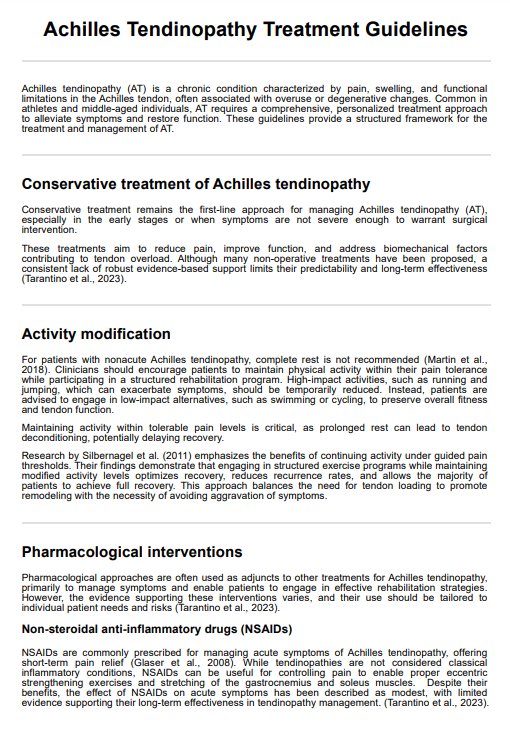
Achilles Tendonitis Treatment Guidelines
Our comprehensive treatment guidelines provide evidence-based strategies to alleviate symptoms and restore function in Achilles tendonitis. Here is a brief overview of the available treatment options:
Conservative treatment of Achilles tendinopathy
Conservative approaches are the first-line treatment for AT and emphasize reducing pain, improving tendon function, and addressing biomechanical factors contributing to tendon overload.
- Activity modification: Patients should avoid high-impact activities like running and jumping but remain active within tolerable pain limits. Low-impact exercises like swimming or cycling maintain fitness while preventing tendon deconditioning. Structured rehabilitation programs emphasizing gradual loading support tendon remodeling and recovery.
- Therapeutic exercise: Eccentric loading exercises like the Alfredson protocol are the gold standard for managing non-insertional AT. These exercises promote collagen remodeling and improve tensile strength, with heavy slow resistance training offering a viable alternative for some patients.
- Physical therapy modalities: Adjunct therapies like extracorporeal shockwave therapy (ESWT) and ultrasound therapy may relieve pain and stimulate healing. ESWT is particularly beneficial when combined with eccentric exercises, though its application requires careful protocol adherence for optimal outcomes.
Pharmacological interventions
Pharmacological treatments address pain management and symptom control to support effective rehabilitation strategies.
- NSAIDs and cryotherapy: NSAIDs can provide short-term pain relief, though their role in tendinopathy remains limited. Cryotherapy offers temporary analgesia by reducing tendon metabolism and blood flow but is not considered a definitive treatment.
- Nitric oxide therapy: Topical nitric oxide administration has shown mixed results in improving AT symptoms. While early studies were promising, recent evidence suggests no significant long-term benefits, highlighting the need for further research.
Surgical intervention
Surgery is reserved for patients who do not respond to six months of conservative management. Options range from traditional open surgery to minimally invasive techniques, such as percutaneous longitudinal tenotomies and endoscopic debridement, which reduce recovery time and complication rates.
Open surgery
Open surgery is typically used in severe or complex cases, such as those involving extensive degenerative tissue or significant structural damage to the tendon. This procedure involves an incision directly accessing the Achilles tendon, removing damaged or necrotic tissue, and repairing or reconstructing the tendon as needed.
Minimally invasive techniques
Minimally invasive procedures are increasingly preferred for reduced recovery and complication rates. Techniques such as percutaneous longitudinal tenotomies involve small incisions to remove damaged tissue and stimulate healing. At the same time, endoscopic debridement allows surgeons to remove degenerative areas precisely using a camera and specialized instruments.