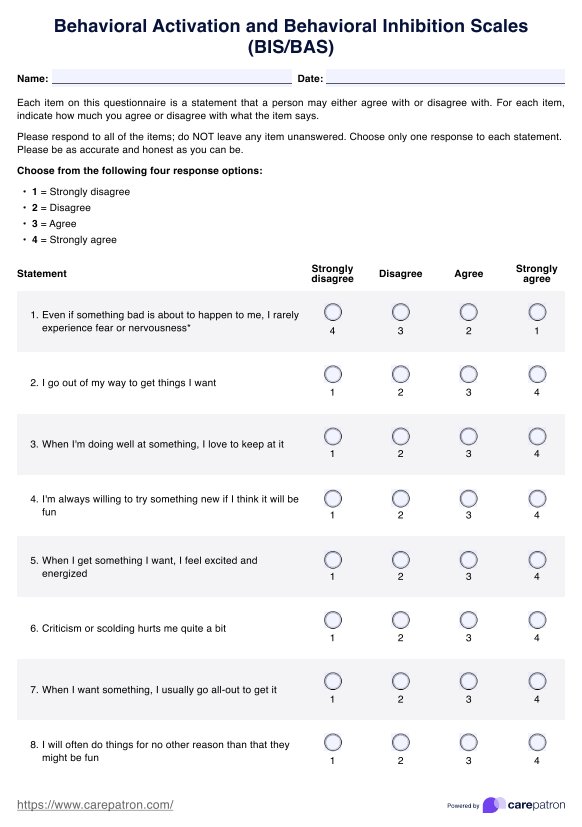




What is the BIS/BAS?
The behavioral inhibition system (BIS) and behavioral activation system (BAS) are central components of Gray’s (1978) reinforcement sensitivity theory (RST), a framework for understanding personality and emotional responses based on sensitivity to rewards and punishments. These systems are theorized to regulate behavior and emotions by responding to different environmental stimuli, particularly incentives and threats.
Behavioral activation system
The BAS is associated with sensitivity to rewards and incentives. It motivates individuals to approach goals, pursue rewards, and engage in behaviors that lead to positive outcomes. BAS activity is linked to positive emotions, such as hope and excitement, and is considered a key driver of approach-oriented behaviors. According to the revised reinforcement sensitivity theory (Gray & McNaughton, 2000), the BAS responds to both conditioned (learned) and unconditioned (innate) incentives, suggesting it plays a role in seeking out opportunities for reward, whether these are familiar or novel.
Behavioral inhibition system
The BIS, on the other hand, is sensitive to conflict and potential punishment. It is activated in situations involving conflicting motivations, such as when competing approaches and avoidance cues are present. The BIS is not solely triggered by threats or aversive stimuli but also by the need to resolve conflicts between goals, especially when both rewards and punishments are present. BIS activation is linked to feelings of anxiety and cautious behavior as the system works to manage risk and resolve uncertainties in the environment.