
A throat examination is a medical procedure a doctor conducts to inspect the throat, including the tongue, tonsils, and other parts of the oral cavity and neck. This exam is recommended for patients experiencing symptoms such as sore throat, pain, swelling, difficulty swallowing, dysphagia, or signs of infection or disease. It's also crucial for identifying foreign objects, assessing risks for conditions like cancer, or evaluating any abnormalities in the mouth, nose, and throat area.
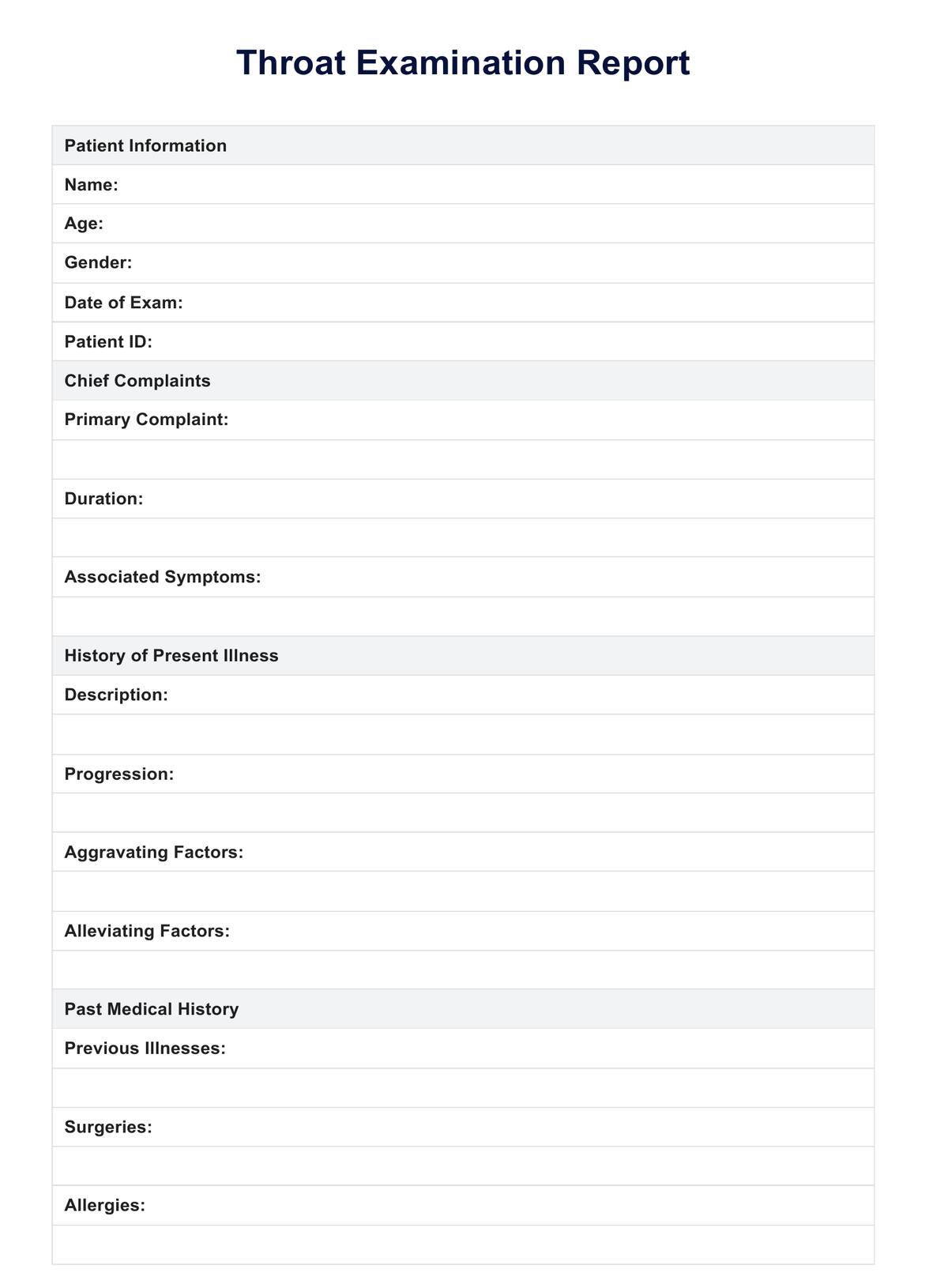



Throat Exam
A comprehensive throat examination template for healthcare professionals, including symptoms, diagnosis, and treatment plan sections.

Use Template
Throat Exam Template
Commonly asked questions
An indirect throat examination involves using a small mirror and a light source to indirectly view the throat and larynx, usually without the need for numbing medicine. This indirect method contrasts with direct examinations, where a scope is inserted into the throat or endoscopy procedures that may require sedation or anesthesia. Indirect exams are less invasive and can be quickly performed in a doctor's office, making them suitable for initial assessments and for patients who may experience discomfort with more invasive techniques.
You may experience slight discomfort or gagging during a throat exam, especially if tools are inserted into your mouth or nose. Numbing medicine may ease pain, especially for more invasive procedures like direct laryngoscopy or endoscopy. Risks and complications are rare but can include minor bleeding, gagging, or allergic reactions to the numbing medicine. Your doctor will take precautions to minimize these risks and ensure the examination is as comfortable as possible.










EHR and practice management software
Get started for free
*No credit card required
Free
$0/usd
Unlimited clients
Telehealth
1GB of storage
Client portal text
Automated billing and online payments