
No. It can only determine what type of hearing loss the patient has and in turn, determine which part of the ear is related to the hearing loss. That’s why this and the Weber Test are used as part of a comprehensive examination. Other tests should be able to determine the cause, but the direction for these tests will be set by what type of hearing loss the patient has.
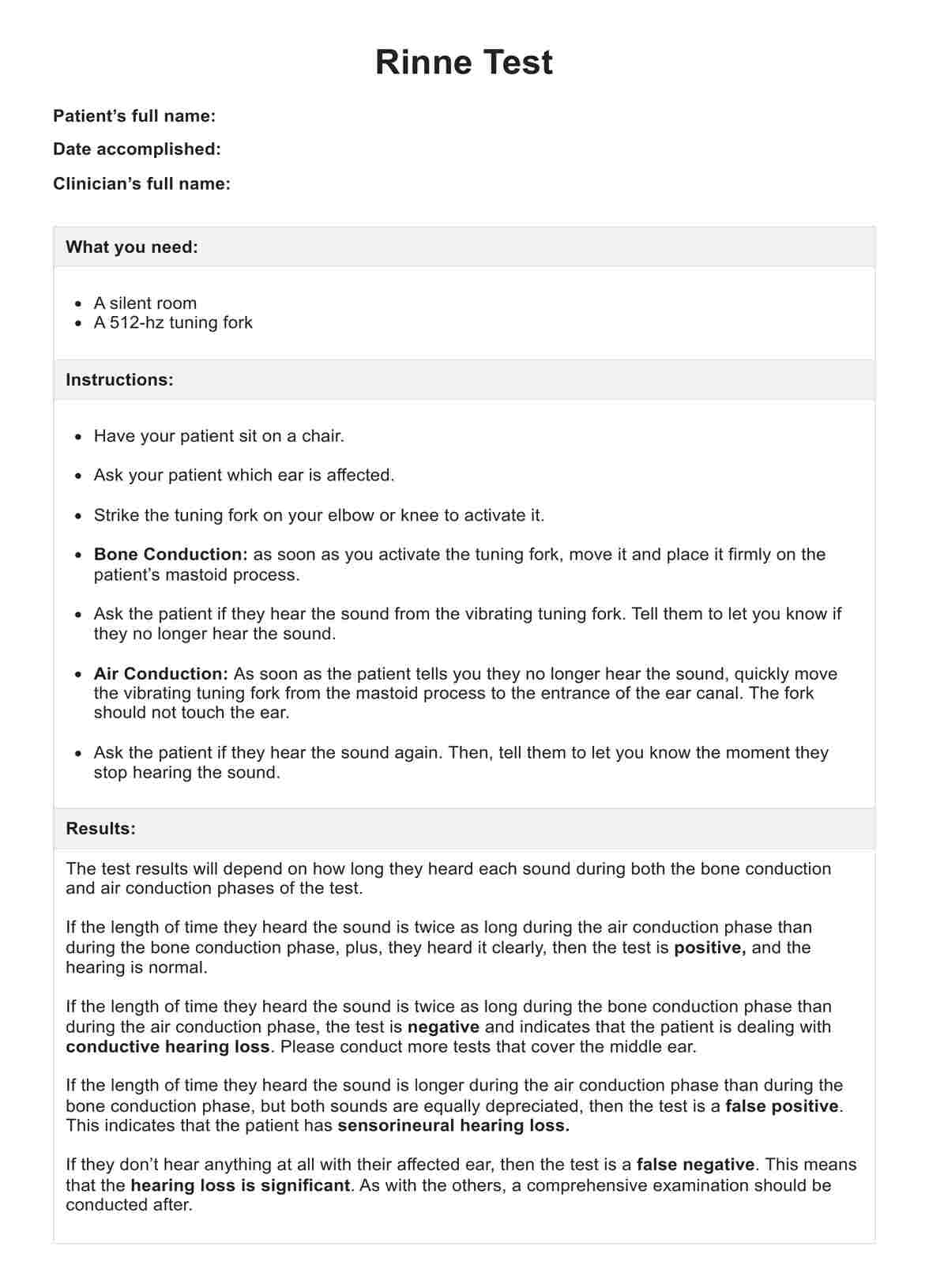



Rinne Test
If you have a patient consulting you about hearing loss in one of their ears, one of the tests you can conduct is the Rinne Test to determine if the patient is dealing with conductive or sensorineural hearing loss.

Use Template
Rinne Test Template
Commonly asked questions
Sadly, that is not a good sign because that means they are likely to have significant hearing loss in the ear. You should check first if there is earwax or fluid blockage. If their ears are clean, it’s best to conduct further examination to determine why the hearing loss is significant.
The answer is no to both questions. The Rinne Test is a non-invasive exam. The tuning fork will not be used to dig into the skin, nor will it be placed inside the ear of the patient. It’s a test that relies on the sound produced by the tuning fork, and all the patient and the healthcare professional need to do is check if the patient can hear the sounds.










EHR and practice management software
Get started for free
*No credit card required
Free
$0/usd
Unlimited clients
Telehealth
1GB of storage
Client portal text
Automated billing and online payments