
A higher score on the PSS typically indicates higher levels of perceived stress. It reflects that the individual has experienced feelings such as being unable to control important things in their life, feeling nervous, or having overwhelming difficulties in the last month. Higher scores may suggest a need for strategies to better cope with life's stressors.
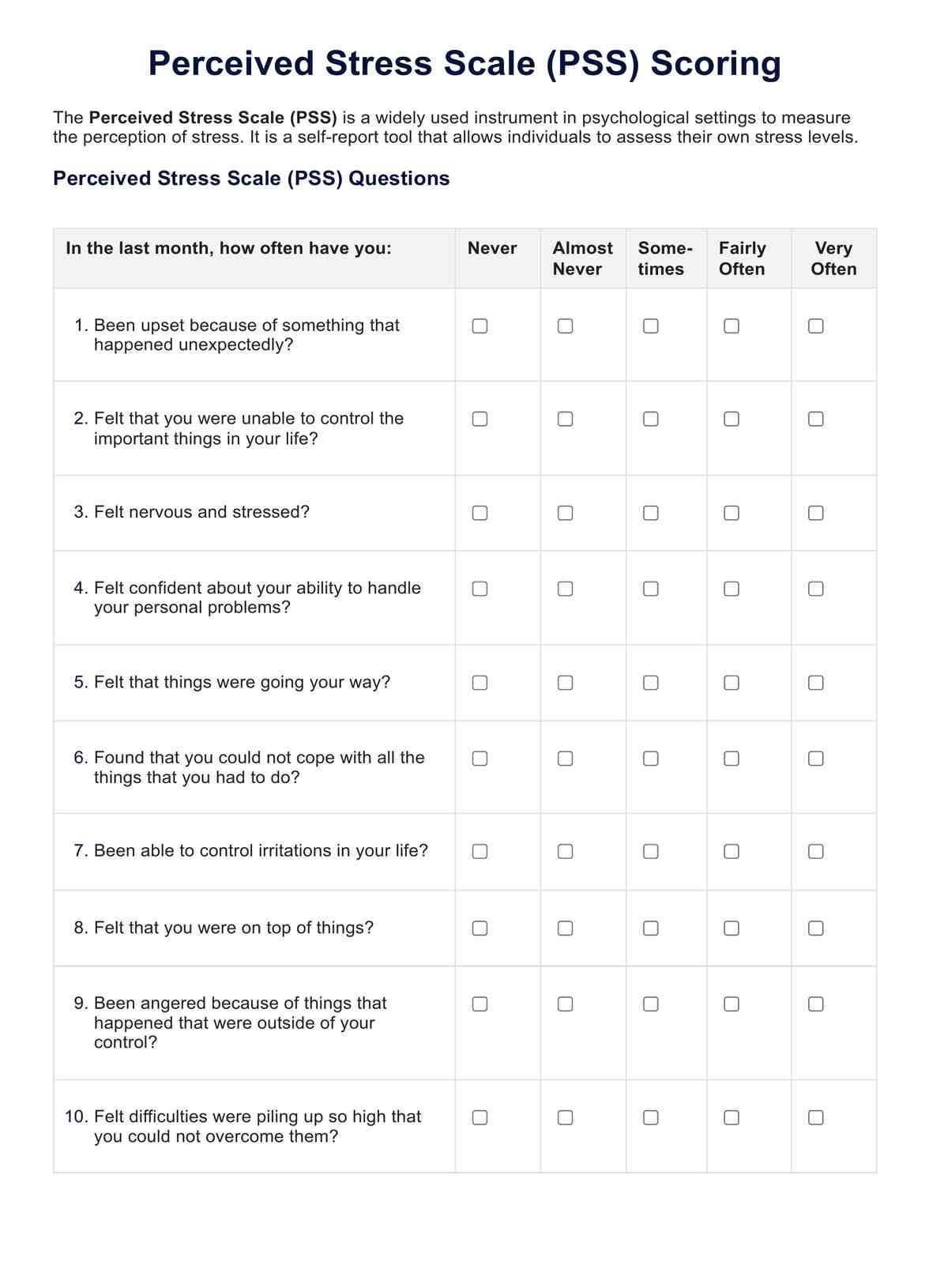



PSS Scoring
Understand the Perceived Stress Scale (PSS) scoring: Learn how to interpret scores to assess stress levels and identify effective coping strategies.

Use Template
PSS Scoring Template
Commonly asked questions
The PSS helps individuals and healthcare providers identify the frequency and intensity of perceived stress, particularly relating to irritating life hassles. By understanding these scores, individuals can determine areas where they might need to develop more effective coping strategies or seek support from reputable medical services.
Yes, the PSS is a clinically validated diagnostic instrument. It measures perceived stress by assessing feelings and thoughts over the last month, including how often individuals felt unable to control important things, felt nervous, or dealt successfully with personal problems.










EHR and practice management software
Get started for free
*No credit card required
Free
$0/usd
Unlimited clients
Telehealth
1GB of storage
Client portal text
Automated billing and online payments