



Neuro Ophthalmology ExamAI Template IconToolbar IconShare Icon

Neuro Ophthalmology Exam

Explore our comprehensive neuro-ophthalmology exam guide aiding precision diagnostics, tailored treatment plans, and expert care for optimal eye and brain health.

Emma Hainsworth avatar

By Emma Hainsworth on Aug 2, 2025.

Fact Checked by RJ Gumban.

Use Template

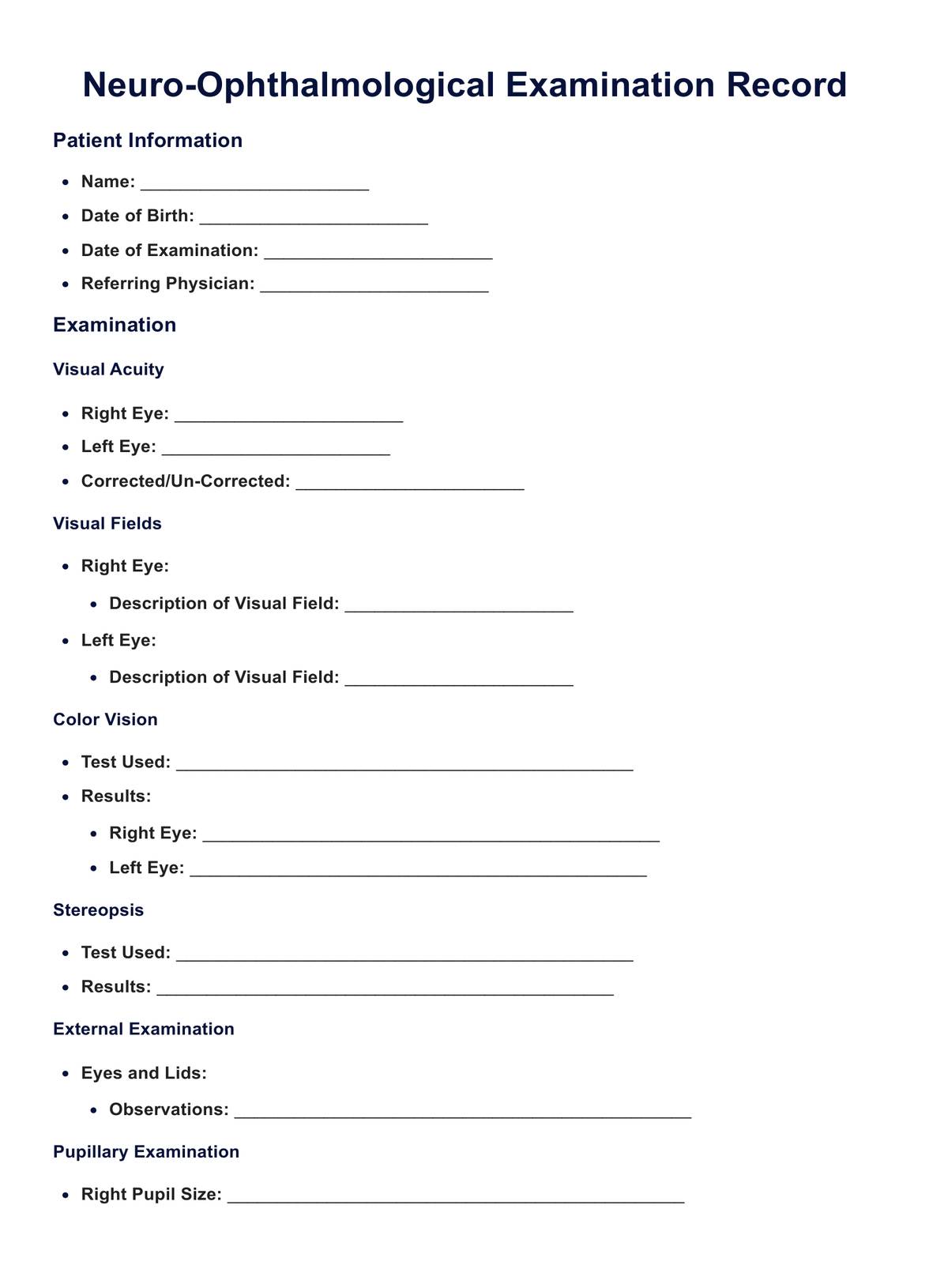
Neuro Ophthalmology Exam Template

Download PDF Template

Commonly asked questions

A neuro-ophthalmological assessment for visual loss includes evaluating the best corrected visual acuity for distance and central vision. Tests like fundus examination and optical coherence tomography (OCT) assess the health of the optic nerves and macula. The assessment may include pupil testing, confrontation visual fields, and a detailed review of any refractive error. The neuro-ophthalmologist aims to diagnose macular degeneration, optic neuritis, or central serous retinopathy.

Neuroophthalmologists use a combination of patient history, clinical examination, and diagnostic tests to perform differential diagnosis. They assess peripheral vision loss through visual field testing and examine the optic disc with a slit lamp or OCT. Conditions like glaucoma, stroke, and optic nerve diseases are considered. Pupil testing and examination of eyelid abnormalities may also provide crucial diagnostic information.

Neuro-ophthalmologists conduct a detailed eye examination for suspected optic nerve disorders, including a fundus examination to visualize the optic disc. OCT is used to assess the optic nerve fiber layer, and visual field tests check for characteristic patterns of visual loss. Additional tests might include an MRI to visualize the optic nerves and assess for demyelinating diseases in cases like optic neuritis.

EHR and practice management software

Get started for free

*No credit card required

Free

$0/usd

Unlimited clients

Telehealth

1GB of storage

Client portal text

Automated billing and online payments







