
A meniscus tear is typically diagnosed through a combination of medical history, physical examination, and imaging tests. During the physical exam, a healthcare provider assesses the knee joint for swelling, tenderness, or limited knee motion. Specific maneuvers, such as the McMurray test, may be used to identify the tear. Imaging, particularly MRI, is the gold standard for confirming a torn meniscus and assessing associated knee injuries or damage to soft tissues.
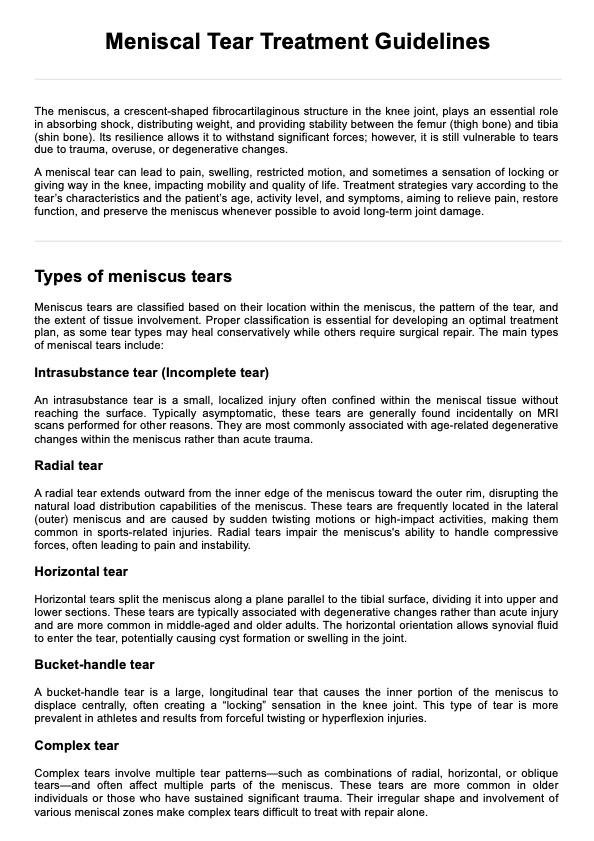



Meniscal Tear Treatment Guidelines Handout
Download a free Meniscus Tear Treatment Guidelines Handout – a comprehensive resource to educate patients on treatment options.

Use Template
Meniscal Tear Treatment Guidelines Handout Template
Commonly asked questions
Common symptoms of a lateral meniscus tear in an injured knee include pain, swelling, and a popping sensation within the knee joint. Many patients also experience difficulty bearing weight, a feeling that the knee might give way, or even knee locking if the torn portion becomes displaced. These symptoms are frequently seen in sports-related injuries and contact sports, making a torn meniscus one of the most common knee injuries treated by orthopedic surgeons.
Most meniscus tears do not require surgery and can heal with conservative treatment such as the Rest, Ice, Compression, and Elevation (RICE) protocol, physical therapy, and medications to relieve pain. However, tears in the avascular "white zone" or those caused by acute trauma may require arthroscopic surgery to remove or repair the torn portion. For chronic or degenerative tears, non-surgical approaches may be less effective, and surgical intervention may be necessary.










EHR and practice management software
Get started for free
*No credit card required
Free
$0/usd
Unlimited clients
Telehealth
1GB of storage
Client portal text
Automated billing and online payments