
Adults with autism may exhibit various behaviors, including difficulties with social interactions, communication, and repetitive behaviors. They may have trouble understanding social cues, initiating or maintaining conversations, and reading nonverbal signals. They may also exhibit repetitive behaviors like hand flapping or rocking and have vital interests or fixations on specific topics.
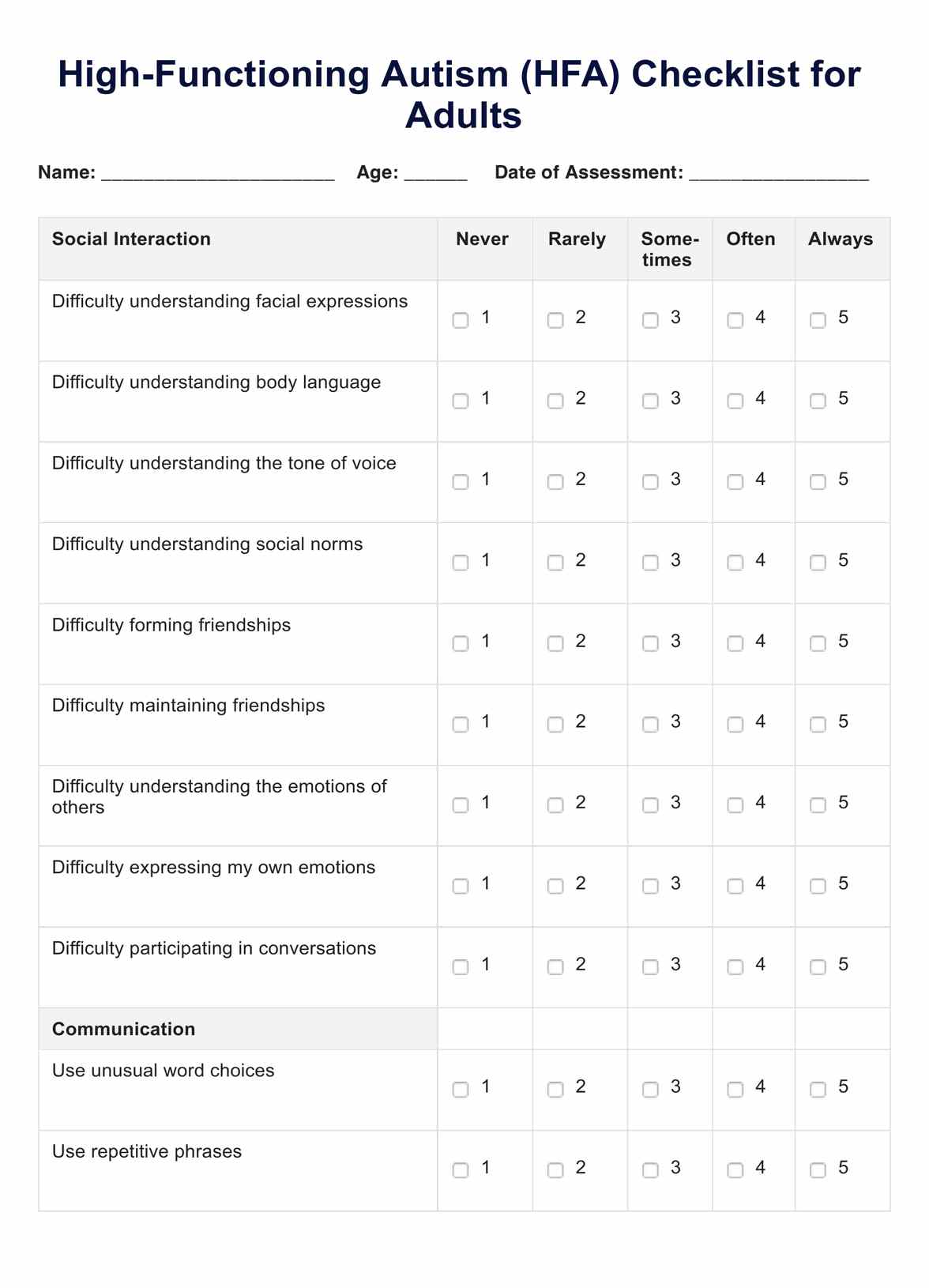



High-Functioning Autism in Adults Checklist
Streamline the evaluation of high-functioning autism in adults using our concise checklist template for effective assessment and monitoring.

Use Template
High-Functioning Autism in Adults Checklist Template
Commonly asked questions
The diagnostic criteria for autism in adults are based on the DSM-5, which defines autism spectrum disorder (ASD) as persistent deficits in social communication and social interaction across multiple contexts, as manifested by deficits in social-emotional reciprocity, nonverbal communicative behaviors, and developing, maintaining, and understanding relationships.
Autism in adults can be confused with other conditions, such as social anxiety disorder, obsessive-compulsive disorder, or intellectual disability. Some individuals may be misdiagnosed with a different condition due to the overlap in symptoms.










EHR and practice management software
Get started for free
*No credit card required
Free
$0/usd
Unlimited clients
Telehealth
1GB of storage
Client portal text
Automated billing and online payments