
Biceps tendonitis exercises are designed to promote pain relief, reduce swelling, and restore function to the shoulder joint and biceps tendons. These gentle exercises target key areas, including the biceps muscles, rotator cuff muscles, and shoulder blade, to strengthen the injured arm and improve mobility.
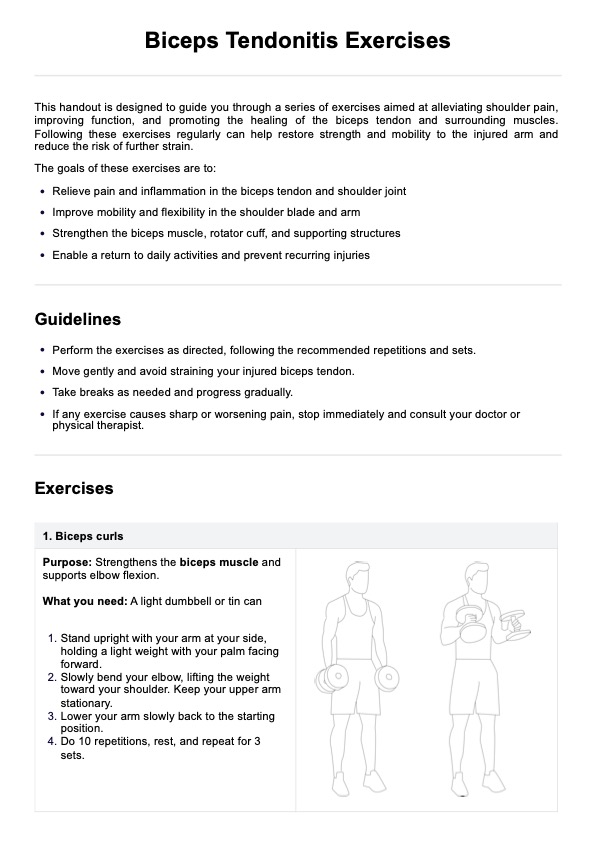



Biceps Tendonitis Exercises Handout
Discover the benefits of our Biceps Tendonitis Exercises Handout for physical therapists. Download now and enhance patient care with this PDF.

Use Template
Biceps Tendonitis Exercises Handout Template
Commonly asked questions
It’s important to avoid making pain worse by focusing on gentle exercises that prioritize the injured side. Keep movements slow and controlled, such as when you slowly raise or lower your arm, gently turn your forearm, or move into a stretch position. Avoid pulling the shoulder backwards or using heavy weights during tendonitis exercises. Exercises like the sleeper stretch and forearm twists should be performed to a gentle stretch point without causing discomfort. Always consult a physical therapist to ensure proper form and avoid aggravating the coracoid process, short head, or long head of the biceps tendons.
Start with gentle stretches and light movements, such as letting the injured arm hang or gently bending the elbow. Use tools like an exercise band positioned at waist height to perform movements like shoulder external rotation. Gradually progress to more advanced exercises, such as bicep curls or forearm twists, ensuring your elbow remains at a right angle for stability. If you feel pain during any movement, stop immediately and consult your physical therapist.










EHR and practice management software
Get started for free
*No credit card required
Free
$0/usd
Unlimited clients
Telehealth
1GB of storage
Client portal text
Automated billing and online payments