
No, activities of daily living (ADLs) may vary from person to person, depending on lifestyle, age, health condition, and individual abilities. The essential ADLs are generally necessary for everyone regardless of these factors. Still, the specific activities considered essential (e.g., shower vs. bath, type of shopping and meal preparation that is necessary, or preferences for basic activities) can vary from person to person.
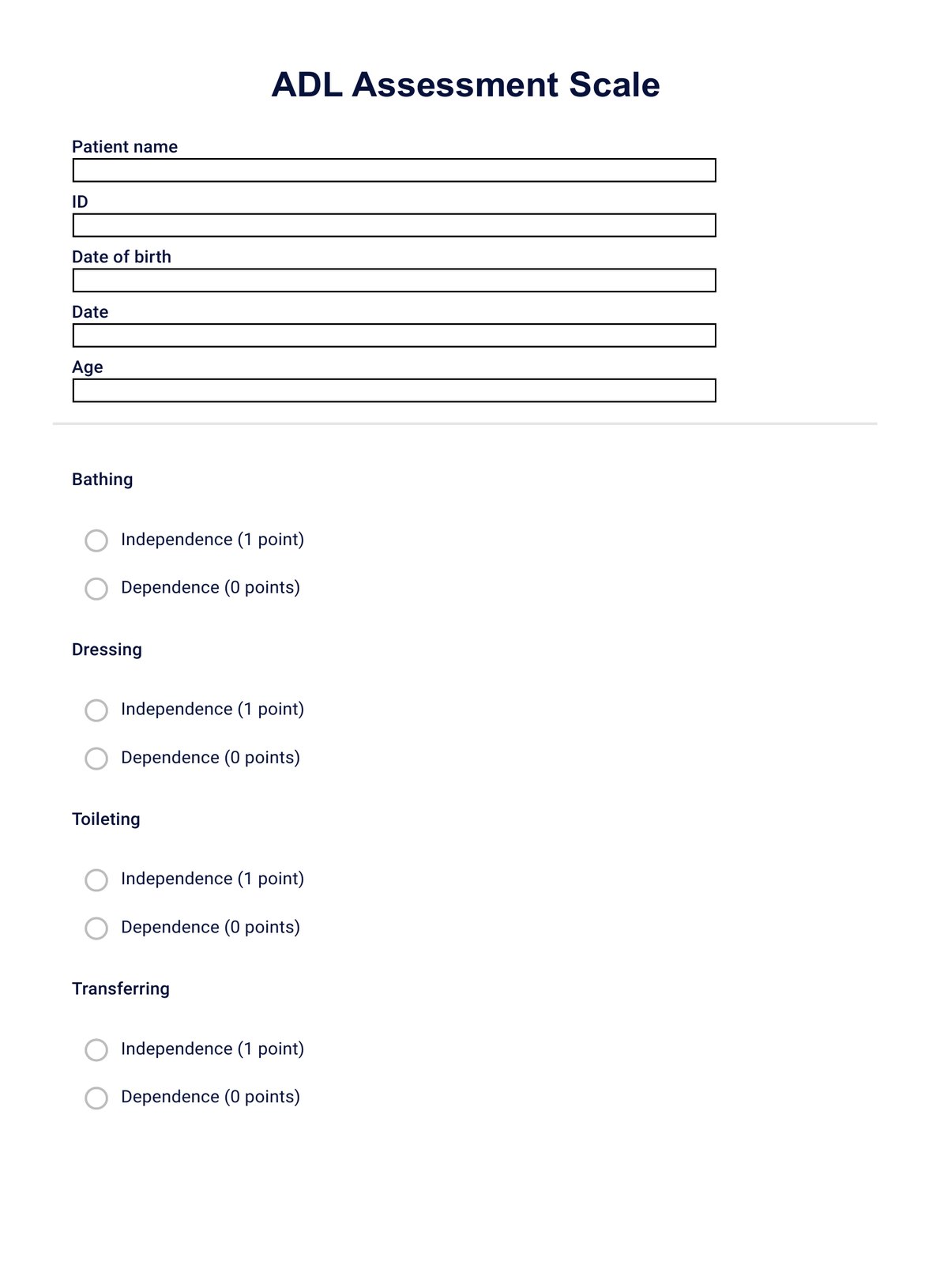



ADL Assessment Scale
Assess your client's level of function against practical activities of daily living with our ADL assessment scale.

Use Template
ADL Assessment Scale Template
Commonly asked questions
The ADL score is a numerical representation of an individual's functional status. It is measured on a scale, with higher scores indicating greater independence and lower scores reflecting a greater need for assistance or dependence. The scoring system helps healthcare professionals, caregivers, and researchers evaluate a person's functional status and design appropriate interventions or support services based on their level of independence in performing ADLs.
Cognitive impairment, such as dementia or other neurological disorders, can significantly impact a person's ability to perform ADLs. As cognitive function declines, individuals may experience difficulty with memory, decision-making, problem-solving, and overall mental processing. This can lead to challenges in performing basic self-care tasks, including many essential and instrumental daily living activities.










EHR and practice management software
Get started for free
*No credit card required
Free
$0/usd
Unlimited clients
Telehealth
1GB of storage
Client portal text
Automated billing and online payments