
The frequency of eye examinations can vary depending on age, health conditions, and risk factors for eye diseases. Generally, it's recommended that adults have a comprehensive eye exam every 1 to 2 years. Children should have their vision checked at six months, three years, before first grade, and regularly during school. People over 60 should have annual exams. Those with specific risk factors, such as diabetes, a family history of glaucoma, previous eye injuries, or who wear contact lenses, may need more frequent exams as advised by their eye care professional.
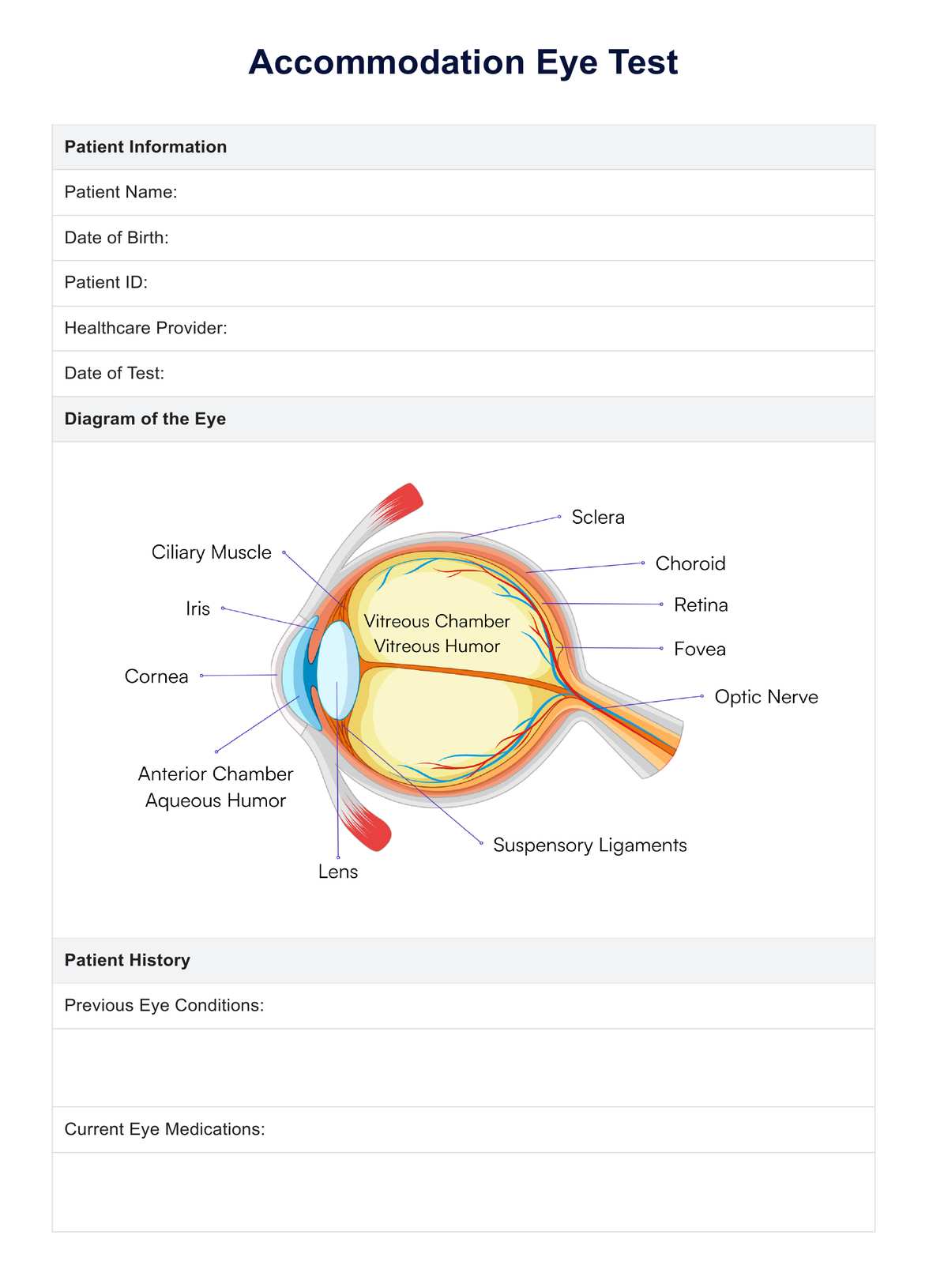



Accommodation Eye Test
Learn about the Accommodation Eye Test, PERRLA, and signs of accommodative insufficiency in our comprehensive eye health guide.

Use Template
Accommodation Eye Test Template
Commonly asked questions
An eye care professional will observe pupils' responses to focusing on a nearby object to check pupils for accommodation. The examiner will move an object, like a pen or a finger, towards the patient's nose and observe the pupils. The normal response is for the pupils to constrict (become smaller) and for the eyes to converge as the object comes closer. This tests the "accommodation reflex," which is the eye's ability to adjust its lens shape to focus on near objects.
Normal accommodation of the eye refers to the eye's ability to change its focus from distant to near objects. This is achieved by the lens inside the eye changing its shape. For young adults, the average maximum accommodation is around 14 to 16 diopters, which means they can focus on objects as close as six to seven centimeters from the eye. However, this ability diminishes with age, a condition known as presbyopia, starting around the age of 40 to 50, reducing the eye's ability to focus on close objects.










EHR and practice management software
Get started for free
*No credit card required
Free
$0/usd
Unlimited clients
Telehealth
1GB of storage
Client portal text
Automated billing and online payments