
During a physical examination, assessing the abdominal wall muscles is crucial for detecting abnormalities in the patient's abdomen. This includes examining the strength and tone of the abdominal musculature. The evaluation helps identify issues like muscle weakness, hernias, or abdominal pathology. It often involves techniques like palpation and observing the patient's abdominal muscles while they take a deep breath or perform specific movements.
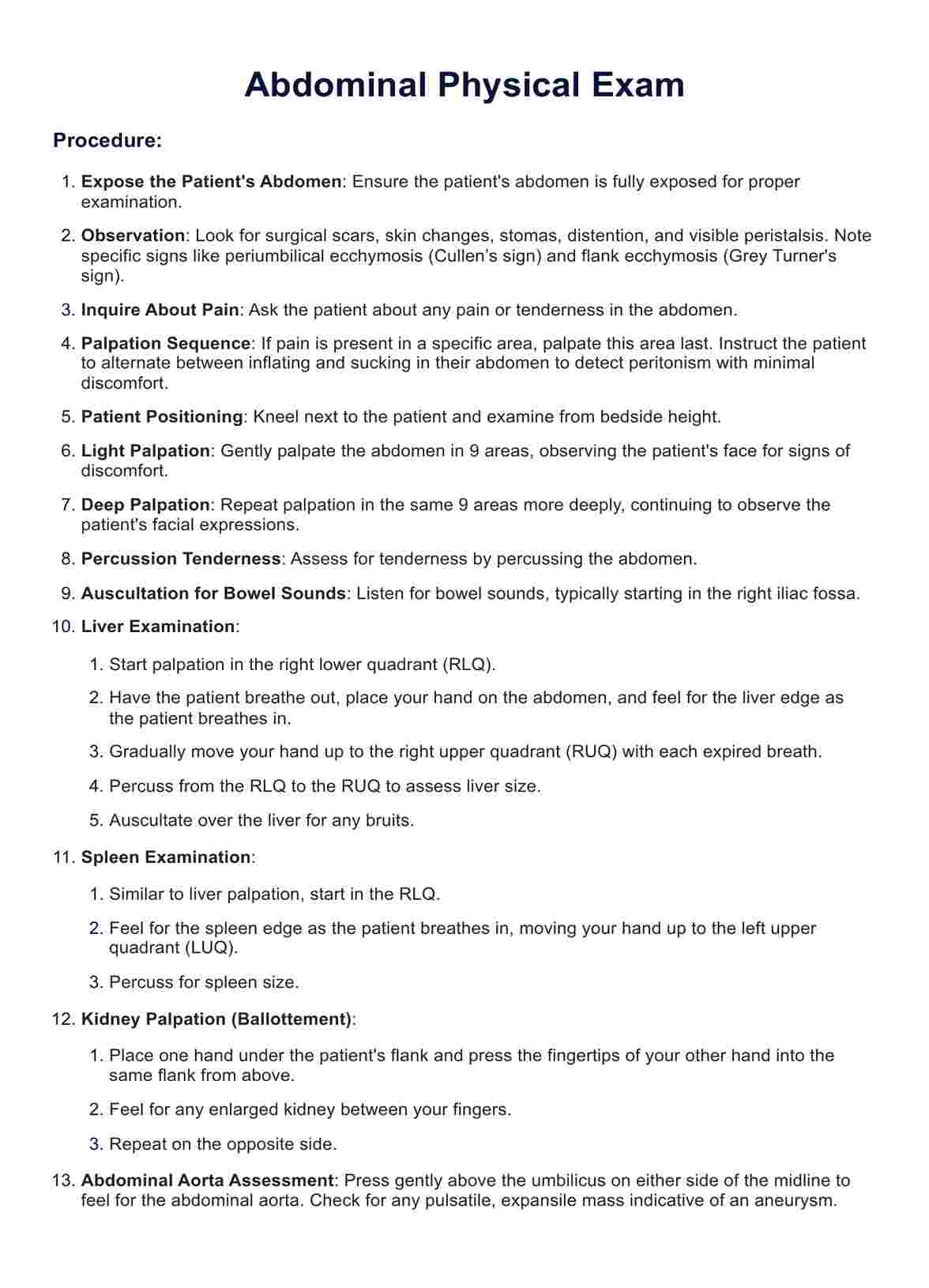



Abdominal Examination
Download our comprehensive Abdominal Examination PDF guide for detailed procedures and reporting, ideal for healthcare professionals and students.

Use Template
Abdominal Examination Template
Commonly asked questions
Deep and light palpation are critical techniques in clinical medicine for examining abdominal organs. Light palpation assesses surface-level characteristics like tenderness. In contrast, deep palpation allows for a more detailed physical examination of intra-abdominal organs such as the liver, spleen, and kidneys. For instance, deep palpation can help detect an abdominal mass or the enlarged liver edge in liver disease, while light palpation helps assess superficial tenderness or muscular resistance.
Absent bowel sounds during abdominal auscultation can be a significant clinical finding. Usually, bowel sounds are present due to the movement of the intestines. Absent or significantly reduced bowel sounds may indicate a lack of intestinal activity, which can be associated with conditions like severe liver disease, bowel obstruction, or peritonitis. In contrast, hyperactive bowel sounds might suggest diarrhea or early bowel obstruction.










EHR and practice management software
Get started for free
*No credit card required
Free
$0/usd
Unlimited clients
Telehealth
1GB of storage
Client portal text
Automated billing and online payments