Types of Acupuncture
In today's world, many seek alternatives to traditional medical treatments, searching for holistic approaches that address our health concerns differently.
One avenue gaining popularity is complementary and alternative medicine, where different types of acupuncture stand out as promising options. From chronic pain to digestive issues, acupuncture offers a unique approach to treating patients by targeting specific points in the body.
Japanese acupuncture
Acupuncture has been integral to Japan, and although China initially led the practice of acupuncture, Japan has since developed its unique approach to treatment. Japanese acupuncture focuses on abdominal palpation to determine needle insertion points, employing thinner, sharper needles and shallower insertion depths (Kobayashi et al., 2010) compared to Chinese acupuncture, which tends to manipulate needles more deeply, potentially leading to stronger Qi sensations.
Additionally, Japanese acupuncture often incorporates moxibustion for added warmth and soothing effects. In contrast, Chinese acupuncture commonly uses herbs in conjunction with treatment and may also utilize moxibustion, typically with a mugwort charcoal stick.
Traditional acupuncture
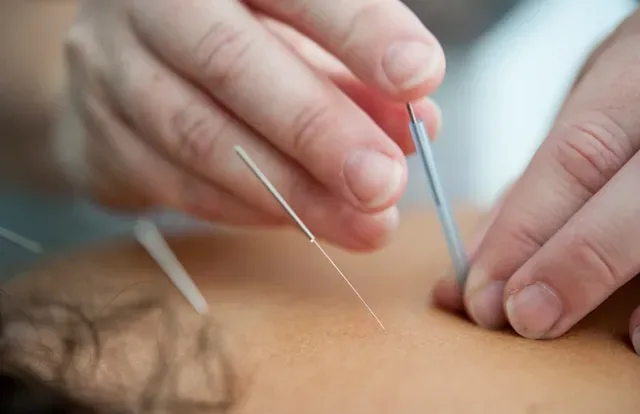
Traditional acupuncture, also known as traditional Chinese acupuncture, follows ancient principles of balancing the body's energy, or Qi, by inserting thin needles at specific points along the meridians. This approach views illness and pain as disruptions in the flow of Qi and seeks to restore harmony within the body to promote healing.
Traditional acupuncture treatments may include a combination of needling, moxibustion, cupping, and herbal therapies, guided by a comprehensive understanding of Chinese medicine theory and diagnostic techniques honed over thousands of years.
Scalp acupuncture
Scalp acupuncture (head acupuncture) is a newer way of treating people, but it was a bit complex at first because it didn't match the old ideas in Chinese medicine. This kind of acupuncture focuses on certain areas of the scalp, not specific points, and practitioners need to learn it well to get good results. Unlike traditional acupuncture, where needles go in particular spots, in scalp acupuncture, needles go into larger sections of the scalp that match how the brain works (Hao & Hao, 2012).
Auricular acupuncture
Auricular or ear acupuncture involves stimulating specific points on the external ear to influence various body parts and treat various health conditions. This approach is based on the concept that the ear is a microsystem reflecting the entire body, with specific points corresponding to different organs and systems.
Electroacupuncture
Introduced in the mid-1900s, electroacupuncture (EA) involves the application of weak electronic currents through acupuncture needles post-conventional acupuncture. While EA remains controversial, it has exhibited comparable or enhanced efficacy to acupuncture and offers greater reproducibility, rendering it conducive to research.