Physical FormAI Template IconToolbar IconShare Icon

Physical Form

Streamline patient care with our Physical Form template. Learn how to use it effectively, understand its benefits, and improve your workflow.

Audrey Liz Pérez avatar

By Audrey Liz Pérez on Aug 17, 2025.

Fact Checked by Ericka Pingol.

Use Template

What is a Physical Form?

A physical form is a standardized document healthcare professionals use to assess and record a patient's health and physical condition. These forms serve various purposes, including sports participation, work requirements, school enrollment, or as part of an annual health check-up or standard physical exam.

A comprehensive physical form template typically includes sections for personal information, medical history, vital signs, and a detailed physical examination covering various body systems. Sometimes, it may also contain a health screening questionnaire to gather additional information on the patient's lifestyle, habits, and well-being.

Physical forms are valuable tools for medical practitioners to evaluate an individual's fitness for specific activities, identify potential health risks, and provide personalized recommendations based on the findings. They play a critical role in preventive healthcare and help monitor an individual's progress.

By consistently documenting changes in a person's health and physical condition, healthcare professionals can track trends, identify potential health concerns early, and make informed decisions about appropriate interventions or lifestyle adjustments.

Moreover, physical forms help establish an open line of communication between patients and healthcare providers, promoting a collaborative approach to maintaining and improving overall well-being.

How does it work?

Filling out and using a physical form typically involves the following steps:

Step 1: Gather relevant information

Begin by collecting the patient's personal information, such as their name, date of birth, and contact details. Also, gather essential medical history, including known allergies, past surgeries, current medications, family history of illnesses, and any habits related to tobacco, alcohol, or drug use.

Step 2: Record vital signs

Measure and document vital signs, including blood pressure, heart rate, respiratory rate, temperature, height, and weight.

Step 3: Perform a physical examination

Conduct a thorough head-to-toe physical examination, assessing each body system and documenting the findings in the appropriate sections of this physical exam form.

Step 4: Complete additional sections

Complete any additional sections or tests, such as lab tests or imaging studies, and include the results on the form.

Step 5: Review and sign the form

The healthcare professional should review the completed form, sign it, and date it to validate the findings. Sometimes, a guardian or parent's signature may be required if the patient is a minor or a student.

Step 6: Printable Physical Form

Print the completed form for the patient or institution requiring it or save it as a digital copy for electronic record-keeping.

Physical Form example (sample)

We have provided a comprehensive sample to help you understand the structure and content of a physical form. This sample includes sections for personal information, medical history, vital signs, and a detailed physical examination. It also incorporates a health questionnaire to accurately evaluate the patient's overall health.

Feel free to download the Physical Form PDF provided as a template for your practice.

Download this Physical Form example (sample) here:

Physical Form Example (sample)

When would you use this form?

You can use printable physical exam forms to assess an individual's health and physical condition. Here is a more detailed explanation of the scenarios mentioned:

Sports physicals

Physical forms play a crucial role in sports medicine, as they help evaluate an athlete's fitness and ability to participate in sports activities safely. Healthcare professionals assess the individual's medical history, physical health, and musculoskeletal condition to ensure they can handle the physical demands of the sport and minimize the risk of injury.

Work physicals

In specific industries or job positions, employees may be required to undergo a work physical to confirm their ability to meet the physical requirements of their role. This could include heavy lifting, prolonged standing, or working in extreme environments. A physical form ensures that potential risks are identified and any necessary accommodations or restrictions are implemented to maintain employee safety and well-being.

School physicals

School-aged children and adolescents often require a physical examination before enrollment or participation in specific school programs, such as sports teams or extracurricular activities. A physical form helps document their health status, immunization records, and any existing medical conditions that might impact their ability to participate safely and effectively.

Pre-employment screening

Many employers require a pre-employment physical as part of the hiring process. This assessment ensures that job applicants are physically capable of performing the tasks associated with their role and do not pose a safety risk to themselves or others. A physical form standardizes the evaluation process and records the applicant's fitness for the position.

Annual check-ups

Regular health assessments are an essential component of preventive healthcare. A physical form is often used during annual check-ups to document a patient's vital signs, physical examination findings, and any changes in their medical history. This information can help healthcare professionals detect early signs of illness, track long-term health trends, and develop tailored recommendations for maintaining or improving overall health.

In each of these cases, using a printable physical form streamlines the evaluation process, ensures a consistent method of assessment, and creates a standardized record that can be easily stored, shared, or referred to in the future.

Benefits

Using a well-designed physical form offers many benefits for healthcare professionals, patients, and relevant organizations. By providing a standardized and comprehensive approach to assessing and documenting an individual's health, physical forms contribute to improved efficiency, better communication, and more effective patient care.

Using a physical form offers several benefits:

Standardized evaluation

Ensures a consistent method for assessing and documenting a patient's physical condition.

Comprehensive overview

Provides a thorough and organized overview of the patient's health, making identifying potential issues or areas of concern easier.

Efficient record-keeping

Creates a standardized document that can be easily stored, shared, or referred to in the future.

Improved communication

Facilitates better communication between healthcare professionals, patients, and relevant institutions or organizations.

Comprehensive assessment

Encourages a holistic approach to patient care by considering multiple aspects of an individual's health, including their medical history, lifestyle, and physical condition.

Commonly asked questions

Typically, individuals enrolling in school, participating in sports, starting a new job with physical requirements, or undergoing an annual health check-up must complete a physical examination form.
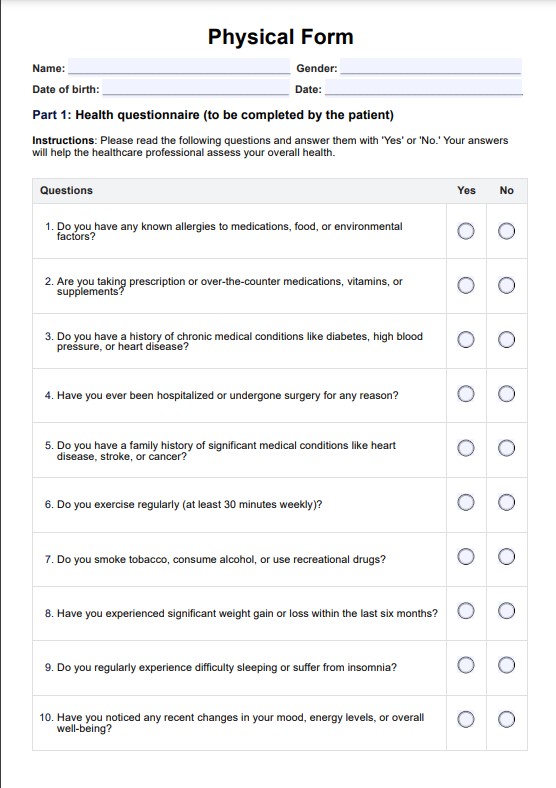
The required information may vary based on the purpose of the physical form. Still, it typically includes personal details such as name, age, gender, contact information, medical history (including any pre-existing conditions or allergies), vital signs (such as blood pressure and heart rate), and a comprehensive physical examination.

Yes, you can modify the template to fit the needs of your patients and practice. Add or remove sections, include specific questions or instructions, and personalize the form with your logo and contact information.
EHR and practice management software

Get started for free

*No credit card required

Free

$0/usd

Unlimited clients

Telehealth

1GB of storage

Client portal text

Automated billing and online payments