The benefits of a Body Language Test
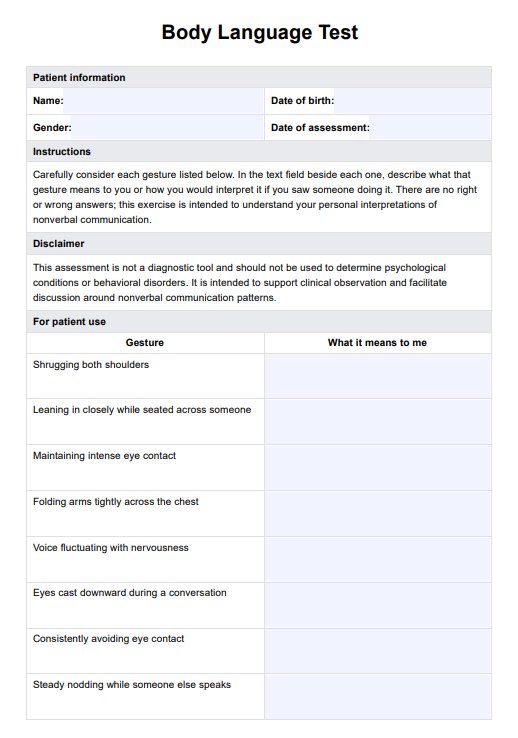
Learning to read body language effectively enhances communication skills and emotional intelligence. This ability to interpret non-verbal cues, such as expansive hand gestures, tone of voice, and even the subtlety of a genuine smile or a microexpression, leads to a more precise understanding and reduced misunderstandings. Recognizing these cues can reveal underlying emotions, answer unspoken questions in various interactions, and enable clinicians to sense a person's mental state better.
In professional settings, reading body language gives a strategic advantage. For instance, observing how someone sits, stands, or rests their arms can provide insight into their comfort level or confidence. This is particularly useful in interviews and negotiations, where understanding the subtle nuances of body language can guide the course of conversation. A shift in leg placement, or breaking eye contact, may signal unease or suggest disagreement—even when the verbal message implies otherwise.
Personal growth is also a key benefit. Developing an awareness of one's body language, such as the use of expansive hand gestures or the authenticity of a smile, boosts self-confidence and aids in self-expression. It also enhances one's ability to perceive and align non-verbal cues with speech to influence others effectively. Whether it's in daily conversation or high-stakes communication, being able to identify and control your own nonverbal signals helps you communicate more clearly and convincingly.
However, interpreting body language requires intuition and a cautious approach. Considering the context is essential, as body language can be misinterpreted if viewed in isolation. The tone of voice, facial expressions, and body postures should be read with the overall situation and cultural norms to provide accurate answers and create meaningful understanding. For example, noticing a person’s head tilt, arm crossing, or the position of their mouth in response to a topic can all suggest whether they're feeling happy, angry, anxious, or disinterested.