





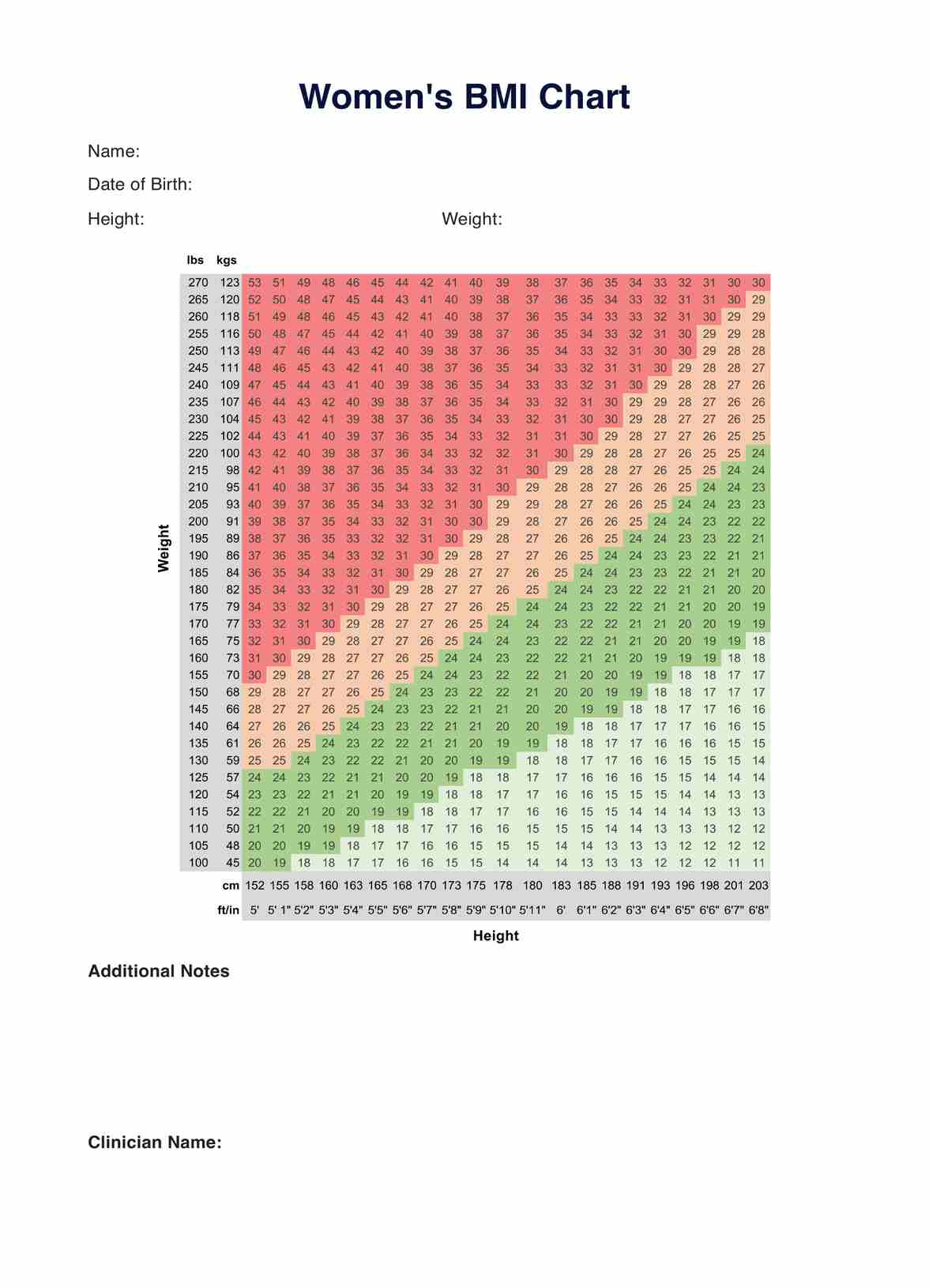




BMI for women
It is important to understand the different factors affecting a person's weight and overall health in healthcare. While there are various methods for determining healthy weight ranges, one commonly used screening tool is the Body Mass Index (BMI) chart.
Body fat plays a crucial role in overall health, providing insulation and energy storage for the body. However, having too much body fat can lead to health problems such as obesity, diabetes, heart disease, and high blood pressure. Women tend to have a higher percentage of body fat than men, and their body fat distribution can also vary.
Body fat levels in women can be measured in various ways, including BMI, body fat percentage, and waist circumference. While BMI is a simple and widely used method, it does not consider factors such as muscle mass or body composition.
The World Health Organization (WHO) recommends using BMI and waist circumference as indicators of health risks. A high BMI combined with obesity or a large waist circumference can increase the likelihood of health problems related to excess body fat, such as metabolic syndrome and cardiovascular disease.
BMI is a measure of body fat based on height and weight, which can help indicate if a person is at an increased risk for health problems. BMI is defined numerically as:
BMI = weight (kg) ÷ height² (m²)
To determine your patient's BMI, you can use a BMI calculator, or with just your patient's height and weight, you can determine their BMI using our Women's BMI Chart. To see how to do this, keep reading!









