When to administer the assessment
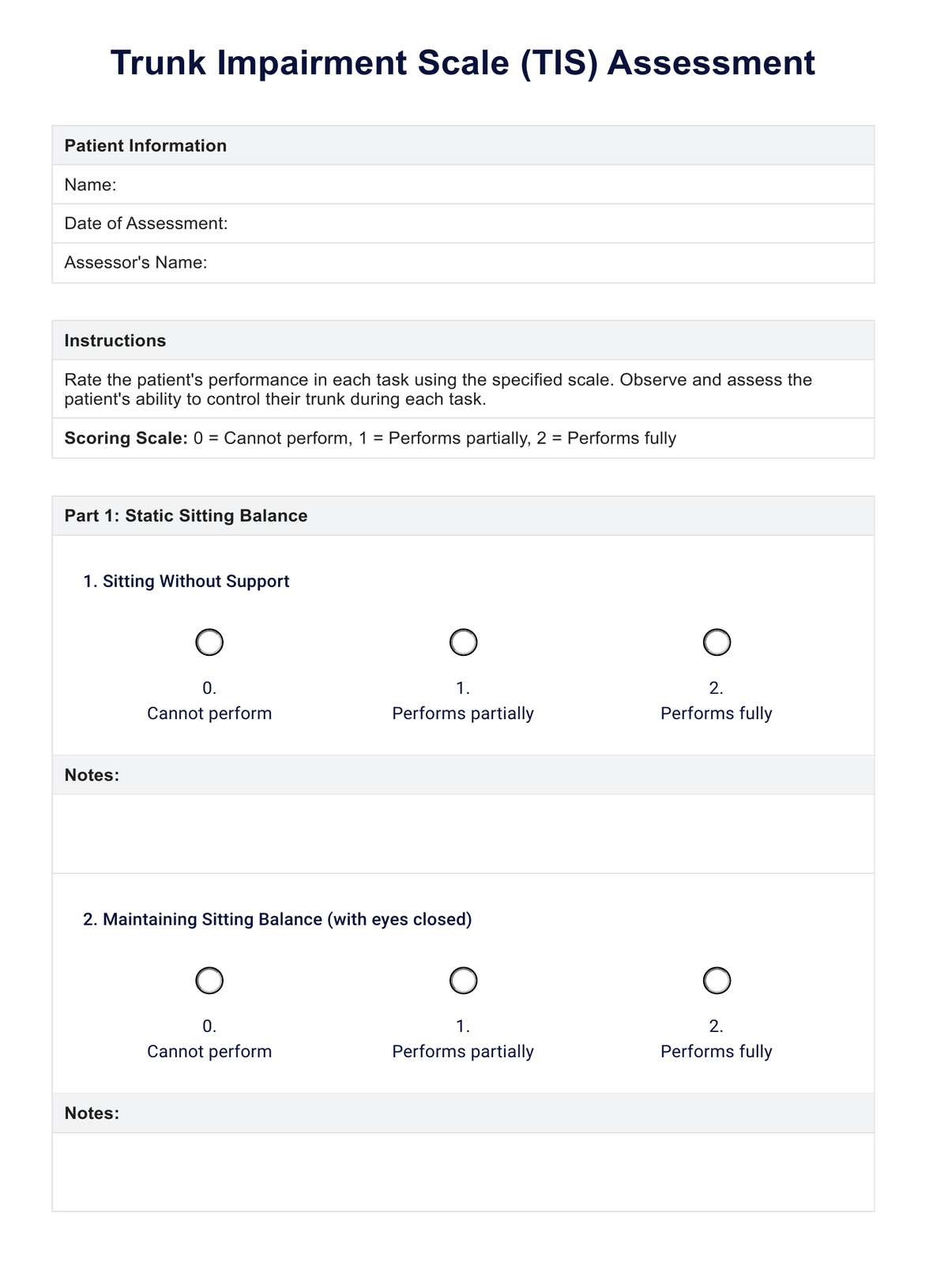
The Trunk Impairment Scale (TIS) is a critical assessment tool in the field of stroke rehabilitation, designed to evaluate motor impairments affecting trunk control. Its administration is pivotal in various stages and settings of stroke recovery and rehabilitation. Understanding when to administer the TIS is essential for clinicians to assess and address stroke patients' specific needs effectively.
Acute stroke rehabilitation
In the acute phase following a stroke, the TIS plays a vital role in assessing the initial level of trunk control. This early assessment is crucial as it lays the foundation for rehabilitation. During this stage, the patient's ability to control their trunk can significantly impact their overall recovery trajectory. The TIS helps clinicians set realistic and appropriate rehabilitation goals tailored to the patient's abilities. It also aids in determining the intensity and type of interventions required in the initial stages of recovery.
Chronic stroke patients
For patients in the chronic phase of stroke recovery, the TIS is instrumental in monitoring ongoing progress and adapting rehabilitation plans accordingly. Over time, patients may experience changes in their trunk control abilities, either improvements or persistent challenges. Regular administration of the TIS allows therapists to track these changes, providing insights into the effectiveness of the current rehabilitation strategies and guiding necessary adjustments. This ongoing assessment ensures the rehabilitation program aligns with the patient's evolving needs and capabilities.
Inpatient and outpatient rehabilitation settings
The TIS is versatile and applicable in both inpatient and outpatient settings. In inpatient rehabilitation, where patients often receive intensive therapy following a stroke, the TIS offers a standardized and systematic way to assess trunk control. This standardization is crucial for ensuring consistent care and tracking progress over time. The TIS provides a reliable method to assess trunk control during periodic visits in outpatient settings, where patients may be seen less frequently. It ensures continuity in the assessment process, allowing therapists to gauge progress and make informed decisions about ongoing care effectively.
Research studies
In stroke research, the TIS is a valuable tool for evaluating the efficacy of various rehabilitation interventions. Its standardized format and validated scoring system make it an ideal instrument for research purposes. The TIS is used in clinical trials and observational studies to measure the outcomes of different therapeutic approaches, contributing to the evidence base in stroke rehabilitation. By comparing TIS scores across different patient groups and interventions, researchers can conclude the effectiveness of specific rehabilitation techniques and approaches.
Predictive tool in rehabilitation
Beyond its role in assessing current trunk control, the TIS is also valuable as a predictive tool. Early TIS scores can help predict functional outcomes in stroke patients, guiding clinicians in prognostication and goal setting. This predictive ability is particularly important in developing personalized care plans and in communicating realistic expectations to patients and their families.
Guiding rehabilitation interventions
The TIS not only assesses trunk control but also guides the selection of specific rehabilitation interventions. Based on the TIS scores, therapists can choose targeted exercises and therapies to address identified deficits. This tailored approach ensures that each patient receives the most appropriate and effective interventions for their trunk control impairments.
The Trunk Impairment Scale is a multifaceted tool essential in various stroke rehabilitation stages and settings. Its comprehensive approach to assessing trunk control makes it invaluable for clinicians in tailoring rehabilitation programs, monitoring progress, conducting research, and ultimately enhancing stroke patients' recovery and quality of life.