
Tarsal coalition affects the tarsal bones of the mid and hind foot and ankle, most commonly between the calcaneus (heel bone) and navicular bones.
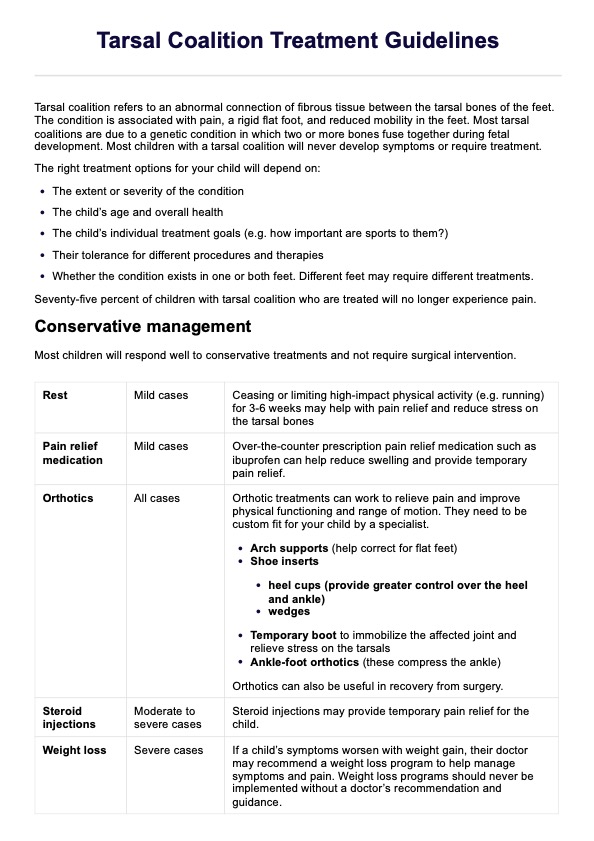



Tarsal Coalition Treatment Guidelines Handout
Access these comprehensive Tarsal Coalition Treatment Guidelines to easily communicate treatment options to patients.
Use Template
Tarsal Coalition Treatment Guidelines Handout Template
Commonly asked questions
Over time, children and adolescents may experience increases in pain, making it hard to enjoy everyday activities such as sports and play. They also may develop stiff feet (a sign that a strong coalition exists). If the coalition becomes too stiff surgical repair will not be possible anymore. These are just some of many reasons why it is important to assess and treat tarsal coalition in a timely manner.
The use of orthotic shoes such as heel cups and wedge shoes can improve foot stability and relieve pain. Temporal boots can help immobilise the foot to remove stress from the tarsal bones. It is necessary to have an orthotic expert analyse the child's specific needs and create a custom orthotic solution.










EHR and practice management software
Get started for free
*No credit card required
Free
$0/usd
Unlimited clients
Telehealth
1GB of storage
Client portal text
Automated billing and online payments