


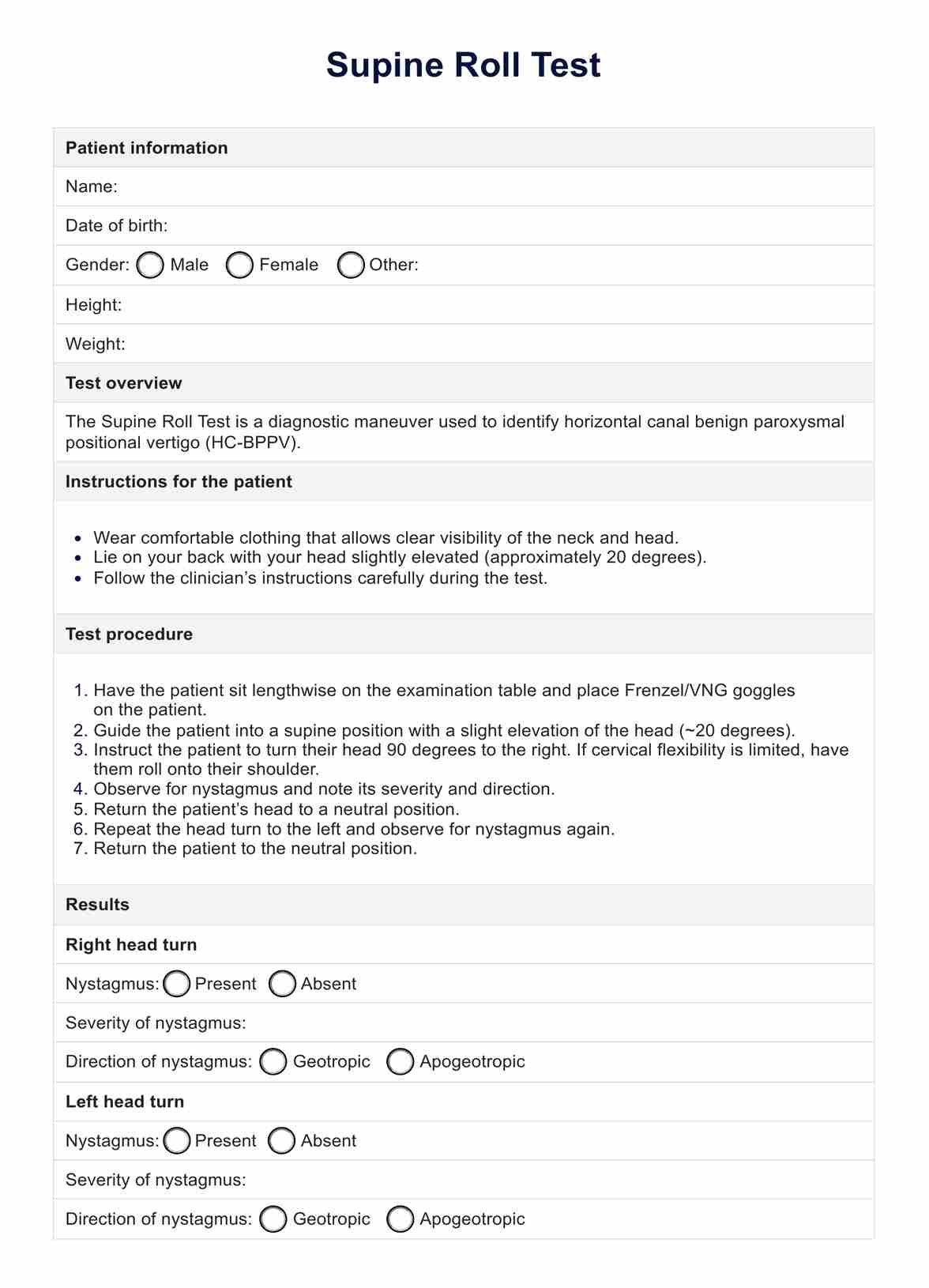




What is lateral benign paroxysmal positional vertigo (BPPV)?
Lateral benign paroxysmal positional vertigo (BPPV) is a subtype of benign paroxysmal positional vertigo, a common vestibular disorder that causes brief episodes of vertigo related to changes in head position. BPPV occurs when otoconia (calcium carbonate crystals) dislodge from the utricle and enter one of the semicircular canals, typically the posterior canal.
In lateral BPPV, also known as horizontal canal BPPV (HC-BPPV), these dislodged crystals move into the horizontal (lateral) semicircular canal, causing vertigo when the head is turned to the side. This condition can significantly impact balance and quality of life but is generally treatable through specific repositioning maneuvers.
Symptoms of lateral benign paroxysmal positional vertigo
Lateral BPPV is characterized by symptoms that typically occur when the head is moved in specific ways, triggering episodes of vertigo.
- Sudden, intense episodes of dizziness triggered by head movements, particularly when turning the head to the side.
- Involuntary, rapid eye movements (nystagmus) often observed when the head is turned or during specific diagnostic maneuvers.
- Nausea and vomiting can accompany vertigo, especially in severe cases.
- Difficulty maintaining balance, particularly when walking or moving quickly.
- Dizziness that occurs when changing positions, such as getting out of bed or looking up.









