





What is the Stroop Task?
The Stroop Task is a psychological assessment that evaluates an individual's ability to concentrate on specific information while ignoring conflicting stimuli. This test is critical in assessing selective attention, processing speed, cognitive control, and the impact of automatic processing on cognitive tasks. It's based on the "Stroop Effect," a cognitive phenomenon named after psychologist John Ridley Stroop.
The Stroop Effect highlights the challenge of accurately identifying a color when it's used to spell a different color's name (e.g., the word "red" written in blue ink). This effect underscores the conflict between our brain's automatic and controlled processing systems.
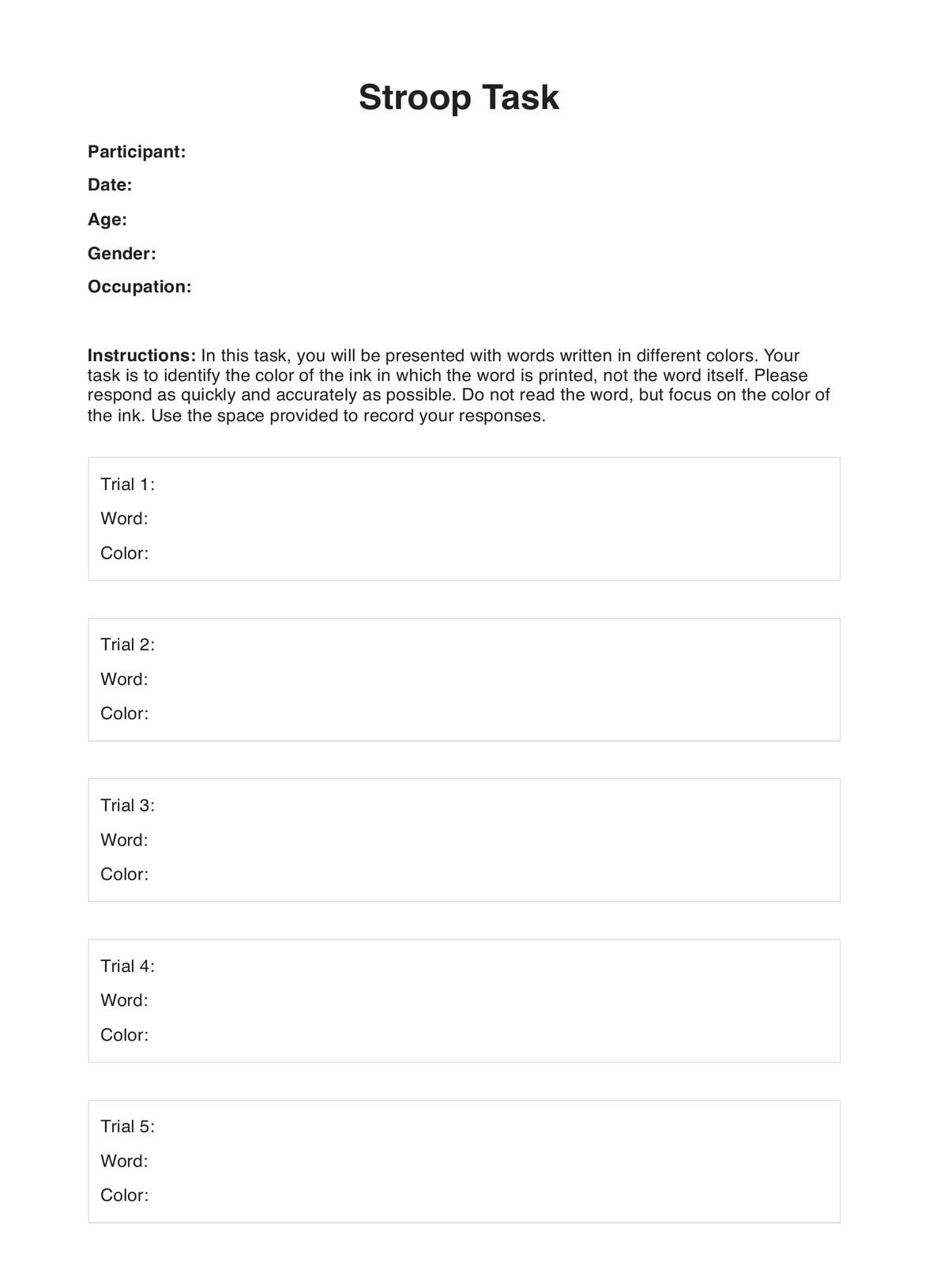
During the Stroop task, participants are shown words where the color of the ink differs from the word's meaning. For instance, the word "red" might be printed in blue ink. The task requires participants to name the ink's color, not the word itself, challenging their ability to focus on the ink color while disregarding the word.
Consider watching this explainer video for a more comprehensive understanding of the Stroop task:
The significance of the Stroop Task extends beyond academic research to practical applications in diagnosing disorders, understanding brain injuries, and exploring other cognitive functions. It's a vital cognitive psychology and neuroscience tool for studying how our brains process conflicting information.
Consider watching this explainer video for a more comprehensive understanding of the Stroop task:









