





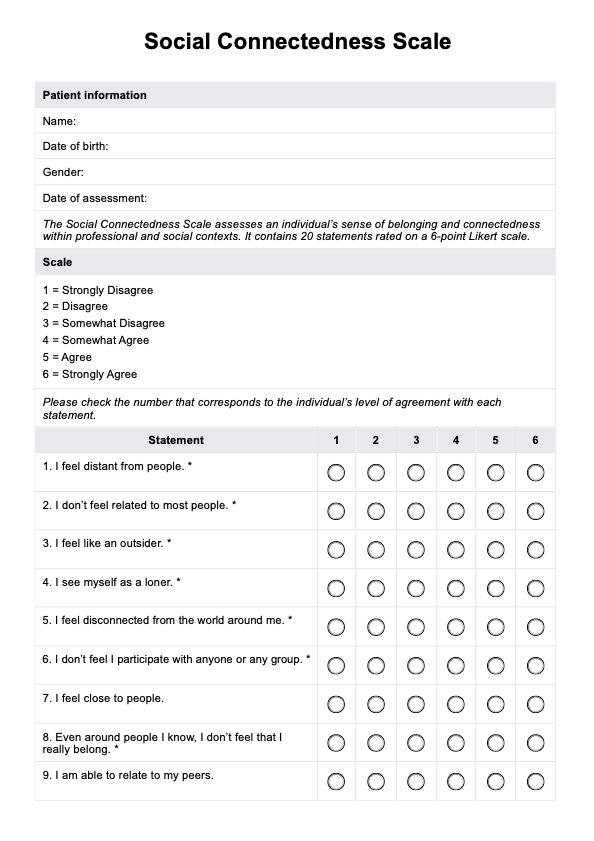




What is the Social Connectedness Scale?
The Social Connectedness Scale (SCS) is a self-report questionnaire designed to assess social connectedness or the degree to which individuals feel connected to others in their social environment. Developed by Lee and Robbins (1995), the initial 8-item scale evaluates multiple dimensions of social connection, including belongingness, closeness, social support, and relationship satisfaction. It is a reliable tool in counseling psychology, psychological science, and public health to understand how human beings navigate their social worlds.
Currently, the Social Connectedness Scale-Revised (SCS-R) contains 20 items (Lee et al., 2001). It uses a 6-point Likert scale ranging from 1 (strongly disagree) to 6 (strongly agree). A higher total score reflects a stronger social connectedness, indicating robust feelings of belonging and support. Conversely, lower scores may highlight social isolation and its potential mental and physical health impacts.
The SCS is widely used in research to explore the connection between social support and outcomes such as mental health conditions, positive emotions, and overall well-being. It is also valuable in clinical settings for assessing individuals with conditions like depression or anxiety. By providing insights into social ties, the scale helps professionals identify areas for intervention to promote social connection and enhance mental health.









