
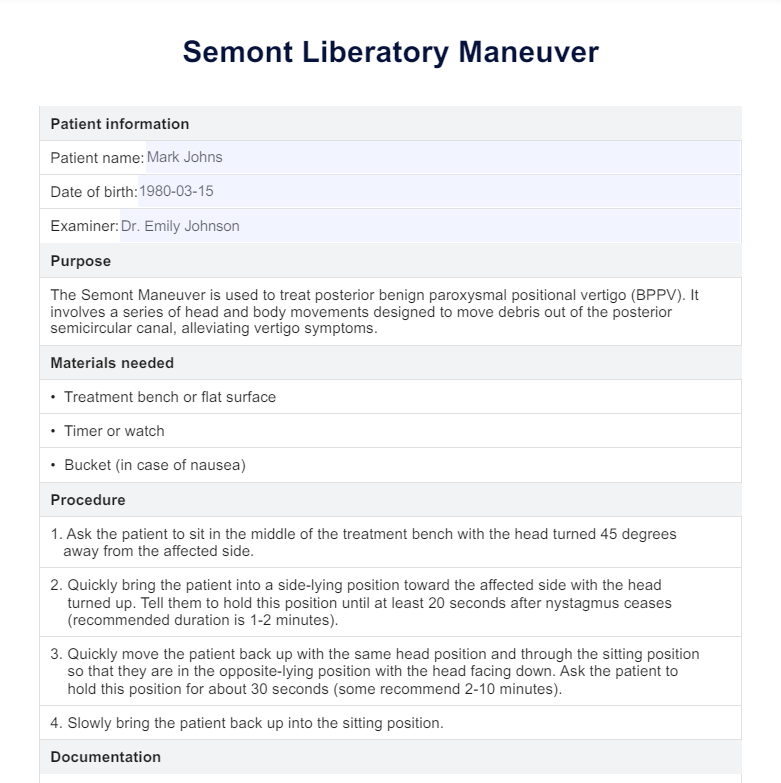




What is posterior benign paroxysmal positional vertigo?
Posterior canal benign paroxysmal positional vertigo (BPPV) is a common vestibular disorder characterized by brief episodes of vertigo triggered by changes in head position. This condition occurs when tiny calcium carbonate crystals (otoconia) become dislodged from their usual location in the utricle and migrate into one of the inner ear's semicircular canals, typically the posterior canal. The movement of these crystals disrupts the normal fluid dynamics within the canal, leading to the sensation of spinning or dizziness when the head is moved.
Symptoms of posterior BPPV
Posterior BPPV presents specific symptoms usually triggered by head movement or position changes. These include:
- Sudden, intense episodes of vertigo lasting less than a minute, often triggered by rolling over in bed, tilting the head back, or looking up.
- Nausea or vomiting associated with vertigo episodes.
- Imbalance or unsteadiness, particularly when walking.
- A sensation of the room spinning or moving, especially when lying down or getting up.
- Nystagmus, which is involuntary eye movement observed during vertigo episodes.
Causes of posterior BPPV
The exact cause of posterior BPPV is often unclear, but several factors are known to contribute to the development of this condition. These include:
- Head trauma, which can dislodge the otoconia from their usual location.
- Inner ear infections or labyrinthitis, which can affect the inner ear structures.
- Age-related degeneration of the vestibular system, increasing the likelihood of otoconia displacement.
- Prolonged bed rest or certain sleeping positions that may promote the movement of otoconia into the semicircular canals.
- Vestibular neuritis or other conditions that affect the inner ear balance system.
- Previous episodes of BPPV, which can increase the risk of recurrence.
Understanding the symptoms and causes of posterior BPPV is crucial for effective diagnosis and treatment. It allows healthcare professionals to provide targeted interventions to alleviate the condition and improve patient outcomes.









