How to use this test template
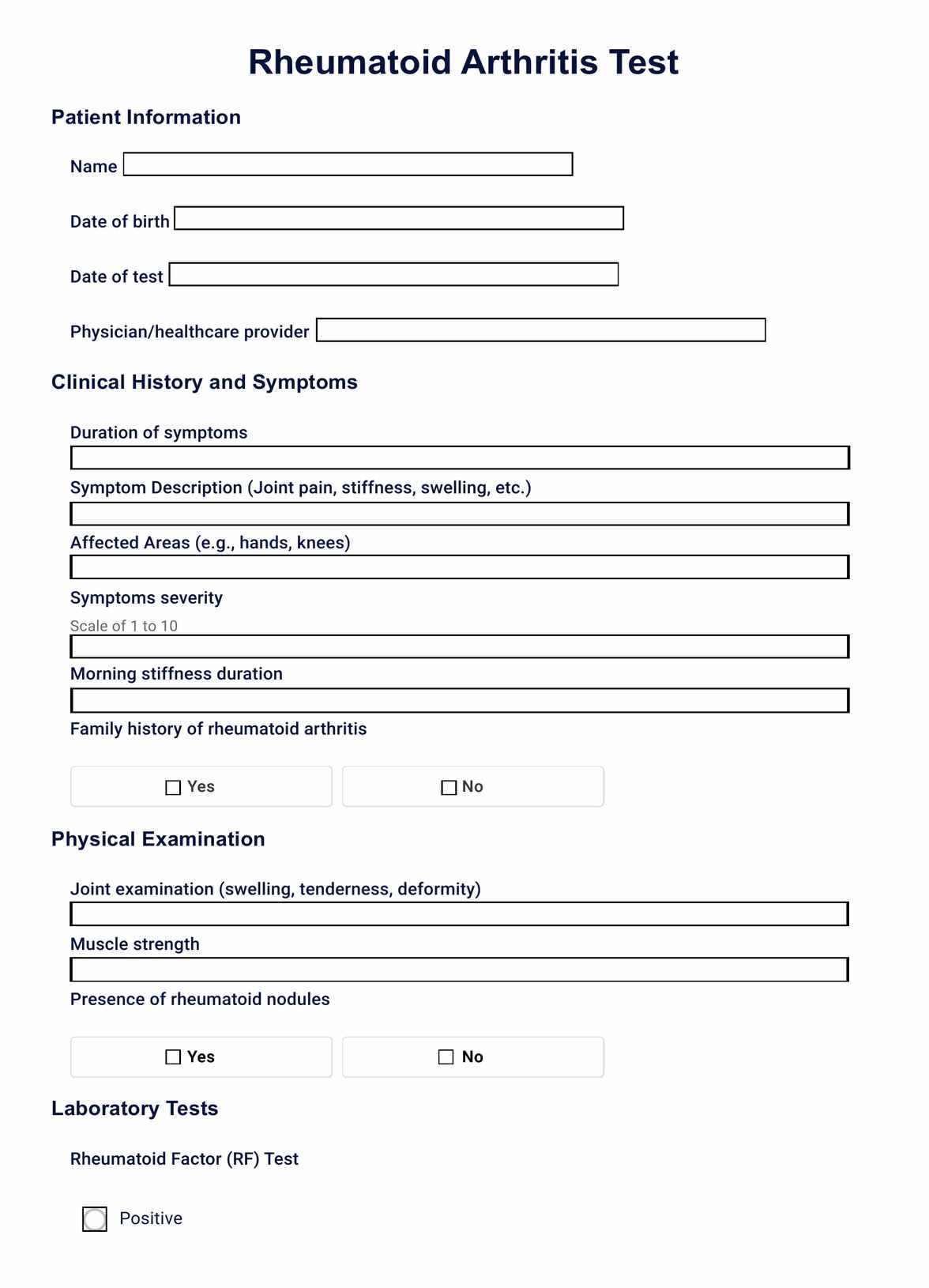
Using a rheumatoid arthritis (RA) test template is essential for healthcare providers to ensure a thorough and accurate diagnosis of RA. This template serves as a structured guide, encompassing various aspects of the diagnostic process. Here's a detailed overview of how to effectively use this test template:
Patient history and symptom documentation
The template begins with a section recording the patient's medical history and current symptoms. This includes details about the onset, duration, and nature of symptoms such as joint pain, stiffness, swelling, and other associated symptoms like fatigue or fever. Documenting the patient's family history of RA or other autoimmune diseases is also crucial, as it can provide valuable insights into the patient's risk factors.
Physical examination findings
The next section of the template focuses on the physical examination. This involves assessing the affected joints for swelling, tenderness, or deformity. The template should guide the healthcare provider in examining the quantity (number of affected joints) and quality (severity of inflammation and damage) of joint involvement.
Blood test results recording
RA diagnosis often requires several blood tests. The template should include fields for entering results of key tests such as Rheumatoid Factor (RF), Anti-Cyclic Citrullinated Peptide (anti-CCP) antibodies, Erythrocyte Sedimentation Rate (ESR), and C-Reactive Protein (CRP) levels. These lab tests can help assess the presence of specific antibodies and the level of inflammation in the body.
Imaging studies
Imaging tests like X-rays, MRI, or ultrasound of the affected joints are crucial for diagnosing RA and assessing its progression. The template should provide a section for recording these imaging findings, noting any signs of joint erosion or other changes indicative of RA.
Diagnostic criteria checklist
Incorporating a checklist based on established diagnostic criteria for RA, such as the American College of Rheumatology (ACR) criteria, can be beneficial. This checklist helps systematically evaluate whether the patient meets the criteria for RA diagnosis.
Treatment recommendations and follow-up
After the assessment, the template can include suggestions for initial treatment approaches and recommendations for follow-up. This may involve referrals to rheumatologists, initiating disease-modifying antirheumatic drugs (DMARDs), and planning for regularly monitoring disease activity.
Patient education and counseling
Finally, the template can prompt healthcare providers to discuss the diagnosis with the patient, providing education about RA, its implications, treatment options, and lifestyle modifications.
A well-designed RA test template is a comprehensive tool that streamlines the diagnostic process, ensures no critical aspect is overlooked, and aids in formulating an effective treatment plan. It enhances the quality of patient care by promoting a systematic and evidence-based approach to diagnosing and managing rheumatoid arthritis.