





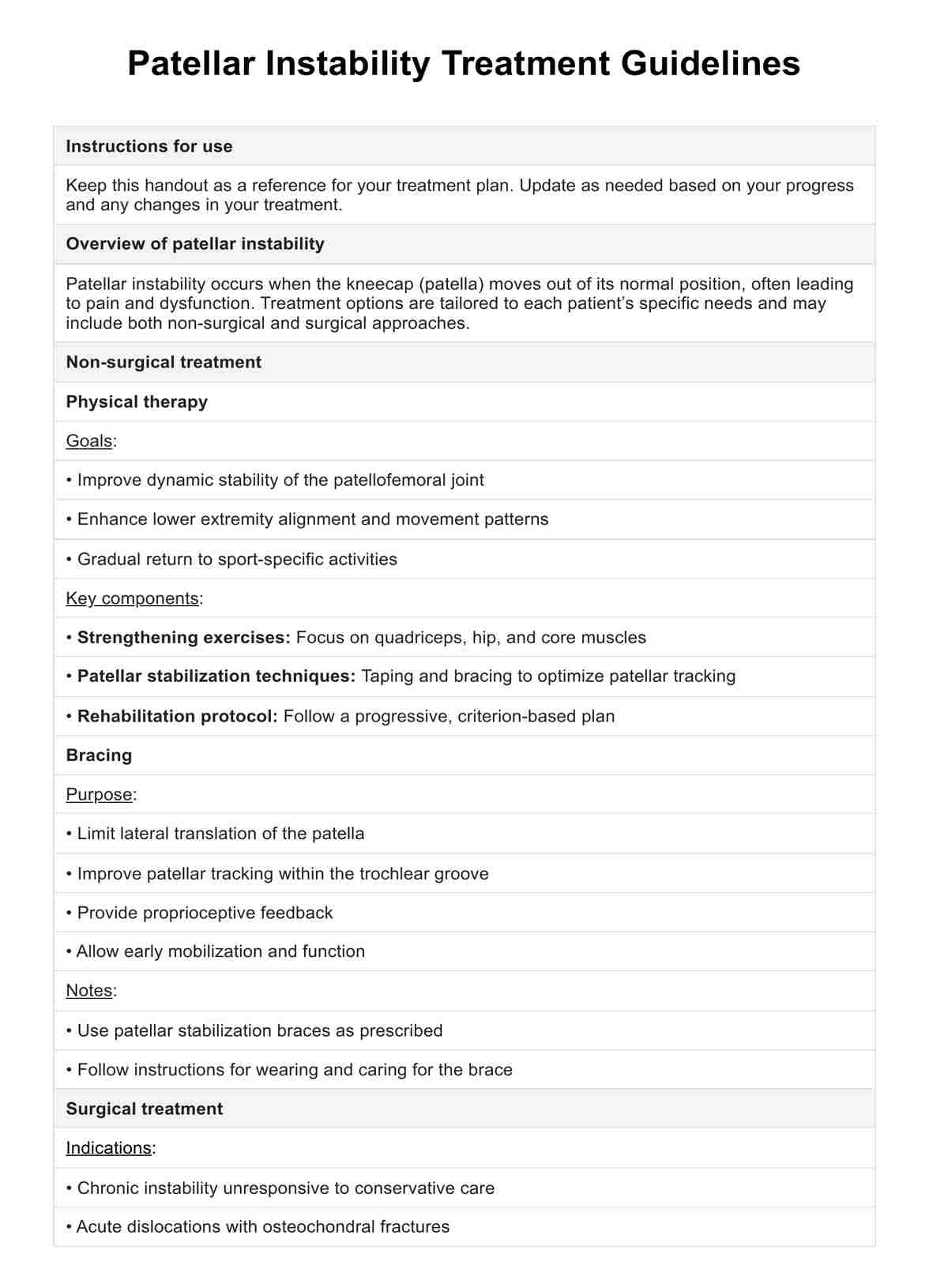




What is patellar instability?
Patellar instability is a condition where the patella dislocates from the trochlear groove, often due to injury to the medial patellofemoral ligament (MPFL). Chronic patellar instability may result from anatomic factors like patella alta, abnormal tibial tubercle position, or trochlear dysplasia.
Patellar instability is diagnosed based on history, exam findings like patellar apprehension with knee flexion, and imaging. Treatment options include bracing, physical therapy to strengthen the medial quadriceps tendon, and surgical procedures like MPFL reconstruction or tibial tubercle osteotomy for recurrent instability.
Symptoms of patellar instability
Common symptoms of patellar instability include:
- Knee pain, especially in the front of the knee
- Feeling of the knee "giving way" or buckling
- Visible deformity or misalignment of the patella
- Swelling and stiffness in the knee
- Apprehension or pain when extending the knee
Causes of this instability
Several factors can contribute to patellar instability:
- Trauma or direct blow to the knee causing dislocation
- Anatomic factors like patella alta, trochlear dysplasia, increased Q-angle
- Generalized ligamentous laxity
- Muscle imbalances or weakness, especially in the quadriceps
- Recurrent patellar dislocations cause injury to stabilizing structures like the medial patellofemoral ligament (MPFL)
How is this instability assessed?
A comprehensive evaluation is crucial for accurate diagnosis and appropriate management. This involves a detailed patient history to identify the mechanism of injury, prior dislocations, and risk factors such as family history, hyperlaxity, or anatomical abnormalities.
A thorough physical examination assesses patellar mobility, alignment, apprehension, and associated injuries. Key exam findings include tenderness over the medial patellofemoral ligament (MPFL), increased passive patellar translation, and a positive patellar apprehension test.
Imaging studies such as X-rays, CT scans, or MRI evaluate bony anatomy, alignment, and soft tissue injuries like MPFL tears. Specific measurements, including patellar height (Insall-Salvati ratio, Caton-Deschamps index), trochlear depth, and tibial tubercle-trochlear groove (TT-TG) distance, help identify anatomical risk factors for instability.









