
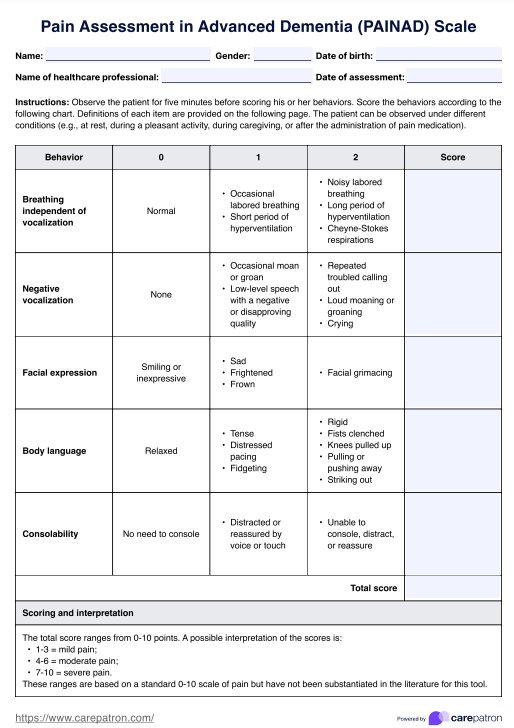




What is a Pain Assessment in Advanced Dementia (PAINAD) Scale?
Pain is a common symptom experienced by people with advanced dementia, and it can significantly negatively impact their quality of life. People with advanced dementia experience pain differently than those without it. They may be unable to express their pain verbally and may show signs such as changes in behavior, facial expressions, or body language when they are in distress.
To properly assess and manage pain in people with advanced dementia, healthcare professionals use the PAINAD Scale. It helps healthcare providers to evaluate pain levels and determine the best course of action. The PAINAD Scale is a 2-point scale based on observing and assessing physical signs and non-verbal behavior associated with people with dementia in pain.
When assessing pain in older adults and people with advanced dementia, it is important to remember that there are no standard “cut-offs” for each symptom and that the scale should be used as a guide for observation and evaluation.
The PAINAD Scale is designed for a wide range of healthcare professionals, including physicians, nurses, caregivers, and specialists across various fields, to assess pain in individuals who may struggle to communicate. It can be applied in hospitals, nursing homes, and care facilities, but should not be used as a diagnostic pain assessment tool alone.









