Why is this plan popular with mental health professionals?
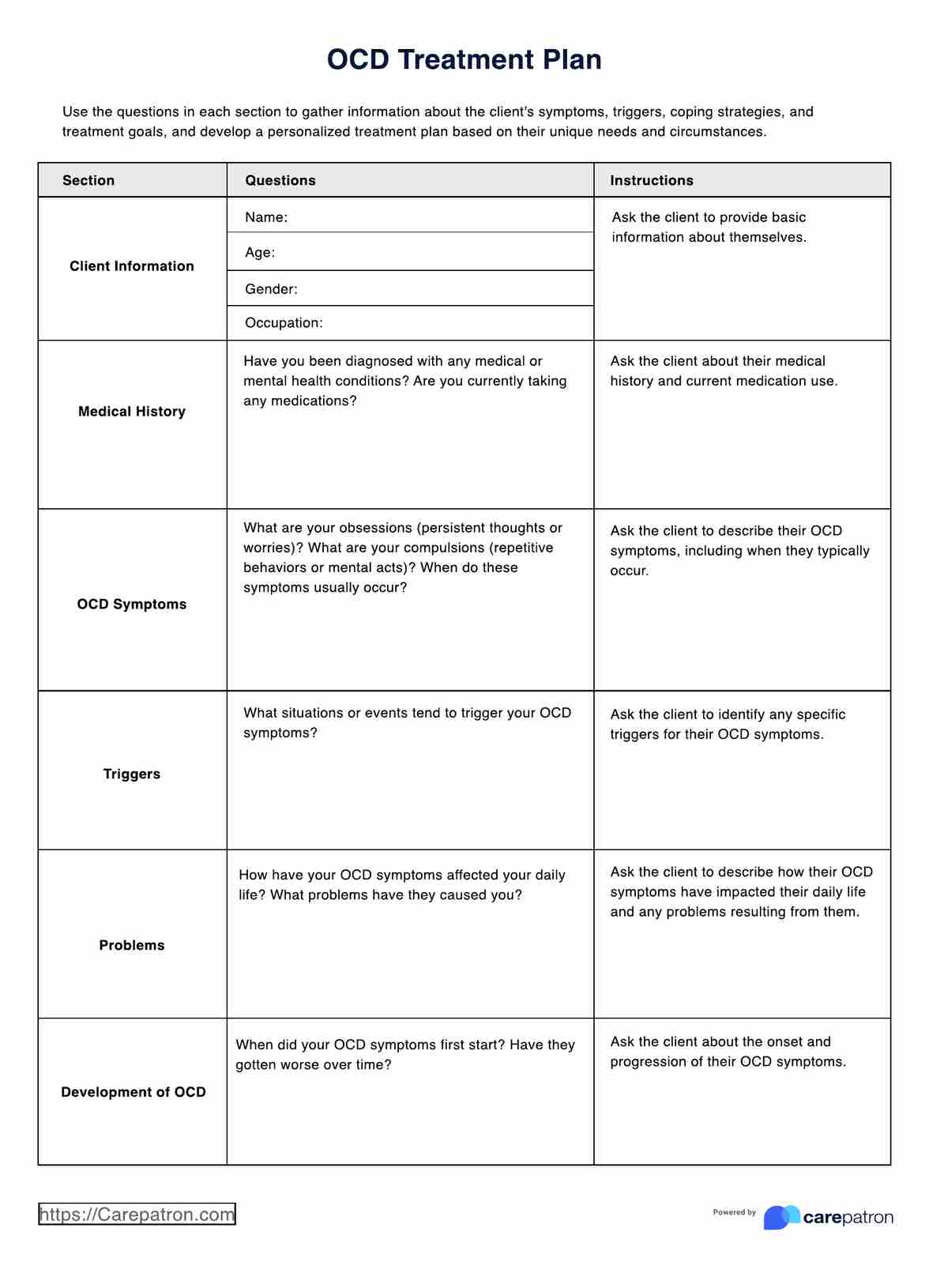
OCD treatment plans are widely used and popular with mental health professionals for several reasons and benefits:
Structured approach to treatment
OCD treatment plans provide a structured approach to treatment that aids in addressing all aspects of a person's OCD symptoms and related concerns through specific strategies and interventions like deep brain stimulation (DBS). In addition, mental health professionals can use exposure and response prevention strategies to identify specific goals for managing their symptoms.
Comprehensive coverage
An OCD treatment plan considers the individual's symptoms, triggers, and related concerns, ensuring that no aspect of the individual's OCD is overlooked. This comprehensive coverage contributes to a complete picture of the individual's condition and enables a more tailored treatment plan.
Progress tracking
Treatment plans help track progress over time, allowing both the person with OCD and their mental health professional to see how well the treatment is working and make necessary adjustments. This is especially useful with staying on track when achieving goals and determining which strategies are most effective for symptom management.
Personalization
OCD treatment plans can be tailored to each person's unique needs and circumstances, making them a highly personalized approach to treatment. This personalization ensures that the treatment plan is tailored to the individual's specific goals, symptoms, and preferences and is, therefore, more likely to be effective.
Encourages accountability
People with obsessive compulsive disorder can hold themselves accountable for implementing the necessary strategies to manage their symptoms by setting specific goals in the OCD treatment plan template. This accountability can help motivate them to stick to the treatment plan and get back on track.
Collaboration
The process of developing an OCD treatment plan requires collaboration between the person with OCD and their mental health professional. This need for collaboration can aid in developing a strong therapeutic relationship and foster a sense of trust and accountability.