Is the Nottingham Health profile reliable and valid?
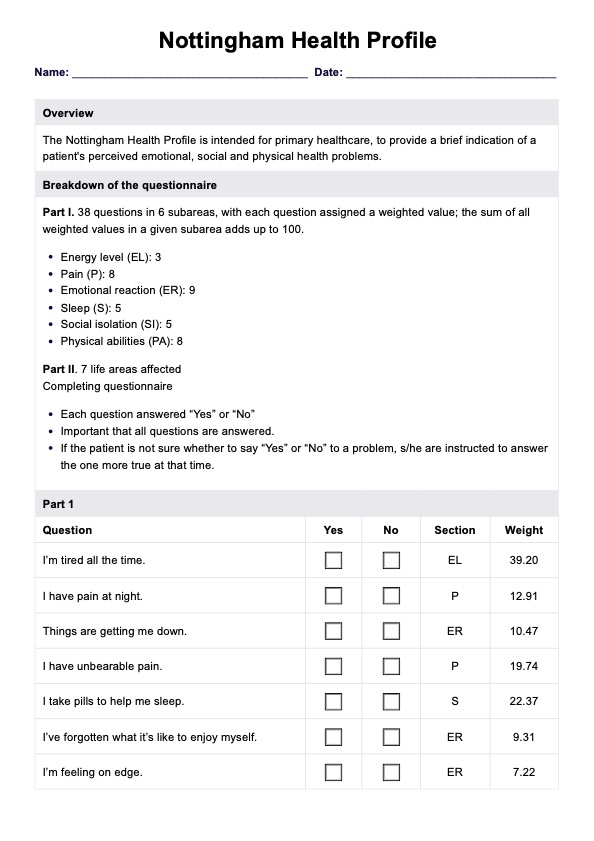
The Nottingham Health Profile is recognized for its reliability and validity. It is extensively utilized in diverse clinical research and measuring general health-related quality of life. Its robust structure is proven to effectively measure the impact of quality of life on daily activities, and multiple studies published in international journals on public health and chronic diseases endorse it. These include life research studies on patients recovering from long-term illness and the effects of varying cognitive function in older adults. The NHP’s flexibility across different patient demographics exemplifies its comprehensive applicability, ensuring it accurately reflects patient-reported health outcomes, especially for those experiencing poor health or ill health, making it a trusted tool in clinical settings and research.
Does the Nottingham Health Profile take Medicare?
The Nottingham Health Profile does not engage directly with Medicare or any billing processes as it is primarily a health assessment tool. However, the insights from the NHP can guide clinical decision-making and interventions that may be covered under Medicare, provided they are deemed medically necessary. Utilizing the NHP can help healthcare providers in primary health care settings develop care plans that improve patient outcomes, potentially influencing eligible treatments for Medicare reimbursement. It also supports better understanding of perceived health and perceived health status.
Is the Nottingham Health Profile only for people with disability and similar health status?
The Nottingham Health Profile is designed to assess health status across a broad spectrum, making it applicable not only to individuals with disabilities but also to a wide range of populations. It is effectively used in various settings to evaluate the health impacts on daily activities and quality of life in individuals suffering from chronic diseases, in patients recovering well from medical procedures, or dealing with the nuances of aging and varying cognitive function.
This tool includes aspects such as family life, emotional reactions, and physical capabilities assessed, providing a holistic measure of health-related quality of life. Its flexibility allows it to be implemented in public health surveys, clinical settings, and longitudinal studies to monitor the effects of chronic conditions and interventions over time. The NHP is particularly relevant in nursing homes and long-term care facilities, where understanding the specific needs and health status of the elderly or those with chronic conditions is crucial for enhancing patient care and optimizing treatment strategies.
By measuring dimensions like pain, sleep, energy, and social isolation, the NHP helps identify specific areas where interventions are needed. This makes it a vital tool for healthcare providers to address the comprehensive needs of patients across various stages of health and rehabilitation. This broad applicability ensures that the NHP can contribute significantly to improving diverse patient groups' well-being and health outcomes, reflecting its importance in both clinical practice and health research. It’s one of the best tools to measure subjective health status and understand negative aspects of a patient’s quality of life.
Does this health profile provide an objective or subjective health status?
The Nottingham Health Profile is known for its subjective assessment approach. It gathers self-reported data to capture individuals' perspectives on how their health conditions influence their everyday lives and mental well-being. This subjective evaluation is essential for understanding the real-life impact of chronic conditions, measuring rehabilitation progress, and assessing the real-world effectiveness of various treatments. It highlights the personal experience of health, which is crucial for comprehensive health assessments, often providing insights that purely objective measures might overlook. This method enriches our understanding of a patient's quality of life, social and emotional functioning, and the subjective efficacy of medical interventions.