



Normal Review Of SystemsAI Template IconToolbar IconShare Icon

Normal Review Of Systems

Looking for a template and example of a normal review of systems? Download our free PDF and see how it’s used in medical evaluations and assessments.

Wynona Jugueta avatar

By Wynona Jugueta on Aug 2, 2025.

Fact Checked by Ericka Pingol.

Use Template

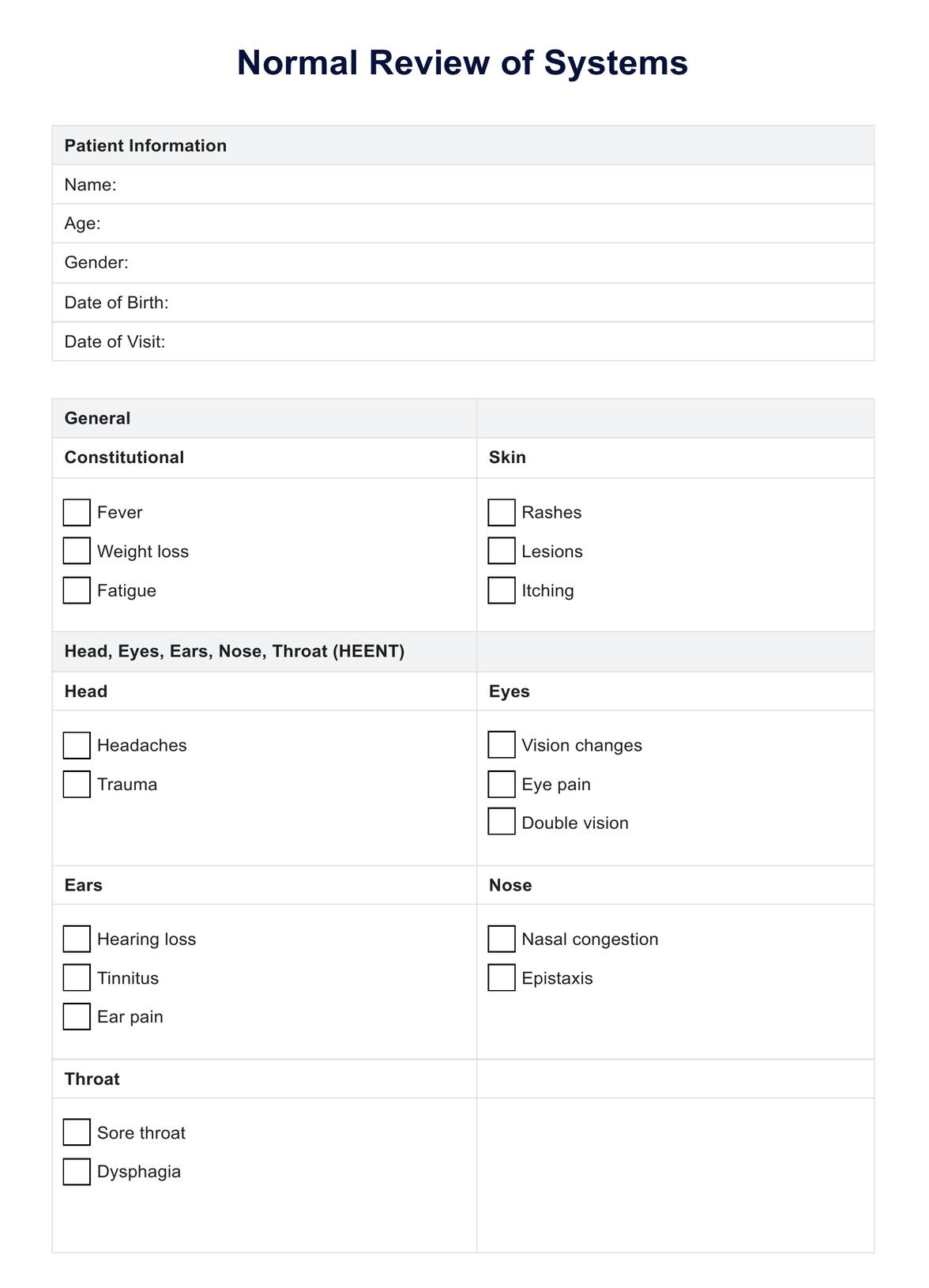
What is a Normal Review of Systems Template?

A Normal Review of Systems (ROS) Template is a structured framework designed to evaluate various bodily systems and functions systematically. ROS is a crucial component of patient assessments in medical and healthcare settings, enabling healthcare professionals to gather comprehensive information about a patient's health status. The template serves as a guide, ensuring that no essential aspect of a patient's well-being is overlooked during the assessment process.

Typically, a ROS template is organized into distinct sections, each focusing on a specific system, such as cardiovascular, respiratory, gastrointestinal, musculoskeletal, and more. The template prompts healthcare providers to ask targeted questions about each system, facilitating a thorough examination of the patient's health. By utilizing a standardized template, healthcare professionals can ensure consistency in their assessments, improving the reliability of the gathered information.

Creating a Normal ROS template involves tailoring questions to the unique needs of a medical practice or specialty while adhering to established medical standards. This streamlines the assessment process and enhances communication among healthcare providers. The Normal ROS template is a valuable tool for promoting a systematic and holistic approach to patient care, contributing to accurate diagnoses and effective treatment plans.

Normal Review Of Systems Template

Download PDF Template

How does it work?

A Normal Review of Systems (ROS) Template is a structured guide to assist healthcare professionals in conducting systematic patient assessments. Below are the key steps involved in utilizing a printable Normal ROS template effectively:

Access the template

Start by obtaining a printable Normal ROS template. These templates are readily available online, and some healthcare management platforms, such as Carepatron, offer customizable and printable options. Ensure the template aligns with the specific medical practice or specialty to capture relevant information.

Patient information

Begin the assessment by filling in essential patient details at the top of the form. This includes the patient's name, date of birth, medical history, and other pertinent information to establish a comprehensive context for the review.

Systematic section navigation

Navigate through the template's organized sections, each dedicated to a specific bodily system. These may include cardiovascular, respiratory, neurological, and more. Follow the prompts within each section to ask targeted questions related to the corresponding system, ensuring a thorough examination.

Comprehensive questioning

Employ the template as a comprehensive checklist, prompting you to inquire about symptoms, concerns, or abnormalities related to each system. This structured approach helps avoid oversights and ensures that all relevant aspects of the patient's health are thoroughly assessed.

Documentation and analysis

As information is gathered, document the findings within the designated spaces on the template. This allows for easy reference and ensures a systematic record of the patient's health status. Analyze the compiled data to identify patterns, trends, or potential areas of concern.

When would you use this remplate?

The Normal Review of Systems (ROS) Template from Carepatron is a versatile and indispensable resource for a wide range of healthcare practitioners. Tailored for efficiency and thoroughness, this template finds its application in various clinical scenarios, enhancing the quality of patient assessments.

Routine check-ups and physical examinations

Incorporate the Normal ROS template into routine check-ups and physical examinations to ensure a systematic and comprehensive assessment of a patient's overall health. By following the structured format, healthcare professionals can minimize the risk of overlooking critical details and establish a baseline for ongoing care.

Initial patient visits

During initial patient visits, the Normal ROS template becomes an invaluable tool to gather detailed information about the patient's medical history and current health status. It guides practitioners to explore symptoms, concerns, and potential risk factors across various bodily systems.

Specialized medical practices

Specialized medical practitioners, such as cardiologists, neurologists, or gastroenterologists, can benefit from the Normal ROS template by customizing it to suit the unique demands of their respective fields. This ensures assessments are tailored to specific systems, allowing for a more targeted and efficient diagnostic process.

Integration into electronic health records (EHR)

Seamlessly integrate the Normal ROS template into electronic health record systems. This facilitates a streamlined documentation process, ensuring that assessment findings are easily accessible and contribute to a comprehensive patient health history.

Educational and training purposes

Utilize the Carepatron template for educational and training purposes within healthcare institutions. It serves as a valuable tool for teaching aspiring medical professionals the importance of systematic patient assessments and adherence to industry standards.

What do the results mean?

Understanding the results obtained from a Normal Review of Systems (ROS) is crucial for healthcare practitioners to make informed decisions about patient care. Here's a breakdown of common results and their implications:

1. Normal findings

If the responses across various systems indicate "normal" or within expected ranges, it suggests that the patient is generally in good health. Normal findings serve as a baseline for ongoing monitoring and reassure the patient and the healthcare provider.

2. Abnormal findings

Identifying abnormalities in specific systems may indicate underlying health issues or potential risks. Abnormal findings prompt further investigation, additional diagnostic tests, or referrals to specialists for a more in-depth assessment and targeted treatment.

3. Symptomatic findings

Results indicating specific symptoms within the template help practitioners pinpoint the areas of concern. For example, respiratory symptoms may lead to a focused examination of the respiratory system, guiding practitioners in diagnosing and addressing the root cause of the symptoms.

4. Chronic conditions or pre-existing issues

The Normal ROS template aids in documenting chronic conditions or pre-existing issues affecting various systems. Understanding the patient's medical history is crucial for tailoring treatment plans, managing chronic conditions effectively, and anticipating potential complications.

5. Trend analysis

Over time, practitioners can analyze trends in the results, tracking changes in the patient's health status. This longitudinal view assists in proactive healthcare management, enabling practitioners to intervene early, adjust treatment plans, or provide additional support as needed.

Research & evidence

The Review of Systems (ROS) is a fundamental component of medical history taking. According to Philips, Frank, Loftin, and Shepherd (2017), it serves as a structured way for healthcare professionals to gather information about a patient's symptoms experience across various body systems. This essay explores the history of the ROS, its development, and its enduring significance in clinical practice.

The early history of the ROS is somewhat unclear, but its roots can be traced back to the Hippocratic era (460-370 BC), where a focus on holistic patient assessment was emphasized. However, according to Baker (1995), the formalization of the ROS as a standardized tool is generally attributed to the 20th century.

The ROS has continued to evolve over time, reflecting advancements in medical knowledge and changing clinical practices. Various ROS templates exist today, tailored to specific patient populations and settings. Despite this evolution, the core principles of the ROS remain constant: to identify potential health problems and guide further diagnostic and therapeutic interventions.

The ROS has a rich history, dating back centuries, and has evolved significantly to become an essential tool in contemporary medical practice. Its relevance extends beyond its ability to identify symptoms; it fosters comprehensive patient assessment, facilitates diagnosis, and promotes effective communication among healthcare professionals. As medical knowledge and technology continue to advance, the ROS will likely continue to adapt and refine itself to remain an invaluable resource for patient care.  

References

Philips, A. Frank, A. Loftin, C., Shepherd, S. (2017). A detailed review of systems: an educational feature. https://www.sciencedirect.com/science/article/abs/pii/S1555415517307018

Baker, R.B. (1995). The codification of medical morality: historical and philosophical studies of formalization of western medical morality in the eighteenth and nineteenth centuries. https://link.springer.com/book/10.1007/978-0-585-27444-7

Commonly asked questions

To create a Normal Review of Systems template, identify the relevant bodily systems for your medical practice, customize questions based on industry standards, and consider the specific needs of your patient population. Use platforms like Carepatron to design and tailor templates easily to streamline the assessment process.

Normal Review of Systems Templates is used during routine check-ups, initial patient visits, and specialized medical assessments. These templates provide a systematic approach to gathering comprehensive health information, ensuring no crucial details are overlooked.

Healthcare professionals use Normal Review of Systems Templates by systematically navigating through organized sections and asking targeted questions about each bodily system. The templates serve as a checklist, guiding practitioners through a thorough examination and providing a structured approach to patient care.

EHR and practice management software

Get started for free

*No credit card required

Free

$0/usd

Unlimited clients

Telehealth

1GB of storage

Client portal text

Automated billing and online payments







