
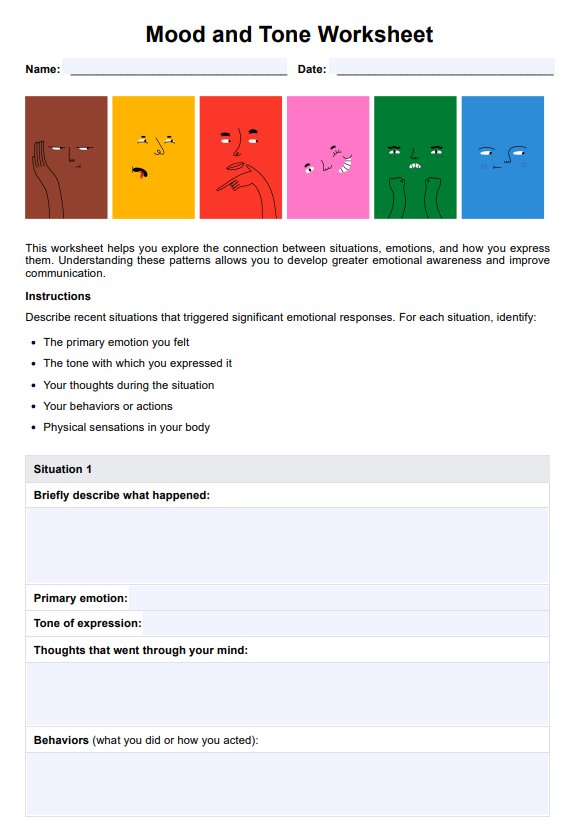




What is a Mood and Tone Worksheet?
Originally developed for classroom settings to teach literary elements, a Mood and Tone Worksheet helps students understand the writer's tone or author's attitude toward his or her subject. It also touches on mood or the feeling or atmosphere that the reader experiences, as well as figurative and connotative meanings.
In literature classes, students practice looking for context clues or identify words and phrases that signal both tone and mood, analyzing how specific word choice and figurative language work together to create an emotional effect on the reader. To teach tone, teachers often introduce short stories or passages alongside guiding questions with answer keys that prompt close reading and critical thinking about connotative meanings.
The concept can also be useful for healthcare and therapeutic settings. In these contexts, Mood and Tone Worksheets help clients identify their own emotional states and expressive qualities in various situations. Unlike their educational counterparts that focus on literary analysis, a clinical tone and mood worksheet emphasizes personal emotional awareness. It aims to help individuals recognize connections between situations, emotions, thoughts, behaviors, and physical sensations. They serve as a practical tool for emotional regulation, self-awareness, and interpersonal communication development.
A Mood and Tone Worksheet can be a great tool for helping individuals become aware of how their moods and tones affect their communication. Using this worksheet, one can become more mindful of the messages they send to others through their words and actions.
It can also help identify situations where the tone or mood changes and how this might affect the conversation. It also encourages individuals to adjust their tone or mood to communicate their emotions more effectively.









