





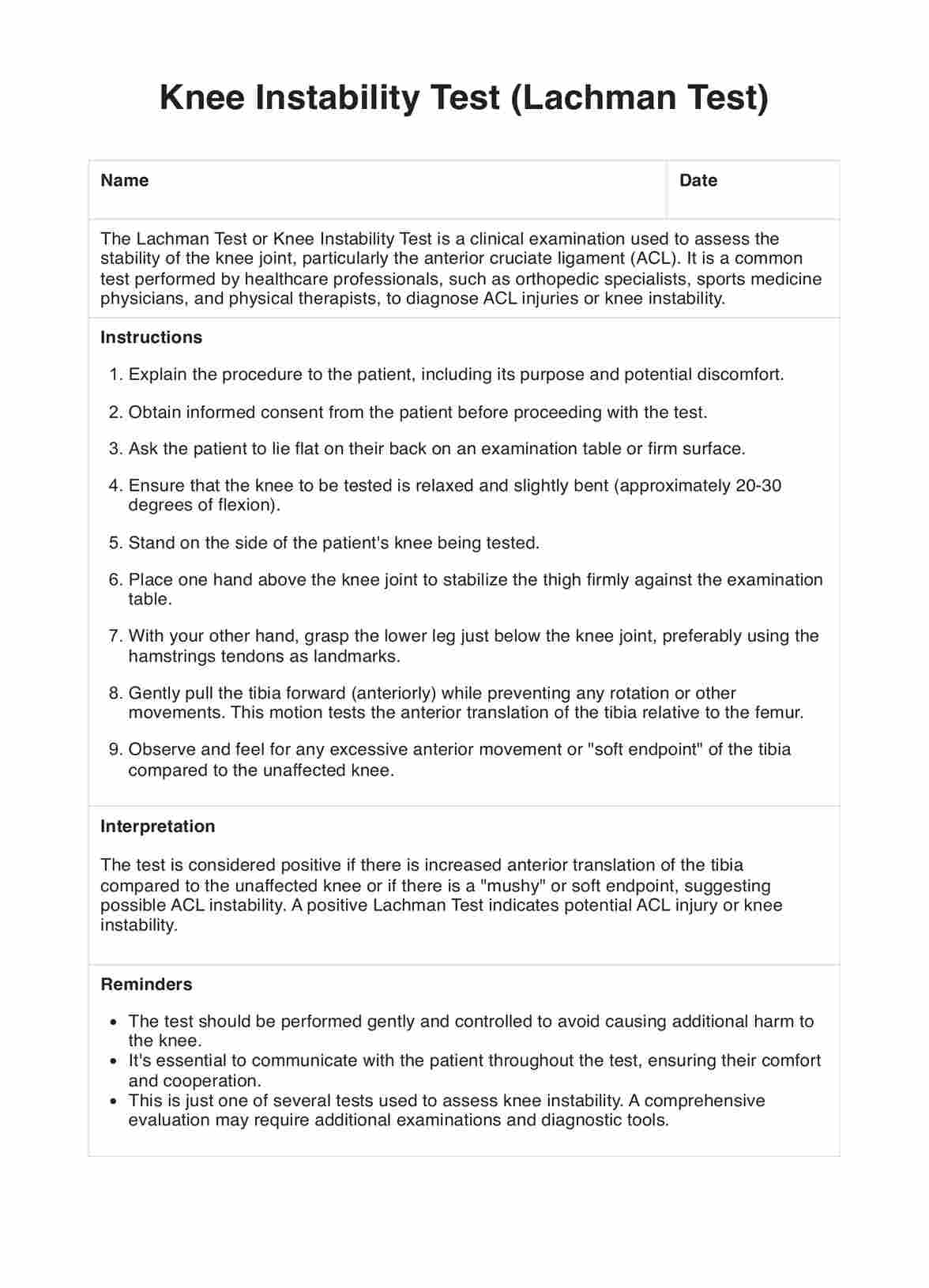




What is a Knee Instability Test?
Knee instability is a condition that affects the knee joint, leading to feelings of weakness, giving way, or buckling of the knee during movement. Various factors, including ligament injuries, meniscal tears, or other structural issues within the knee, can cause it. Patients with knee instability often experience difficulty in walking, running, or participating in physical activities without fear of their knee giving out.
Medical professionals use the or the Lachman Test to identify knee instability and evaluate its severity. This physical examination is used to assess the stability of the knee joint, particularly to evaluate the integrity of the anterior cruciate ligament (ACL). The ACL is one of the major ligaments in the knee that helps stabilize and control forward movement of the tibia (shin bone) relative to the femur (thigh bone).
During the Knee Instability Test, the examiner evaluates the amount of anterior translation or forward movement of the tibia relative to the femur when the knee is partially flexed (usually around 20-30 degrees of flexion). The test is often performed by orthopedic surgeons, sports medicine physicians, physical therapists, or other healthcare professionals.









