




What is a good heart rate recovery?
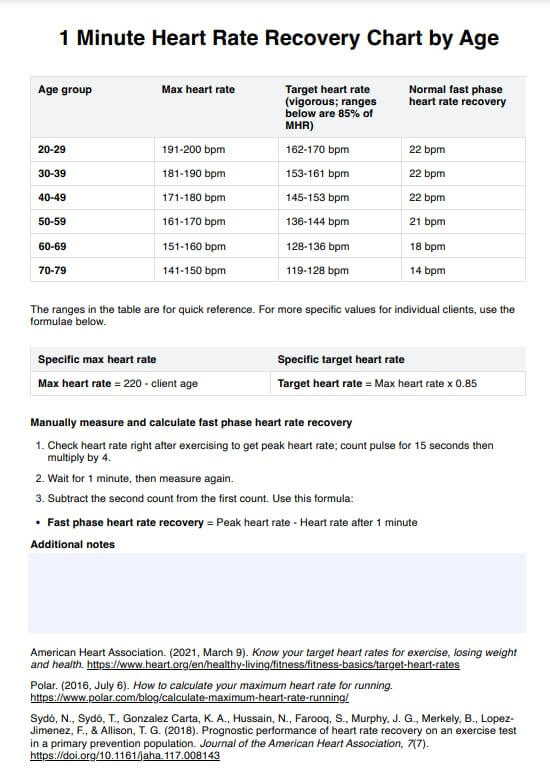
Heart rate recovery (HRR) is a crucial metric that reflects the efficiency of the heart's ability to return to its resting state after exertion. The standard measure for heart rate recovery is often calculated one minute after the cessation of exercise, which coincides within the fast phase. During this time, a healthy heart should exhibit a noticeable drop in beats per minute (BPM).
An abnormal recovery is characterized by a reduction of 12 beats per minute or less from the peak exercise heart rate (Cole et al., 1999). However, individual variations may apply, especially for slightly younger people. It is also vital to know the difference between the fast phase and the slow phase of heart rate recovery, which differentiates between sympathetic withdrawal and parasympathetic reactivation.
Good heart rate recovery is essential because it correlates with cardiovascular mortality (Cole et al., 1999) and heart health. Individuals experiencing slower recovery rates may be at a higher risk of developing cardiovascular disease and other heart-related issues, including coronary artery disease and heart attacks. As individuals age, heart rate recovery may naturally slow down. However, prolonged recovery rates, especially when compared to moderately younger age groups, can signal potential concerns.









