
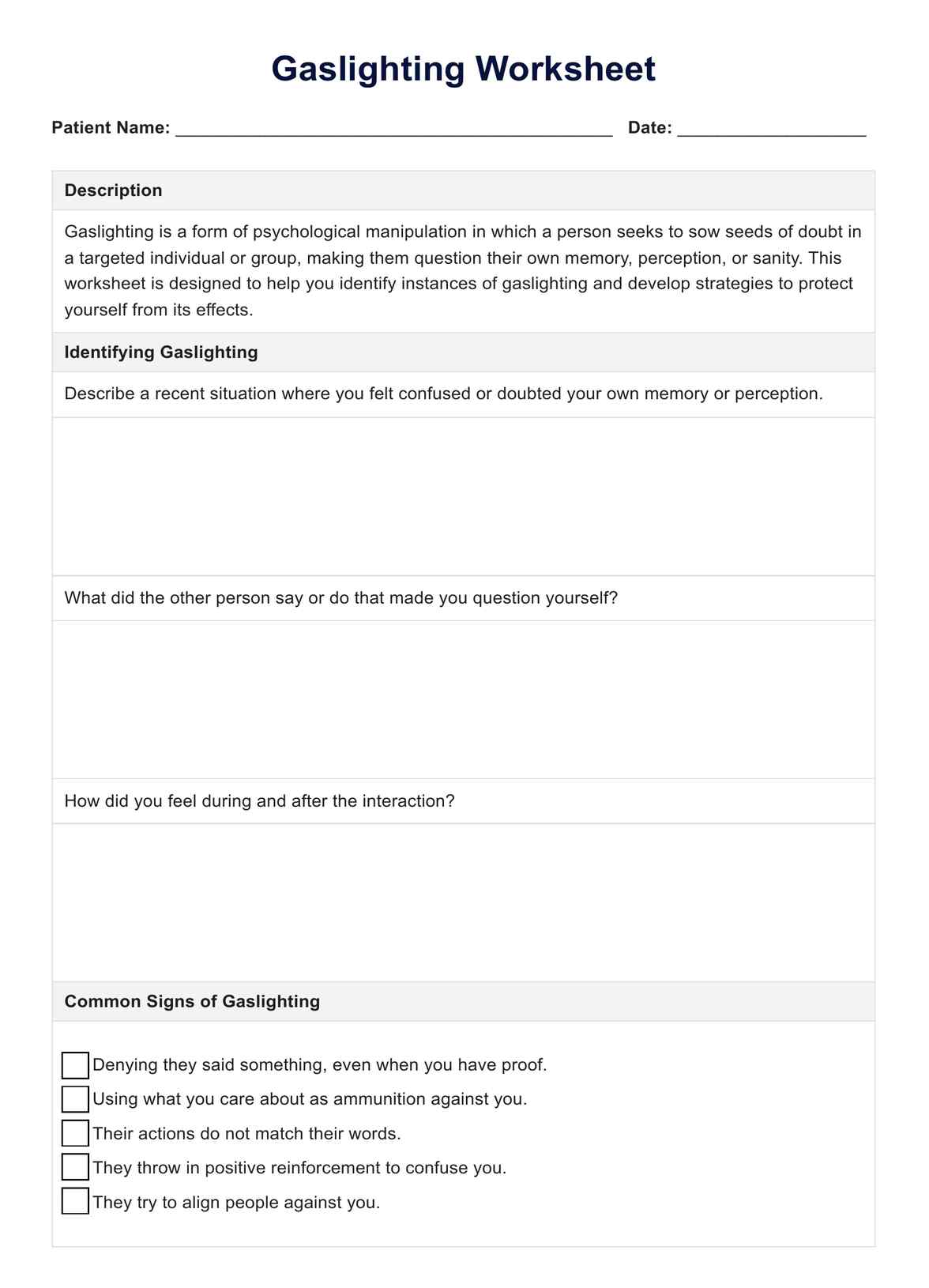




What is gaslighting?
Gaslighting is a form of psychological manipulation in which a person, often a manipulator, makes a victim question their own reality, memory, or perceptions. The goal of gaslighting is to gain power and control over the victim by undermining their confidence and sense of reality. It can lead to significant psychological distress, including anxiety, depression, and a loss of self-esteem.
The term originated from the 1938 play "Gas Light" by Patrick Hamilton and its subsequent film adaptations, where a husband manipulates his wife into thinking she's losing her sanity. In psychological research and education, gaslighting is recognized as a significant tactic in abusive relationships but can occur in various contexts, including familial, romantic, professional, and even societal interactions.
Gaslighting often occurs in relationship dynamics where there is a significant power imbalance. This can manifest in various relationships, including between parents and children, romantic partners, employers and employees, teachers and students, or caregivers and their dependents. In these situations, the gaslighter leverages their authority or control to manipulate the victim's perception of reality.
For example, in a family setting, a parent may use gaslighting tactics to control or discipline their child, making the child doubt their own feelings or experiences. In a romantic relationship, a partner may use gaslighting to maintain dominance, often leading to a cycle of emotional abuse and dependency. Similarly, in a workplace, a superior may use gaslighting to undermine an employee's confidence and assert control.
Humiliation is another aspect closely related to gaslighting. The gaslighter may use belittling comments, mocking, or public shaming as a way to erode the victim's self-esteem and assert dominance. This humiliation can be particularly damaging in relationships where the victim is dependent on the gaslighter for emotional or financial support, such as between an earning spouse and a non-earning spouse.
Understanding gaslighting and its associated relationship dynamics is crucial for mental health professionals and individuals alike to identify and address this harmful behavior.









