


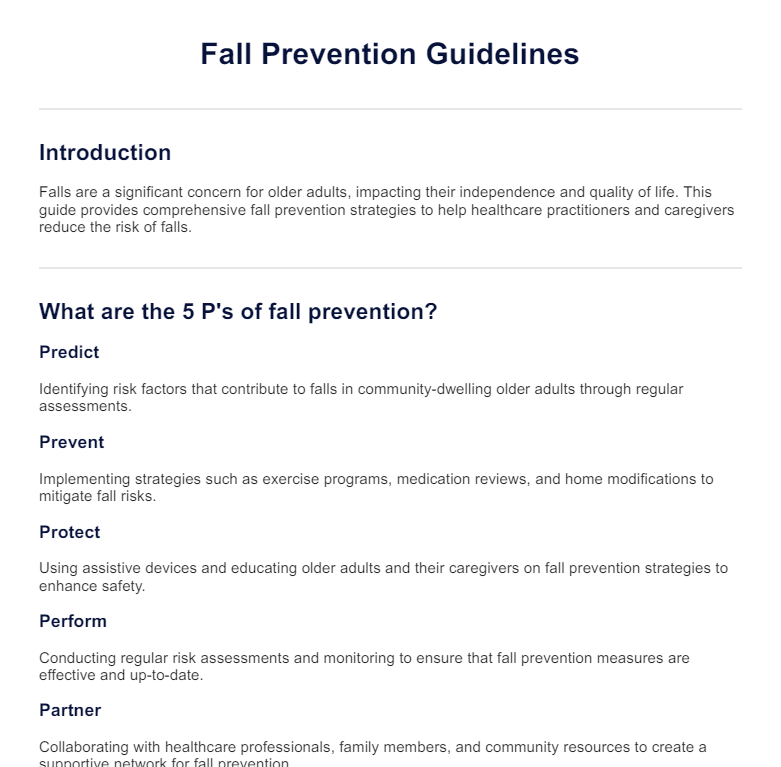




What are the 5 P's of fall prevention?
Fall prevention is crucial, especially for community-dwelling older adults, who are at a higher risk of falls due to various risk factors. Understanding the 5 P's of fall prevention can help healthcare practitioners and individuals implement effective strategies to reduce the risk of falls. The 5 P's are:
Predict
Predicting falls involves identifying the risk factors contributing to falls. According to the Lawson Health Research Institute, risk assessment is a critical component of fall prevention. Factors such as muscle weakness, balance issues, medication side effects, and environmental hazards should be assessed regularly.
Prevent
Preventing falls involves implementing strategies to mitigate identified risk factors. Harvard Medical School emphasizes the importance of exercise programs that improve strength and balance, such as Tai Chi. Additionally, reviewing and adjusting medications that may cause dizziness or sedation is essential.
Protect
Protecting individuals at high risk of falls includes ensuring they have the necessary support and resources. The field of geriatrics and palliative medicine advocates for the use of assistive devices such as canes or walkers to aid in mobility. Protective measures also involve educating older adults and their caregivers about fall risks and prevention strategies.
Perform
Performing regular risk assessments and monitoring is crucial for ongoing fall prevention, as recommended by the World Falls Guidelines. The World Falls Guidelines recommend routine check-ups and assessments to track changes in an individual’s health.
Partner
Collaboration across various fields, such as medicine and health sciences, including experts from geriatrics, health and life sciences, and public health, can enhance the overall approach to fall prevention.









